
Idea 1
Spectacle, Power, and Neokayfabe
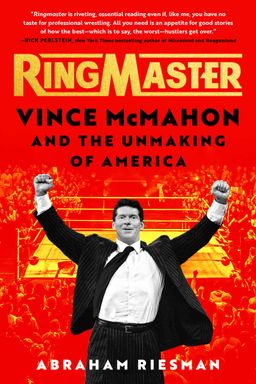
How do you tell truth from theater when the show keeps swallowing reality? In Ringmaster, Abraham Riesman argues that modern American life looks a lot like professional wrestling because Vince McMahon industrialized a technique for fusing fiction and fact. He didn’t just build an empire; he trained you to decode it. The core claim is simple and unsettling: kayfabe, the old code that protected wrestling’s illusion of real competition, publicly died—and was reborn as neokayfabe, a system where everyone knows it’s scripted but still treats the performance as a potent vessel for meaning, money, and power.
From kayfabe to neokayfabe
For decades, kayfabe demanded that promoters and wrestlers present matches as real. That code—borrowed from carnivals and enforced like omertà—made faces and heels feel morally clear and locally rooted. But the 1980s and 1990s broke the covenant. Newspapers like the New York Times printed that matches were prearranged; state hearings in New Jersey logged executive testimony acknowledging the work; media literacy spread among fans. Rather than collapse, the business adapted. Under McMahon, the industry invited you to become a decoder: you learned to ask if a loss came from backstage politics, if a scandal was a work, if a push meant corporate blessing. This is neokayfabe: a marketplace where the admission of fakery intensifies the pleasure of interpretation. (Note: Roland Barthes’s essay on wrestling anticipates this by treating the ring like theater, but Riesman shows how the theater colonizes life in the cable-and-internet era.)
Vince McMahon as ringmaster
Riesman paints McMahon as both architect and avatar of this new order. Raised as Vinnie Lupton in a violent home, he later found and fell for his absent father, the promoter Vince Sr., absorbing a gospel of control and calculation. That private wound becomes public architecture: McMahon centralizes a territorial industry with cable deals and pay-per-view tentpoles, then writes himself onto television as the heel Mr. McMahon. After the 1997 Montreal Screwjob—when Bret Hart was double-crossed in the ring—Vince embraces villainy on camera, converting outrage into ratings. The Attitude Era surges as Stone Cold Steve Austin, a worked-shoot rebel honed in ECW, flips off the boss and drinks beer while you buy T-shirts. You know it’s a show; you also feel like it’s speaking to your real contempt for corporate authority. That is neokayfabe’s profit engine.
What changes when spectacle runs the business
Once McMahon frames entertainment as the core product, everything becomes content. MTV partnerships with Cyndi Lauper and Mr. T in the mid-1980s rebrand wrestling for youth culture and advertisers; WrestleMania becomes a prototype for media tentpoles you can slice across TV, closed circuit, PPV, toys, and music. Stars are manufactured as intellectual property—The Ultimate Warrior is rushed to the top with short squashes and other wrestlers ordered to "do the job"; Hulk Hogan is leveraged into Hollywood via No Holds Barred, then strategically cooled when returns disappoint. When steroid panic erupts, McMahon both promises reform and launches the World Bodybuilding Federation—doubling down on muscle spectacle in the very moment society panics about it. (Note: This kind of audacity recalls Guy Debord’s spectacle thesis, but Riesman grounds it in payrolls, TV slots, and legal filings.)
Ethics, labor, and the human bill
Beneath the lights lies a brutal ledger. Wrestlers are classified as independent contractors, touring endlessly without union protection or benefits. Drug culture, concussions, and hazing normalize risk and humiliation. Women face systemic exploitation: from Fabulous Moolah’s cut-taking control to Wendi Richter’s televised screwjob. Scandals proliferate—Jimmy Snuka and Nancy Argentino, referee Rita Chatterton’s allegation against Vince, the Ring Boys abuse cases—and internal crisis management often prioritizes the product over victims. Live tragedy pierces the fiction at Over the Edge 1999 when Owen Hart falls to his death; production cuts away, the pay-per-view continues, and the company quickly packages a tribute. After the Chris Benoit murder-suicide, WWE sanitizes content and later masters the COVID "ThunderDome," piping in virtual cheers—a reminder that control over perception remains the company’s superpower.
Consolidation and politics
The late 1990s and 2000s deliver corporate triumph: a 1999 IPO, the 2001 acquisition of WCW and ECW remnants, and a rebrand to WWE. With rivals gone, WWE controls the stage and the archives that define wrestling history. Political power follows. The McMahons befriend Donald Trump (WrestleManias IV and V in Atlantic City marketed as Trump Plaza affairs), donate heavily, and see Linda appointed to the SBA. Globally, WWE inks a long-term Saudi partnership reported to pay tens of millions per show, and domestically secures a rich Fox deal for SmackDown. The show becomes a diplomatic and commercial instrument as much as a TV product.
The thesis in one line
Wrestling didn’t just mirror America; under Vince McMahon, it taught America how to turn reality into a show—and how to cash it in.
How to read the rest
As you move through this summary, you’ll see how McMahon built a national empire from a patchwork of territories; how kayfabe died and neokayfabe took over; how stars are made and unmade by promoter calculus; how scandals and tragedies are folded into the machine; and how consolidation and politics entrench WWE’s dominance even as indie scenes keep the art alive. The lesson travels far beyond wrestling: when a leader owns distribution, narrative, and the archive, the line between truth and theater becomes a lever—and you, the audience, become both mark and partner in the work.