
Idea 1
The Battle for America’s Narrative
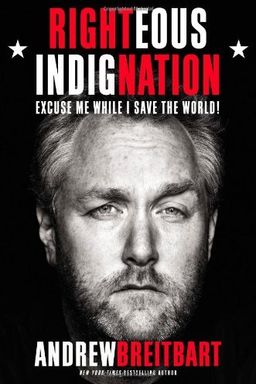
Have you ever wondered why the same news stories can sound completely different depending on which network you watch? In Righteous Indignation, Andrew Breitbart asks that question and builds an answer rooted in decades of media control, cultural manipulation, and political indoctrination. He argues that America isn’t simply divided by party lines, but by competing realities—a war over who gets to define truth itself. His mission: to empower individuals like you to reclaim the national narrative from what he calls the Democrat-Media Complex.
Breitbart contends that the American left long ago stopped winning arguments in the open marketplace of ideas. Instead, it won control of the storytelling machines—schools, newspapers, television, movies, and increasingly the Internet. To him, media isn’t just a place where politics are reported; it’s the battlefield where ideologies fight to shape perception. The left, he insists, occupies the commanding heights of culture, and conservatives have ceded those positions for too long. But the rise of the New Media—blogs, talk radio, and an uncensored Internet—is changing everything, and he believes you can pick up the digital sword and fight.
The Democrat-Media Complex: A Modern Propaganda Machine
Central to Breitbart’s argument is the notion of a single coordinated entity he calls the Democrat-Media Complex. It’s not a conspiracy in smoky rooms, but a partnership of mutual benefit between progressive politicians and the media class that shares their worldview. The complex manufactures narratives that protect left-wing interests (like the treatment of Barack Obama in 2008) and discredit conservative voices. It’s why, he says, scandals like ACORN or corruption within Democratic institutions go unreported until grassroots journalists force them into public view.
Breitbart positions himself as a revolutionary within this war—a man who learned the language of media from insider experience but turned it against its own masters. His awakening came when he realized media wasn’t neutral; it was weaponized. After co-creating the Huffington Post, he noticed how the left used emotional storytelling and celebrity echo chambers to legitimize its politics. Conservatives, meanwhile, were stuck arguing dry policy points while ignoring pop culture—the sphere where hearts and minds are actually won. His book is both manifesto and field guide for reversing that imbalance.
The Awakening of a Cultural Warrior
Breitbart’s own transformation—from a disengaged liberal kid in Brentwood to a conservative New Media warrior—anchors the book's personal narrative. He admits he was once comfortably apolitical, busy chasing trends and pop culture, before moments like the Clarence Thomas hearings shook his faith in media neutrality. To him, those hearings revealed that the press was not an objective truth-seeker but an ideological ally of the Democratic Party. That revelation launched his lifelong mission: to expose bias wherever it lived and to give regular Americans the tools to fight back using truth as their weapon.
If the left had mastered storytelling through entertainment and academia, Breitbart saw that ordinary people could reclaim the narrative through technology. Blogs, camera phones, and social media platforms could bypass the traditional gatekeepers. His story of helping expose ACORN’s corruption and defending the Tea Party movement are offered as real-world examples of citizens outsmarting the establishment press. You don’t need institutional backing, he tells you; you need courage, facts, and a willingness to stand in the fire of public ridicule.
Why It Matters Now
Breitbart wrote during a time when trust in mainstream media was collapsing, and his case feels eerily prophetic in today’s environment of social-media battles and partisan echo chambers. He believes America’s survival as a free republic depends on intellectual rebellion against ideological domination. To rediscover liberty, he insists, the people must control their own stories again. This isn’t just a fight for news coverage—it’s a fight for culture, for education, for art, and ultimately for the idea of America itself.
By the end of the book, Breitbart’s message is clear: cultural power determines political power. The left understood that decades ago; now the right must catch up. The tools are in your hands—the Internet, video cameras, blogs, tweets, and above all, fearless conviction. The question he leaves you with is stark but inspiring: Are you willing to stand up and fight for truth, even if the entire establishment tells you to sit down?