
Idea 1
Why the Rich Get Richer and Everyone Else Struggles
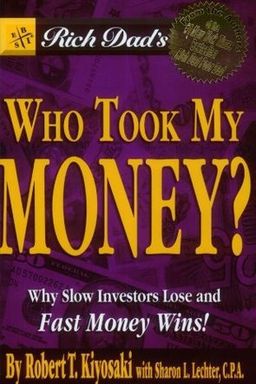
Have you ever wondered why some people seem to build wealth effortlessly while others work tirelessly yet never get ahead? In Rich Dad’s Who Took My Money?, Robert Kiyosaki and Sharon Lechter argue that the difference lies not in intelligence, luck, or opportunity—but in financial education. The book reveals why so many hardworking, intelligent people remain financially stuck while the rich continue to accelerate their wealth. According to Kiyosaki, the ultimate reason is that most people were trained to hand their money to others—to banks, mutual fund managers, or governments—rather than to learn how to make money work for them.
Kiyosaki contends that average investors play a risky game without knowing the rules. They invest for capital gains—trying to buy low and sell high—while professional investors create steady cash flow and protect their assets through knowledge, insurance, and strategy. The real secret to becoming wealthy, he insists, is not about saving for the long term but about mastering the velocity of money—the speed at which your money moves, grows, and returns to you.
The Problem: Playing the Wrong Game
Most people are employees and savers, Kiyosaki says. They work for money, park it in banks or pensions, and hope markets rise. But the financial system isn’t neutral—it’s built to benefit those who understand it. He recounts how millions lost trillions in the 2000–2003 crash because they bought into the sales pitch “invest for the long term, buy, hold, and diversify.” To him, this isn’t investment advice—it’s a sales slogan that keeps ordinary people feeding Wall Street’s profits.
Kiyosaki’s approach rewires how you see your money and your role. You are not a powerless consumer; you’re a potential investor, entrepreneur, and asset builder. Unlike the average person who turns money over to strangers, professional investors know exactly how, when, and why their money moves.
The Solution: Become a Financially Educated Investor
Through stories of his two father figures—his poor dad, a well-educated government employee, and his rich dad, a self-made businessman—Kiyosaki introduces readers to the mindset that separates the rich from the rest. His rich dad insists that financial education—not traditional schooling—creates wealth. You must know how to manage money, leverage other people’s money (OPM), protect what you earn, and plan your exit from each investment before you enter it. These five steps—earn or create, manage, leverage, protect, and exit—define the cycle of a professional investor.
But this education demands time and humility. It’s easier to “invest for the long term” than to learn accounting, taxes, business systems, or real estate strategies. That’s why most people remain employees who work hard, pay others first, and pay the highest taxes—while the financially literate invest in entities that produce continuous income and tax advantages.
Beyond Saving and Hoping
Kiyosaki challenges conventional wisdom: saving money and waiting for compound interest doesn’t create financial independence in a world of debt-based currency, inflation, and taxes. The rich don’t save; they create assets that generate money today. They build businesses, invest in real estate, and use paper assets wisely because these allow for control, cash flow, and tax benefits. Saving for forty years in a mutual fund, he warns, is like letting your money sit in a feedlot waiting for slaughter—the moment markets turn, it’s gone.
What You’ll Learn in This Book
Across the chapters, you’ll follow Kiyosaki’s dialogues with his mentors—a banker, an insurance agent, a journalist, a gambler, even “Father Time” himself. Each represents a lens on money: how professionals protect themselves, how taxes drain the uninformed, how media manipulates perception, and how cycles of history shape markets. You’ll learn about the Cashflow Quadrant—Employee, Self-Employed, Business Owner, and Investor—and why crossing from the left side (working for money) to the right (having money work for you) is essential for freedom.
Finally, Kiyosaki shows how to turn small investments into massive results. By combining the three asset classes—business, real estate, and paper assets—you create synergy, not diversification. Add leverage, tax strategy, legal protection, and financial learning, and your returns accelerate dramatically. The book invites you to stop parking your money and start moving it intelligently. As Kiyosaki puts it, “Rich people get richer because their money never stops working for them.”