
Idea 1
Awakening Financial Intelligence for Lifelong Freedom
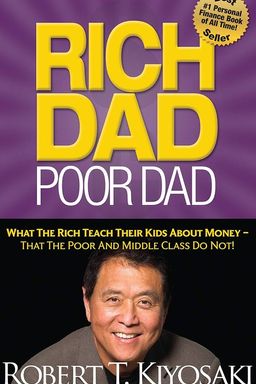
What separates those who struggle with money from those who achieve lasting financial freedom? Robert Kiyosaki’s Rich Dad Poor Dad challenges everything you’ve been taught about work, education, and wealth. Through the lessons of his two father figures—his biological “poor dad” and his best friend’s wealthy “rich dad”—Kiyosaki reveals how financial success is not about working harder, earning more degrees, or saving every penny, but about awakening your financial intelligence so that money works for you instead of you working for money.
Kiyosaki argues that most people remain trapped in the Rat Race because schools teach professional and academic skills, not financial literacy. The poor and middle class work for money, buy liabilities they believe are assets, and hope that job security will protect them. Meanwhile, the rich focus on building asset columns—businesses, investments, and income-generating properties—that provide passive cash flow long after they stop working.
Two Dads, Two Philosophies
Growing up in Hawaii, Kiyosaki was mentored by two fathers whose contrasting attitudes toward money shaped his understanding of wealth. His poor dad was a highly educated teacher who believed that hard work, good grades, and a steady job led to success. His rich dad—Mike’s father, a savvy businessman who never finished eighth grade—believed that true freedom came from financial education. He encouraged young Robert to ask questions, take risks, and learn from mistakes. “The rich don’t work for money,” he said. “They have money work for them.”
These competing philosophies reveal the cultural gap that keeps many trapped in economic insecurity. The poor dad valued stability and credentials; the rich dad valued learning, entrepreneurship, and adaptability. Where one said “Find a good company to work for,” the other insisted “Find a good company to buy.”
From Knowledge to Freedom
Kiyosaki’s rich dad taught him through experience rather than lectures. Working in his stores without pay, Robert learned that life pushes you around, and only those who think critically learn from it. Fear and greed drive most people—they fear not having enough and desire more than they need—trapping them in endless cycles of wage dependence. Breaking free requires financial intelligence, the ability to recognize opportunities, interpret numbers, and build systems that make money even when you’re not working.
As Kiyosaki matured, his education diverged from traditional paths. While his peers studied for secure professions, he worked as a salesman at Xerox to conquer his fear of rejection, joined the Marine Corps to learn leadership, and took real estate seminars to master investing. These experiences reinforced his belief that education should make you free, not dependent. You must “mind your own business” by developing assets that generate income independently of employment.
Why This Matters Today
In a world of student loans, credit card debts, and economic uncertainty, Kiyosaki’s message is more urgent than ever. As automation displaces jobs and traditional pensions vanish, individuals cannot rely on governments or employers for security. Instead, you must build your financial foundation—learning how assets, liabilities, and cash flow interact. Without this foundation, chasing quick riches is like building a skyscraper on a six-inch slab: spectacular collapse is inevitable.
Kiyosaki’s Core Thesis
Financial freedom is the result of financial intelligence, not hard work. To be rich is not about income—it’s about understanding the flow of money: how to acquire assets, minimize liabilities, and control your own cash flow.
The Journey Through the Book
Throughout Rich Dad Poor Dad, Kiyosaki maps 10 lessons drawn from his experience, beginning with “The Rich Don’t Work for Money” and culminating in “Getting Started.” Along the way, he dismantles cultural myths—such as “your home is an asset” or “the love of money is evil”—and replaces them with actionable principles for building wealth strategically. You’ll learn why fear and ignorance are bigger obstacles than lack of money, how to master self-discipline to pay yourself first, how to use assets to buy luxuries, and why teaching others amplifies your own learning.
By the end, you’ll see money not as an end goal but as a tool—a reflection of your choices, habits, and mindset. Kiyosaki invites you to question what you’ve been taught, think like an investor, and use every dollar to move closer to independence. The path to freedom begins when you stop working for money and start having money work for you.