
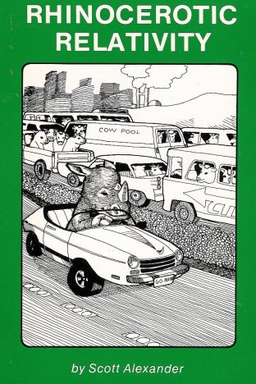
Rhinoceros Success cover

Rhinoceros Success

by Scott Alexander

Rhinoceros Success is a motivating and entertaining guide to reaching your goals through relentless determination. Scott Alexander inspires readers to channel their inner rhino, charging through obstacles and distractions with unwavering focus and energy.

Charge Toward Success Like a Rhinoceros

What if success were a living creature lurking deep in the jungle—hard to catch, but worth the chase? In Rhinoceros Success, Scott Alexander argues that achieving prosperity and happiness isn’t about luck, pedigree, or perfect planning—it’s about transforming yourself into a mental and emotional rhinoceros: thick-skinned, unstoppable, energetic, and wildly determined. You don’t tiptoe toward your goals; you lower your head and charge full speed ahead. Alexander’s metaphor challenges readers to stop living like complacent cows grazing in safety, and instead live with the risk and thrill of the jungle.

The book captures a simple but powerful philosophy: success comes to those who act boldly, persist through obstacles, and refuse to settle for mediocrity. Alexander playfully casts “cows” as the average people satisfied with comfort, routines, and excuses, while “rhinoceroses” are the dream-chasers who wake up every morning ready to run at opportunity. Through humor and animal metaphors, he builds a motivation system grounded in enthusiasm, self-discipline, and faith.

A Jungle of Success Principles

The jungle in Alexander’s world represents life itself—an unpredictable, opportunity-rich, risk-filled place. You can stay safe in the pasture eating cud like everyone else, or you can brave the jungle’s dangers to pursue something extraordinary. The rhino’s strength isn’t just physical but mental. It’s about having “two-inch-thick skin” to endure rejection, setbacks, and criticism without slowing down. Every charge through life brims with energy, optimism, and laughter because rhinos know that bumps and bruises are part of the adventure.

In the early chapters, Alexander lays out what he calls the “Art of Charging”—the daily discipline of waking up eager to pursue dreams with intensity. He contrasts this with the sluggish, risk-averse life of the cow, who wakes up every morning just to get through the day. Cows worry, gossip, and graze; rhinos set goals and move. They don’t just wish for success—they embody it through action.

Mindset Makes the Mammal

At its core, the “rhinoceros” is a mental archetype. Alexander insists that everyone can develop the rhino mindset through attitude, belief, and persistence. The first step is declaring, “I am a rhinoceros.” You internalize this identity through daily affirmations, positive reading, associating with other ambitious people, and focusing relentlessly on big goals. As the author jokes, if you’re going to charge, don’t aim for a jackrabbit—aim for something massive.

His program combines practical habits (goal-setting, planning, financial discipline) with motivational psychology (enthusiasm, visualization, and belief). It’s part Think and Grow Rich (Napoleon Hill), part The Power of Positive Thinking (Norman Vincent Peale), filtered through cartoonish humor and evangelical energy. By using humor and absurd imagery, Alexander makes self-development less sterile and more visceral—you can almost feel your horns growing as you read.

The Rhino’s Code of Living

The book organizes success into six life arenas—financial, work, family, physical, social, and spiritual. A true rhino charges in all of them. Rhinos make money enthusiastically but don’t worship it. They turn work into joyful effort, approach family life with love and humor, maintain their physical strength, choose inspiring friends, and nourish spiritual faith. Each sphere reinforces the others, creating a holistic life of adventure and abundance. Alexander’s tone echoes classic motivational speakers like Zig Ziglar and Jim Rohn, celebrating self-discipline and faith as twin engines of prosperity.

Rhino success isn’t about grinding for its own sake—it’s living with zest. Rhinos play “rhino games,” finding joy in ordinary moments like smiling at strangers or tipping unexpectedly. They make bold, confident choices, persist through storms, and see every problem as proof they’re progressing. For Alexander, enthusiasm isn’t a luxury—it’s fuel. “Charge massively,” he repeats, because timid effort only produces timid results.

Why the Message Matters

Why does this metaphor still resonate decades after publication? Because it directly challenges our modern tendency toward complacency. Many of us—glued to screens, comfortable but restless—have become the very cows Alexander lampoons. The rhino mindset calls on us to stop waiting for perfect conditions and start charging; to reconnect with boldness, belief, and joy in the pursuit itself. His jungle is chaotic—but so is life. The question is whether we’ll graze or run.

By the end of the book, the message is simple but empowering: Success is for anyone thick-skinned and brave enough to chase it. You don’t need permission or perfect plans—you just need audacity, persistence, and faith. Once you decide to be a rhino, everything else—money, happiness, and fulfillment—flows naturally from your unstoppable charge.


The Art of Charging

Scott Alexander opens his playbook for success with one rule: wake up every morning ready to charge. In the jungle of opportunity, sitting back is a death sentence. A true rhino faces each day with energy and clear intention, horn-first. Charging is more than enthusiasm—it’s a disciplined, single-minded pursuit of goals. The rhino charges at opportunity until it’s caught; the cow waits, worries, and watches life pass by.

Charging With Purpose

A rhino’s first job is to decide what to charge at. Alexander warns against wandering aimlessly: “Never charge two things at once.” He compares focus to a magnifying glass—if you move it too quickly, nothing catches fire. Stay locked on one objective, no matter how long it takes, until it blazes into reality. This is the “singleness of purpose” that separates achievers from dabblers. In other success classics like Gary Keller’s The One Thing, this same principle reappears: big results demand narrow focus.

Developing Thick Skin

Of course, every charge meets resistance. That’s where the rhino’s iconic “two-inch-thick skin” comes in. Torpedoes—criticism, rejection, failure—will always fly your way. But a rhino barely notices them. Instead, each hit builds toughness. Alexander reminds you that the harder the charge, the bigger the torpedoes. But they’ll run out before your resolve does. This metaphor transforms hardship into proof that you’re moving forward. (This parallels Carol Dweck’s growth mindset: obstacles are signals that learning—and success—are happening.)

Belief as Fuel

The rhino’s power source is belief—an unwavering conviction that success is both possible and inevitable. Cows, by contrast, suffer from disbelief; they tell themselves success is reserved for others, and so they never start charging. Belief generates enthusiasm, and enthusiasm fuels perseverance. Alexander even uses biology to back this up, noting that enthusiasm triggers endorphin release, a natural high that keeps rhinos joyful even when life gets rough. The message: your outlook literally biochemically sustains your charge.

Massive Action, Massive Results

Rhinos don’t creep—they collide. To Alexander, success rewards not careful thinkers but massive doers. “Charge massively and you will have massive success,” he writes. It’s a simple cause-and-effect law. This mindset mirrors business thinkers like Grant Cardone (10X Rule) who also push for massive effort as the differentiator between average and extraordinary. Every day becomes an all-in effort, from morning wake-up to nightfall. The rhino operates full-throttle, knowing momentum creates its own opportunities.

Charging, then, is not mindless motion—it’s focused faith in action. You set a target, affirm your belief, brace your body, and run. You ignore the noise, expect the hits, and never graze in comfort. The secret, Alexander insists, is simple: keep charging until success surrenders.


Training the Rhinoceros Mind

Becoming a rhinoceros isn’t a one-day gimmick—it’s a complete mental and behavioral reprogramming. Alexander calls this process “Rhinoceros Training,” a daily regimen of action, association, reading, and discipline that keeps your spirit strong in a cow world. If charging is your motion, mindset is your engine.

Attitude and Affirmation

The rhino attitude starts with a declaration. Alexander literally tells readers to write two cards: one affirming “I am a rhinoceros,” and another celebrating your main goal as if it’s already achieved. Read them morning and night. This ritual rewires your subconscious, teaching your mind to expect success rather than doubt it. Similar to Napoleon Hill’s visualization techniques, these affirmations transform belief into a daily habit. But Alexander insists on pairing thought with action: “Reading affirmations without acting on them is kidding yourself.”

Guarding the Mind

Alexander urges rhinos to protect their thoughts from negativity. Turn off the news, avoid gossip, and fill your mind with positive reading. “We become the product of three things,” he writes, “the people we associate with, the books we read, and the media we listen to.” This triad resembles modern psychology’s “behavioral bubble”—your environment shapes your motivation more than willpower alone. By surrounding yourself with other rhinos, you’ll reinforce your identity and expectations daily.

Planning and Persistence

Rhinos don’t drift—they plan. Alexander’s success formula: dream big, make a plan, and charge it down. Long-range, intermediate, and short-term goals all matter—but only if acted upon daily. When plans fail (which they will), you modify and persist. He compares life planning to navigation: storms may divert you, but you keep steering toward your destination. Cows stop when the map changes; rhinos redraw the route mid-sprint.

Discipline and Self-Command

Self-discipline, Alexander says, is the defining trait of rhinos. Without it, entropy—the tendency toward decay—takes over. He mocks cows as “perfect examples of entropy,” content to rot in dull comfort. A rhino overcomes inertia through discipline: waking early, exercising, eating well, managing money, taking rest strategically, and pushing through boredom. He even likens self-management to running a business: “You are the president of You, Inc.” This vision of self-leadership anticipates modern self-management frameworks like Stephen Covey’s 7 Habits.

In short, rhino training is about mastering internal forces—belief, focus, action—so external obstacles become laughable. “You are a Niagara Falls of energy,” Alexander exclaims. Train your instincts until acting like a rhino becomes automatic—and life will rush to meet your momentum.


The Power of Happiness

Success without joy, Alexander reminds us, is just noise in the jungle. The happiest rhinoceroses charge not because they must, but because they love the run itself. In his chapter on happiness, Alexander flips traditional notions of satisfaction: happiness isn’t a reward for success; it’s the emotional fuel that makes success possible.

Happiness is a Choice

Whether you’re a cow or a rhino, happiness is ultimately a decision. Cows choose contentment through comfort—TV, gossip, grazing—while rhinos choose happiness through motion and growth. “There are happy cows and miserable cows, happy rhinos and miserable rhinos,” Alexander writes. “Everyone chooses their own state of mind.” You can decide to be cheerful, loving, and grateful today, no matter the pasture or jungle conditions. This echoes Viktor Frankl’s insight that meaning and happiness are independent of circumstance.

The Cycle of Success and Joy

Alexander describes a self-reinforcing cycle: looking good makes you feel good, feeling good makes you charge, and charging leads to success, which makes you feel good again. He encourages rhinos to take care of themselves—wash, groom, dress confidently—because outward pride reinforces inner energy. The focus isn’t vanity but vitality. When you feel magnificent, your spirit and performance align.

Laugh at Life

Humor is the rhino’s secret weapon. Problems shrink when you can laugh at them. Alexander jokes about the absurd image of a rhinoceros filling out income tax forms to remind readers not to take setbacks too seriously. “Better to be a happy cow than a sad rhino,” he quips, urging us to keep perspective. Gratitude and laughter work as emotional armor, shielding optimism when life’s heat turns up.

Faith and Focus

For Alexander, happiness ties directly to spiritual faith. He points readers toward timeless wisdom, arguing that the Bible itself is the “original success manual.” Faith grounds the rhino’s exuberance in meaning and stability. When you trust that “everything always works out for the best,” anxiety dissolves and creativity opens. This faith doesn’t have to be religious—it’s the inner conviction that life bends toward good for those who keep charging.

In essence, rhino happiness comes from zest, gratitude, and belief in life’s adventure. You don’t find joy after the charge—you generate it as you run.


Audacity: Living Boldly Without Excuses

If belief is the rhino’s fuel, audacity is the throttle. Alexander dedicates an entire chapter to cultivating reckless courage—the willingness to act when others hesitate. In the jungle of success, danger is constant, but the rhino accepts it with a grin. “Go for it!” is his motto.

Choosing Daring Over Fear

The difference between cows and rhinos isn’t circumstances—it’s nerve. Rhinos fall, fail, and get muddy, but they charge again laughing. Fear doesn’t vanish; it just gets drowned out by enthusiasm. Alexander quotes Jack London’s line—“I would rather be ashes than dust”—to capture the rhino’s philosophy: better to burn brightly than live safely and rot. This mindset resembles modern stoic ideas from Ryan Holiday about embracing adversity as fuel for greatness.

No Excuses Policy

Rhinos have no room for excuses. Being too young, too old, wrong background, or short on time—all irrelevant. The only real obstacle is self-doubt. Alexander writes, “There is absolutely not one bona fide excuse for not being super successful.” This may sound extreme, but it’s designed to awaken accountability. Excuses are the language of cows; rhinos speak only in results.

Time: The Jungle’s Currency

Alexander’s rhino respects time as a nonrenewable asset. You can make more money but not more minutes. “Live each minute as though you had to pay ten dollars for it,” he warns. By treating time as precious currency, you avoid grazing habits like procrastination and scrolling. This echoes Benjamin Franklin’s maxim “Dost thou love life? Then do not squander time.” Rhinos stay mindful of the clock not to rush life but to savor its use.

Stay Childlike, Stay Alive

Finally, Alexander encourages rhinos to rediscover childlike excitement. Many adults, grown rigid and cautious, become “too mature to charge.” The rhino keeps playfulness alive—believing with childlike faith and laughing freely. He cites biblical encouragements to “be of good cheer” even in tribulation, reminding us that worry doesn’t change the world; enthusiasm might. Being audacious, at heart, means refusing to let fear or cynicism dull your spirit.

The audacious rhino doesn’t wait to be brave—charging makes you brave. Courage, Alexander implies, is built not in safety but in motion.


Persistence: The Unbreakable Charge

Every motivational story extols persistence, but Alexander personalizes it through a vivid anecdote from his own youth. His early job at an animal hospital exposed him to blood, needles, and—worst of all for him—cats, to which he was allergic. On his first day, he nearly fainted. By all logic, he should have quit. Instead, a vivid dream changed his course: in the dream he was clinging to a boat mast during a furious storm, refusing to let go until calm seas returned. The symbolism hit him—hang on, and the storm will pass. The next day, he returned to work and endured until he mastered it. That’s persistence in action.

The Storm Always Ends

Alexander’s lesson is visceral: failure and pain don’t mean defeat—they’re part of every charge. The key is to “never let go” until conditions change or the ship itself sinks. By reframing struggle as temporary weather, persistence becomes logical, not heroic. The moral? No rhinoceros ever succeeded by giving up mid-charge. You’d never catch opportunity if you paused every time it darted away.

Resilience as Identity

Persistence isn’t just repeating effort—it’s identifying as someone who doesn’t quit. Rhinos, with their thick skin, almost enjoy challenges because resistance toughens them. They expect temporary pain but trust the chase. This aligns with Grit researcher Angela Duckworth’s definition: passion plus perseverance equals sustained success. By making persistence a trait rather than a tactic, you never need to “try” to keep going—it’s automatic.

The rhino who endures storms with a grin will eventually graze in the fields of achievement. Every time you refuse to quit, your hide gets thicker, your spirit bolder, and your odds overwhelmingly in your favor.


Living the Rhino Life in Every Arena

In the final half of the book, Alexander expands his metaphor into a complete lifestyle guide, showing how the rhino attitude transforms every area of life. Success, he says, isn’t compartmentalized—you must charge in your finances, career, relationships, health, social life, and spirit all at once. A weak flank in any of these leaves the rhino vulnerable to torpedoes.

Financial Confidence

Money, Alexander insists, isn’t evil—it’s essential. Cows dismiss wealth as unimportant because they don’t have it, while rhinos treat money as a tool for freedom and giving. He advises readers to make money their “hobby, not their god.” Enjoy the game of earning, spend wisely, and tithe 10% to maintain perspective. Saving “ten percent for yourself” first echoes timeless advice from The Richest Man in Babylon. Prosperity, for Alexander, flows from energy and purpose, not greed.

Work as Play

Rhinos don’t work—they play at what they love. If your job feels like drudgery, plan your escape to something meaningful. Employers adore rhinos because they charge with enthusiasm, creativity, and responsibility. Even if you stay employed, act like an intrapreneur: give more value, take initiative, and smile. The day you show up as a rhino, your workplace transforms.

Family, Physical, and Social Balance

In family life, Alexander advises rhinos to nurture relationships like gardens—constantly weed and water them. Don’t flee at the first storm. Rhinos solve problems with commitment, not escape. Physically, he warns against flabby rhinos: “Your skin should be two inches thick, not your fat.” A strong body sustains a strong spirit. Socially, he reiterates Proverbs’ wisdom: associate with other rhinos and eagles, not cows and crows. Your circle defines your altitude.

Spiritual Strength

Spiritually, Alexander offers a simple call: believe in something higher. “Believing costs nothing,” he jokes, “no salesman will call.” Yet faith, he insists, yields infinite return. A rhino with faith is never fully defeated because divine partnership brings peace through every jungle storm. His message isn’t preachy—it’s profoundly practical. Faith keeps the charging heart alive.

By integrating the rhino mindset into every domain, success becomes a lifestyle, not a checklist. You don’t just charge at goals—you live charging itself.


Problems, Play, and the Final Charge

In the closing chapters, Alexander balances seriousness with joy and realism. Life in the jungle means constant problems—but also constant play. Rhinos expect problems and turn them into progress. They also make sure fun, gratitude, and connection stay central to their adventure.

Problems Are Progress

“Beware when you have no problems,” Alexander warns; “then you’ve really got a problem.” To him, problems signal forward motion—the result of charging and creating. The rhino doesn’t run from them but toward them, horns down. He instructs readers to write problems down, define them clearly, brainstorm solutions, and then “charge at them like a rhinoceros.” Even sorrow has a purpose: it reminds you to depend on faith and resilience. Like Stoic thinkers such as Marcus Aurelius, Alexander sees struggle as the raw material of strength.

Rhino Games and the Joy of Living

But success without fun is still a cow’s life. Rhinos keep life vibrant through what he calls “Rhino Games”—little practices of courage and playfulness. Smile and wave at strangers. Tip people who aren’t expecting it. Carry a $100 bill just to remind yourself of abundance. Try something new each week—a new food, sport, or experience. These games build joy and audacity muscles, helping you avoid apathy or drifting.

The Final Decision

In the finale, Alexander gets blunt: you’re either a rhino or a cow—there’s no halfway. Stop being “cool,” he warns, because cool is lifeless. Be passionate, hot-blooded, and alive. Life’s diseases—indecision, doubt, worry, indifference, pessimism—are all cured instantly by rhinohood. The cure is motion: decide, believe, and charge. “Positive thinking will get you nothing,” he concludes, “unless you combine it with charging.”

The book ends on an electrifying note: Go forth, rhino, and make your dreams come true. Because that’s what rhinos do—they charge, persist, laugh, and live gloriously thick-skinned lives.

Dig Deeper

Get personalized prompts to apply these lessons to your life and deepen your understanding.

Go Deeper

Get the Full Experience

Download Insight Books for AI-powered reflections, quizzes, and more.