
Idea 1
The Two Minds and the Roots of Self-Destruction
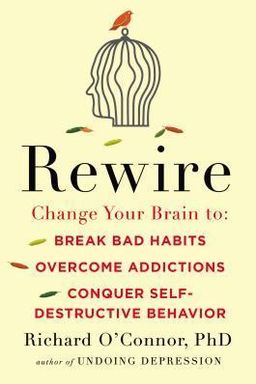
Why do you keep doing things you know will hurt you? In Richard O’Connor’s Undoing Depression and his later work on self-sabotage, he argues that most destructive behaviors come from a split within the mind: an automatic self shaped by habit and early experience, and a conscious self guided by reason and planning. These two systems cooperate but often miscommunicate, leaving you at war with yourself.
The divided mind
O’Connor adopts and expands on Daniel Kahneman’s model of two systems. The automatic system (System 1) handles quick judgments, emotions, and habits; the conscious system (System 2) plans, reflects, and corrects. When you overeat, lash out, or procrastinate, it’s not a lack of knowledge but old wiring running the show. Your automatic self learned survival strategies in childhood and defends them as if they were life-or-death truths—even when they now create harm.
Because the conscious mind can focus on only a few things at once, it can’t supervise all the automatic processes that guide your day. Worse, when stress or fatigue hits, the automatic mind takes over, reverting to whatever behaviors once brought relief or safety. This is why people in therapy often re-enact the same relationship patterns they desperately want to escape.
Scripts, bias, and distortion
The automatic mind runs on scripts and biases. You see what fits your assumptions, ignore what doesn’t, and then confirm your worldview—what O’Connor calls the “assumptive world.” It’s like living inside a paradigm you rarely question. Biases such as confirmation bias, self-serving bias, and thought suppression maintain those scripts. A person ashamed of anger may recreate relationships where they’re provoked to explode, thus proving they truly are “bad.” Such repeating cycles are not accidents—they’re the automatic mind trying to resolve old injuries with familiar but harmful strategies.
Emotion, fear, and repression
Self-destructive acts are most often motivated by fear—fear of intimacy, failure, or responsibility—hidden from awareness. These fears shape avoidance, perfectionism, or self-handicapping. Repressed anger becomes passive aggression, and unmet needs masquerade as rebellion. When you deny anger or shame long enough, they solidify as traits: cynicism, low self-worth, or chronic guilt. Many of O’Connor’s clients, for example, seemed “lazy” or “unmotivated,” but their avoidance was just fear in disguise.
From awareness to rewiring
Understanding this divided mind is just the beginning. The goal is integration—teaching the conscious self to recognize, retrain, and eventually harmonize with the automatic. O’Connor weaves together Freudian insight, cognitive psychology, and modern neuroscience to show that insight alone won’t change your life unless you also practice new behaviors until they become automatic. Awareness lets you see the script, but repetition rewrites it.
If you find yourself repeating regrets, don’t just vow to “try harder.” Pause, name which self is acting, and interrupt the script. Replace reactive habits with new micro-behaviors—breathing, counting, or reframing—that give your conscious self a chance to intervene. Change, he argues, is not a moral struggle but a neurological apprenticeship: you are teaching your own brain how to cooperate.
Core insight
“We have two minds that don’t communicate very well.” Real freedom comes when the fast, emotional mind and the slow, deliberate mind learn to speak the same language through mindful awareness and deliberate practice.
This foundation sets the stage for the rest of the book: uncovering how biases, emotions, trauma, and modern stress feed the automatic machinery of self-destruction—and how mindfulness, compassion, and repetition can retrain it toward growth.