
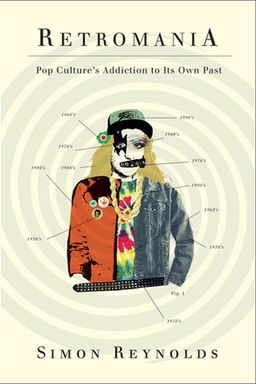
Retromania cover

Retromania

by Simon Reynolds

Retromania delves into the stagnation of modern pop music, questioning why today''s artists fail to ignite a new musical revolution. Simon Reynolds explores how nostalgia and technology keep music rooted in the past, offering insights into the need for genuine innovation.

Retromania and the Culture of Looking Back

Why does so much of today's pop culture feel obsessed with its own past? In Retromania, Simon Reynolds argues that we live in a feedback loop of cultural memory—a time when popular music, fashion, and media can’t stop recycling themselves. He calls this condition the 'Re' Decade: a period of reissues, remakes, revivals, and reunions. Instead of hurtling toward the future, culture stumbles over its own history.

Reynolds positions this not as mere nostalgia, but as a structural shift. Digital technology, mass archives, and demographic changes have produced a world where the past is too available, too monetizable, and too seductive to ignore. The result is cultural hyper-stasis—endless activity without forward movement.

The rise of the retro economy

During the 2000s, music and pop culture were saturated with acts of return. The Police reunite for sold-out tours, Amy Winehouse channels vintage soul, Oasis and The White Stripes recycle the 1960s. Box sets, reissues, and rock museums proliferate. Broadcasters run nostalgia marathons—I Love the '70s, VH1 Classic—and entire industries of curation and commemoration emerge. This nostalgia is not just an emotional pattern; it's an industrial blueprint.

Media, memory, and archive fever

Reynolds draws on Jacques Derrida’s idea of 'archive fever'—the compulsion to collect and preserve everything. With CDs, MP3s, and digital streaming, music becomes infinitely retrievable. The archive expands exponentially, transforming into a searchable terrain of endless possibility. You are no longer at the mercy of scarcity or radio schedules; you click and time-travel. But that accessibility breeds passivity and anxiety: everything is available, so nothing feels truly new.

Technology thus changes the texture of cultural memory. YouTube, for example, gives you 'total recall'—instant access to forgotten gigs, bootlegs, and obscure broadcasts. This creates a sense of simultaneity where all eras coexist. The past becomes as clickable as the present, collapsing historical perspective. But the reward of infinite access comes with a cost: shorter attention spans, fragmentary listening, and 'franticity', Reynolds’s term for the jittery restlessness of digital collectors who accumulate more than they experience.

Nostalgia as identity and economy

Reynolds distinguishes between restorative nostalgia—the desire to rebuild or return to a lost past—and reflective nostalgia, the wistful, aesthetic engagement with memory. Pop culture slides between both. You see reflective nostalgia in Morrissey’s melancholic tributes to old Manchester; you see restorative nostalgia in political movements built around national myths. The key is that nostalgia is no longer just private longing—it’s a mainstream business model.

Culture as archive loop

In the digital present, the act of listening becomes a form of curating. You are always sorting, selecting, remixing. This shift transforms the musician into a curator, the listener into a collector, and the industry into an archive-management enterprise. The gravitational pull of the past shapes not only what you hear but how you experience time itself. Instead of a forward vector, culture turns inward, folding into memory.

Reynolds’s warning

Reynolds is no puritan—he loves old records and reissues—but he worries that the future is being suffocated by the weight of its own archive. The endless recycling of retro styles risks turning creativity into documentation rather than imagination. The challenge for you, he suggests, is to listen differently: to use the past as a jumping-off point, not a resting place.

Across the book’s arc, Reynolds maps this feedback loop—from the museums and reunion tours that canonize the past, to the YouTube scroll that makes time itself feel flat, to digital file-sharing and curation cultures that redefine what it means to own or value art. The result is a portrait of a civilization haunted by its own memory—a world where art’s greatest challenge is not to remember, but to forget enough to move on.


Nostalgia, Recording and the Memory Industry

Reynolds shows how recording technologies made nostalgia tangible. Phonographs, tapes and CDs turned sound into storable time capsules, making retro possible. Once you can replay history perfectly, the past becomes a living resource, not just memory. You can hear Marvin Gaye’s voice exactly as it was or remix Kraftwerk beats decades later—recordings become “time machines.”

When nostalgia became mass culture

Originally nostalgia meant homesickness, but as Svetlana Boym noted, modern nostalgia became temporal—longing for an idealized past. In pop culture, this shifts from personal memory to collective commodity. The result is an 'archive economy' where labels mine their catalogs for deluxe reissues, documentaries dramatize the past, and curated compilations monetize yesterday’s sound.

Two moods of nostalgia

Restorative nostalgia wants to rebuild the lost world (national revivals, heritage branding). Reflective nostalgia dwells lovingly on what’s missing (Morrissey, Pulp’s wistfulness). Pop swings between the two: sometimes playful, sometimes mournful. The reflective mode dominates much retro—Nick Cave’s covers, Saint Etienne’s compilations, or Sonic Youth’s self-curating projects create dialogues with history rather than illusions of rebirth.

The compulsion to archive

Digital abundance feeds archive fever. Blogs and collectors digitize and share entire libraries; streaming platforms turn scarcity into surplus. The collector’s joy shifts to anxiety—Reynolds calls it 'the collector’s crisis.' With infinite music, scarcity loses meaning, and value moves from owning to filtering. Modern collecting becomes psychological management: how to curate without drowning in it.

From passion to pathology

Digital 'sharity' culture—blogs like Mutant Sounds—democratizes access but creates 'franticity': the restless downloading and skipping that replaces deep listening. Reynolds argues that this is cultural ADHD—speed without satisfaction. To recover meaning, you must impose your own slowness and scarcity.

Ultimately, retro and nostalgia aren’t escapism alone; they are coping mechanisms for abundance and loss. We record because we fear forgetting, and we replay because we can’t move on. Reynolds reframes nostalgia as both wound and cure: it revitalizes culture with memory but, if left unchecked, can mummify creativity.


From Museums to Reunions: Institutionalizing Memory

Reynolds explores how the music industry stores its history—literally. Rock museums, anniversary tours, and documentaries turn rebellion into heritage. The Rock and Roll Hall of Fame, Seattle’s Experience Music Project, and the British Music Experience all prove that pop culture now curates itself like fine art. But as Reynolds warns, music loses its pulse when trapped beneath glass.

The museum paradox

Museums are visual and static, music is temporal and transient. Once you place punk’s ripped T-shirts and fanzines in vitrines, you neutralize their defiance. Yet these institutions also democratize memory: fans can access stories and artifacts that once disappeared overnight. Reynolds treats this not as hypocrisy but as tension—between preservation and petrification.

Reunions and rock docs

The reunion tour is retromania’s blockbuster form. Bands like The Pixies, The Stooges, and The Police reform for sold-out shows, sometimes creating new work but often acting as living monuments. Ticket sales are enormous—The Police made over $340 million in 2007–08. Simultaneously, documentaries like Scorsese’s No Direction Home or Temple’s Punk trilogy reframe history for mass audiences. They educate but also canonize, turning chaos into coherence.

Performance as preservation

Reynolds cites artists like Iain Forsyth and Jane Pollard, who restage historical concerts as performance art. These reenactments show that the desire to relive the unrepeatable has become its own art form—a meta-nostalgia for the Event.

You inherit a pop culture that constantly curates itself. Reissues, biopics, and documentary retrospectives deliver comfort and context but also stabilize what was once explosive. In this system, rebellion becomes repertory, and spontaneity becomes content. Recognizing that paradox helps you see how institutional memory both enriches and limits the living potential of art.


Curation, Covers and Cultural Gatekeeping

Reynolds observes that being a musician now often means being a curator. Rather than inventing new sounds, many artists compile, contextualize, and re-present existing ones. Labels like Soul Jazz, Numero Group, and Honest Jon’s practice archaeology with taste. Brian Eno foresaw this shift: artists become 'connection makers' more than inventors.

Curation as creativity

From Sonic Youth’s archival projects to Bob Stanley’s compilations, curators act as cultural filters. They identify micro-genres (e.g., wyrd folk, minimal synth), rescue forgotten soundscapes, and design how we remember. Curation is its own authorship—a way to guide listening experience. Yet it raises questions: when collecting eclipses composing, what happens to originality?

Covers and homage

Cover albums—Nick Cave’s Kicking Against the Pricks or Bryan Ferry’s These Foolish Things—extend this ethos. They blur boundaries between tribute, criticism, and reinvention. The Dirty Projectors even 'covered' Black Flag’s Damaged from memory—proof that reinterpretation can outlive reproduction. In this ecosystem, fidelity becomes secondary to conceptual resonance.

The portal artist

Reynolds’s idea of 'portal bands'—like Magazine, Saint Etienne, or The Fall—captures how artists serve as gateways to bigger cultural constellations: literature, design, politics. Following them trains you to connect dots and read pop historically.

Curation, then, becomes the 21st-century’s creative paradigm. Its virtue is connectivity; its vice is paralysis. Your challenge as listener and artist is to turn curation into conversation, not canonization—to keep the past alive by making it strange again.


Hauntology and Retro-Futurist Longing

Hauntology, one of Reynolds’s key theoretical adaptations, describes how sound can carry the ghosts of lost futures. Borrowing Derrida’s term, he shows how artists like Boards of Canada, The Advisory Circle, and William Basinski conjure moods from faded technology—degraded tape, vintage synths, Radiophonic textures—to summon the optimism of futures that never arrived.

Ghosts in the archive

These sounds tap into postwar Britain’s vanished techno-utopianism: BBC science programs, Open University broadcasts, or educational films. Listening feels like tuning into a parallel timeline. Hauntologists don’t simply imitate—they manipulate decay and absence, turning nostalgia into critique. You sense the melancholy of a civilization that once believed in progress.

Retro-futurism as loss and critique

Retro-futurism works similarly. When artists or designers revive mid-century visions of Tomorrowland’s plastics and chrome, they’re really mourning a social loss: the disappearance of collective optimism. The future, once shared and public, has become privatized and uncertain. Thus 'nostalgia for the future' doubles as political yearning—a wish to recover faith in progress itself.

Sound as séance

For hauntologists, sampling isn’t theft; it’s spiritual mediumship. Each looped phrase or analog hiss carries emotional residue, reminding you that technology captures not only signal but time.

Hauntology ties nostalgia to critique: it lets you feel the gap between what was promised and what came. By animating the ghosts of modernism’s utopian dreams, hauntology becomes a sonic philosophy of history—eerie but instructive, melancholy but illuminating.


Digital Culture and Hyper-Stasis

In the book’s closing chapters, Reynolds examines how digital life changes cultural temporality. Borrowing Nicolas Bourriaud’s concept of 'postproduction,' he argues that we now live in an age of remixing rather than invention. Because every artifact is instantly retrievable, novelty becomes harder to achieve. The result is 'hyper-stasis'—a culture of ceaseless reinterpretation that moves frantically but never forward.

Speed without change

Online, trends explode and vanish in months. Subgenres like chillwave or hypnagogic pop spark momentary excitement but rarely yield paradigm shifts. Everything coexists on the same plane—vintage soul next to vaporwave next to 1990s rave—stripped of historical sequence. You experience time as shuffle mode.

Platforms and participation

YouTube, file-sharing, and streaming services empower you to curate, but that empowerment disperses focus. The abundance yields paralysis: with every sound one click away, attention becomes the scarcest resource. Creativity fragments into micro-scenes, each defined more by aesthetic referencing than by radical innovation.

The challenge ahead

Reynolds challenges you to seek works that use the archive generatively. The future of innovation lies not in rejecting the past, but in colliding with it so violently that something unforeseen emerges.

In this final frame, the book becomes both diagnosis and call to action. Retromania warns that cultural over-memory risks draining art of its daring. Yet Reynolds holds out hope: if artists can turn curation into reinvention, you might rediscover how to make the future audible again.

Dig Deeper

Get personalized prompts to apply these lessons to your life and deepen your understanding.

Go Deeper

Get the Full Experience

Download Insight Books for AI-powered reflections, quizzes, and more.