
Idea 1
Rewiring Your Mind Through Cognitive Behavioral Therapy
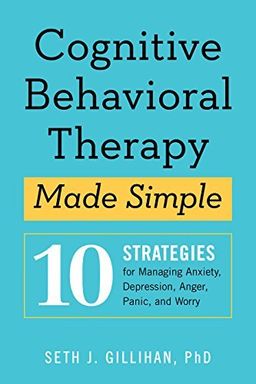
Why does your mind so easily spiral into anxiety or self-doubt—and how can you stop it? In Retrain Your Brain: Cognitive Behavioral Therapy in 7 Weeks, psychologist Dr. Seth Gillihan invites readers on a practical journey to take back control from anxious and depressive thinking by learning evidence-based techniques from Cognitive Behavioral Therapy (CBT). He contends that you can literally retrain your brain to think and act in more helpful ways, developing self-understanding, emotional stability, and practical skills to feel better fast. The premise is both empowering and freeing: although you may not control your feelings directly, you can change how you think and what you do, which in turn changes how you feel.
Gillihan, a professor and seasoned CBT practitioner, structures his program around a seven-week framework that mirrors the therapeutic process itself—beginning with understanding what CBT is, progressing through goal setting, behavioral activation, recognizing and restructuring negative thought patterns, and culminating in confronting fears and integrating all the new skills. The book appeals to anyone wrestling with anxiety, depression, or other forms of emotional suffering, and to those who can’t access therapy but want research-backed tools for self-guided healing.
A Therapy of Empowerment
CBT began as a revolt against older schools of therapy—especially Freudian psychoanalysis—where the patient was viewed as a passive subject interpreted by the therapist. Gillihan highlights that CBT is deeply collaborative, data-driven, and focused on the present moment. You learn to be your own therapist, identifying the distorted thoughts that keep you stuck and experimenting with new behaviors to test those beliefs. The process is designed not just to analyze feelings, but to restore functioning quickly through consistent practice.
Gillihan frames CBT as both a science and an art: a blend of rigorous research (meta-analyses prove CBT more effective than medication for long-term prevention of relapse) and a deeply human process built on empathy, trust, and realistic hope. He emphasizes that the most important ingredients for success are not blind faith but three qualities: showing up, healthy skepticism, and willingness to try new things.
From Insight to Action
CBT’s power lies in turning insight into action. Many people, Gillihan notes, have had therapy before and even understood what drives their suffering—but understanding alone doesn't dissolve anxiety or depression. Instead, CBT emphasizes small daily actions and experiments that strengthen neural pathways associated with balance and resilience. In that sense, this is emotional physical therapy: every exercise builds mental muscle.
The author integrates both the cognitive and behavioral aspects—the thoughts that shape our emotions and the behaviors that reinforce our state of mind. The workbook exercises make this connection tangible: you chart your days, identify triggers, and track how your actions influence your mood. As you practice, you begin to see emotions as temporary results of learned habits rather than unchangeable traits.
Why the Seven-Week Framework Works
Gillihan’s seven-week structure reflects the concise yet potent nature of CBT as a short-term therapy, typically lasting around 10–15 sessions. Each week builds on earlier lessons, combining education, self-assessment, and structured exercises. Early weeks focus on goal clarity and getting re-engaged with life—the behavioral activation that counteracts withdrawal and low motivation. Mid-program, you learn to monitor and question negative thoughts driving anxiety and depression, and later weeks tackle advanced applications like effective time management and systematic exposure to fears.
The step-by-step approach is meant to be accessible even when energy or concentration is low—targeting exactly those readers most in need of gentle structure. This is where Gillihan’s empathy stands out: his writing anticipates the fatigue, hopelessness, and ambivalence common to depression, encouraging small wins rather than perfection.
The Human Element
In recounting patient stories—Ted frozen on a bridge, Mel terrified of dogs, or Alex overwhelmed by guilt—Gillihan shows that changing how we respond to our internal dialogue can feel miraculous. But he also normalizes struggle: if an exposure exercise feels hard or a thought record doesn’t “work,” that’s part of the learning. CBT is not about eradicating anxiety; it’s about increasing your tolerance for discomfort and your confidence in handling it. The underlying message is profoundly compassionate: you are not broken; your brain has simply learned unhelpful patterns that can be unlearned.
As you move through the techniques—goal setting, behavioral activation, thought challenging, and exposure—Gillihan weaves in mindfulness, acceptance, and practical self-care. By the book’s conclusion, you’re equipped not only to manage anxiety and depression but also to live more intentionally. In essence, the book is both a manual for emotional self-repair and a philosophy of human agency: that each person, with consistent practice, can retrain their brain to find peace and purpose again.