
Idea 1
India’s Growth Ambition and Its Institutional Trap
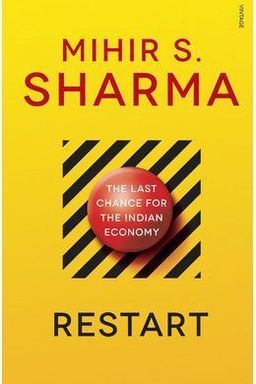
Why does a country that can build Delhi’s magnificent Terminal 3 still struggle with flyovers that jam traffic within a kilometre? In his analytical journey through India’s modern economy, the author argues that the core obstacle to Indian prosperity is institutional weakness—not a lack of ambition, capital, or technology. India can build things, but not systems. The book traces how political incentives, bureaucratic inertia, and misplaced moral zeal repeatedly convert opportunity into underachievement.
The hidden architecture of failure
Each crisis or missed chance—whether in infrastructure, jobs, or investment—reveals the same pattern. Projects get announced, land acquired, resources allocated, yet the administrative machinery collapses under its own rules. A flyover serves the wrong lane; a port adds capacity in the wrong dock; regulators certify unsafe factories. The book insists that India’s core constraint is not paperwork but people: thinly staffed agencies, weak coordination, and institutions without credibility. Cutting forms without building capacity produces cosmetic reform.
The demographic and industrial mismatch
India enters the 2020s with its youth bulge unprecedented—13 million new job-seekers every year. But because factories never scaled, young workers flood cities only to end up in unstable service jobs. Labour laws designed to protect workers instead make employers fearful of hiring. The result is a patchwork of tiny firms too small for export competitiveness and millions in informal work. The author shows how rigid employment rules, the cultural stigma toward manual labour, and urban housing shortages combine into a quiet jobs crisis. Without flexible labour and housing markets, the demographic dividend becomes a demographic bomb.
Politics and paralysis
From Mumbai’s rentier politics to New Delhi’s bureaucratic caution, the book explores how governance substitutes process for purpose. Mumbai’s Shiv Sena transformed an industrial city into a real-estate economy by mixing identity politics with land patronage. Across India, planners and officials fear accusations of corruption more than failure itself. The Coalgate and telecom cancellations demonstrate how “moral panic” turns governance into paralysis: civil servants avoid signing files, investors flee, and policymaking freezes. Fear of corruption proves more destructive than corruption itself.
Reform that never finished
The book revisits 1991—the supposed moment of liberation—and reveals its incompleteness. The shift to market pricing covered trade and goods but left land, labour, and capital hostage to old laws. Every subsequent boom, such as the 2004–2011 investment surge, collapsed on these unfinished foundations. Public–private partnerships failed because contracts were unclear and the state lacked capacity to manage disputes. Cheap coal, spectrum, and land fueled cronyism instead of competitiveness. Each cycle ended the same way: scandals, stalled projects, and distrust between government and business.
What still works—and what must change
Yet, the story is not hopeless. The author points to clear levers: transparent prices for resources, active reform in factor markets, genuine accountability in bureaucracy, and social investments in sanitation and women’s labour. Clean water and toilets improve cognitive outcomes and female workforce participation—a reminder that social infrastructure underpins economic growth. Cities built for workers, not just for offices, and policies that prize competence over connection could convert India’s latent energy into durable prosperity.
Core insight
India’s challenge is to evolve from a nation that improvises toward one that institutionalizes—to replace fragile workarounds with systems strong enough to absorb ambition. The book’s argument is simple but profound: real reform begins when you stop blaming paperwork and start building capability.