
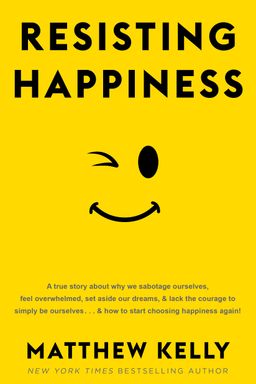
Resisting Happiness cover

Resisting Happiness

by Matthew Kelly

Resisting Happiness by Matthew Kelly explores how we often sabotage our own happiness and offers a guide to overcoming negativity. Drawing from personal experiences, Kelly shows happiness is a choice that requires defeating resistance and embracing meaningful living.

Resisting Happiness: The Battle for Joy and Purpose

Have you ever wondered why it’s so hard to do what you know is good for you? In Resisting Happiness, Matthew Kelly explores that universal tension between desire and discipline—the strange pattern where we resist the very things that make us happy. He argues that every person wages a daily war against an invisible enemy he calls Resistance: the force that keeps us from becoming who God created us to be. Happiness isn’t something we stumble upon, Kelly insists—it’s something we must fight for.

Drawing on stories from his own spiritual awakening, Kelly contends that true happiness comes from aligning our lives with God’s dreams for us. We often chase fleeting pleasures—money, comfort, success—but what we actually crave is purpose, grace, and lasting joy. To get there, we have to recognize and overcome resistance in all its subtle forms, from procrastination to fear.

The Core Argument: Resistance Blocks the Road to Happiness

Resistance, Kelly writes, shows up in small choices—like hitting the snooze button instead of waking up early, or skipping prayer for the sake of convenience. It’s not just laziness or fear; it’s a force that lures us into mediocrity, keeping us from excellence. He compares it to a dragon that must be slain daily. Like Steven Pressfield’s concept in The War of Art, Kelly’s resistance is spiritual as well as psychological—it’s Satan whispering excuses, fear, and self-doubt to steer us from our mission.

Kelly teaches that acknowledging resistance—and naming it—is the first step toward defeating it. Once you label that hesitation or apathy, it loses its power. This insight immediately reframes everyday struggles: it’s not that you’re lazy or undisciplined, but that you’re under siege. Every moment becomes a choice—submit to resistance or break through toward joy.

Happiness as a Spiritual Calling

For Kelly, happiness isn’t merely an emotional state; it’s alignment with divine purpose. His thesis is unapologetically theological: God is happiness itself. When we resist happiness, we’re resisting God. Fulfillment doesn’t come from gratifying the senses but from holiness—the daily practice of becoming, as Kelly often puts it, “the best version of yourself.” This echoes St. Augustine’s line: “Our hearts are restless until they rest in You, Lord.”

The author’s own story is woven throughout as living proof. As a teenager, he felt a deep restlessness despite worldly success. Then, a mentor named John invited him to stop by a church for ten minutes of prayer each morning—a small act that rerouted his entire life. Those simple encounters with God unlocked peace and purpose, teaching him that joy doesn’t depend on circumstances but on surrender. Kelly’s life became a pilgrimage toward God, filled with moments of resistance and renewal.

Ordinary Practices, Extraordinary Transformation

Kelly presents eight concrete spiritual habits—belief, prayer, service, daily Mass, fasting, Bible reading, reconciliation, and mindfulness—that anchor happiness in ordinary life. These habits are simple yet demanding, and he warns that resistance will fight them at every turn. But he promises transformation for those who persevere. Happiness, in his model, is the byproduct of grace experienced through habit and discipline.

“Resistance stands between you and happiness. You have to break through resistance in order to accomplish even the smallest tasks.” — Matthew Kelly

Kelly’s approachable prose and honest vulnerability make the spiritual journey relatable. He confesses his own failures—his arguments, doubts, even unhealthy relationship with food—to remind readers that holiness is a gradual process, not an instant transformation. Life is messy, he says, but God works in the mess, not apart from it. Every small act of faith is a battle won against resistance and a step closer to divine joy.

Why These Ideas Matter

Kelly’s philosophy transcends religion—it’s a universal call to awareness and courage. He shows how resistance damages marriages, careers, creativity, and community by promoting comfort over conviction. In a distracted world obsessed with productivity and pleasure, he invites you to reclaim interior freedom, gratitude, and spiritual excellence. His message resonates with anyone tired of living passively, yearning for purpose.

In Resisting Happiness, Kelly delivers a roadmap for living with clarity and joy: recognize resistance, cultivate spiritual habits, embrace suffering with grace, and surrender to God’s will. It is both confessional and instructional—a deeply personal exploration that culminates in a universal truth: your happiness, holiness, and destiny are intertwined. And the only thing holding you back is resistance itself.


Recognizing and Defeating Resistance

Matthew Kelly opens his book describing one simple act: hitting the snooze button. That small moment, he argues, reveals the heart of resistance—the invisible force that sabotages our happiness and potential. Resistance isn’t an external obstacle; it lives inside us, whispering excuses like “later,” “I’m too busy,” or “I’ll start tomorrow.” Understanding this force is essential because it’s the barrier between who we are and who we’re meant to become.

The Nature of Resistance

Resistance manifests in countless forms: procrastination, fear, doubt, guilt, and distraction. It’s spiritual and psychological entropy. Kelly compares it to a dragon that must be slain every morning. It keeps you from prayer, meaningful work, and even genuine relationships. He writes, “Resistance hates action. It doesn’t want you to pray, grow, forgive, or serve—it wants you to stay comfortable.” The key is recognition: once you name resistance, it loses power. Naming the enemy reveals that laziness or fear isn’t personal failure—it’s the universal human condition.

A Daily Battle

Kelly’s antidote is consistency. Resistance is never defeated once and for all; you must face it daily. Even he, a prolific speaker and writer, admits to wrestling with avoidance while writing his books. His honesty helps readers see that resistance doesn’t vanish with success—it evolves. He celebrates each small victory—getting up, writing a paragraph, saying a prayer—as spiritual triumphs. Like Pressfield’s artists in The War of Art, Kelly’s heroes are ordinary believers who overcome the temptation to do nothing.

Turning Awareness into Action

To defeat resistance, Kelly advises developing awareness through reflection. At the end of each day, notice where resistance appeared: excuses, self-doubt, distraction. Write it down. Awareness brings mindfulness, and mindfulness empowers choice. When we act despite resistance—praying, forgiving, working diligently—we experience mastery and peace. Kelly reassures, “Once you know you can beat resistance, that knowledge becomes very powerful.”

The Spiritual Dimension

Kelly frames this battle as a spiritual one, aligning it with St. Paul’s struggles and Christian theology: resistance is the villain; you are the hero. Slaying resistance is not self-help bravado—it’s spiritual warfare for joy. Each small act of courage invites grace and transforms ordinary moments into sacred victories. Awareness, persistence, and faith become the sword, shield, and armor of the happy person.


Spiritual Habits That Transform

One of the most practical sections in Resisting Happiness unveils Kelly’s eight foundational spiritual habits. These practices, taught to him by his mentor John during what he calls “The First Intervention,” serve as a blueprint for a life rooted in purpose. Kelly insists that holiness is not accidental—it grows from habit. The habits anchor us to God, helping us slay resistance through daily action.

Eight Habits for Spiritual Vitality

  • Believe: Have faith that holiness is possible and that every choice brings you closer to becoming your best self.
  • Ten Minutes a Day: Create a daily prayer habit by spending quiet time with God.
  • Hour by Hour: Dedicate each hour to God as a prayer, turning ordinary work into sacred service.
  • Feed Your Mind: Read Scripture and spiritual texts regularly.
  • Serve Powerfully: Find ways to help others and focus on generosity.
  • Mass: Attend weekday Mass whenever possible to deepen understanding of the Eucharist.
  • Fasting: Practicing denial in small ways builds self-control and spiritual strength.
  • Reconciliation: Confess sins regularly for reflection and healing.

These habits may seem simple, but Kelly repeatedly emphasizes: simplicity is where grace begins. Holiness is ordinary—washing dishes, studying, working—all can become prayer when offered consciously to God. This everyday spirituality echoes Brother Lawrence’s Practice of the Presence of God, infusing divine purpose into daily life.

John’s Gift of Discipleship

Kelly’s friendship with John reveals the ripple effect of mentorship. John led him through these steps, embodying “spiritual coaching.” Their relationship illustrates that discipleship—one-on-one guidance—is vital for growth. Later, John becomes a priest, dedicating his life to guiding others, teaching that holiness spreads through friendship and accountability.

Living Habitually Holy

Each habit strengthens virtue and weakens resistance. Kelly urges building one habit at a time, as saintly excellence is cumulative. Prayer fuels awareness; fasting builds willpower; service cultivates love. Over time, the habits form a spiritual architecture—stable, humble, and transformative. They show that becoming the best version of yourself isn’t magic or mood—it’s habit by habit surrendering to grace.


Finding Joy in Life’s Messiness

“Life is messy,” Kelly confesses. That simple phrase anchors an honest meditation on suffering, brokenness, and divine mercy. Through personal stories—his cancer diagnosis, confessions of loneliness, and encounters with struggling strangers—Kelly demonstrates that God doesn’t stand apart from our mess; He joins us in it.

The Hidden Battles

Kelly recalls how his grandmother’s advice—“Be kind, because everyone you meet is fighting a hard battle”—reshaped his worldview. Every person carries unseen anguish. Once we recognize this, compassion replaces judgment. Quoting Jesus’s words from the cross, “Father, forgive them; for they know not what they do,” Kelly urges readers to adopt mercy as a daily posture.

Entering the Mess

Our culture avoids pain, but Kelly insists on entering it. He shares stories from prayer requests received at Dynamic Catholic—families battling cancer, betrayal, and addiction—to illustrate how ordinary people endure extraordinary suffering. In each, he sees God working through human compassion. We find meaning not by escaping pain but by serving through it.

Hope and Resistance

Resistance thrives in discouragement. It convinces us our efforts are futile. Kelly counters with a timeless truth: action—even small action—restores hope. “Resistance hates action,” he repeats. Serving others, praying for someone, or confronting one personal flaw breaks the paralysis of despair. Hope, then, becomes rebellion against resistance.

God in the Ordinary Suffering

Kelly’s vision of mercy reflects Henri Nouwen’s belief that compassion means “being with others in their pain.” God entered the world’s mess through the manger and the cross to teach us divine empathy. Life’s mess won’t vanish, but through grace we can transform it into holiness. In every moment of chaos, we can whisper to ourselves: “Life is messy, but God works in the mess.”


The Power of Gratitude and Excellence

Two recurring themes in Kelly’s reflections are gratitude and excellence—the twin pillars of vibrant living. Gratitude grounds us in the present; excellence stretches us toward growth. Together they form a framework for lasting happiness.

Gratitude Anchors You

Kelly recounts his young son Harry bursting into the room proclaiming, “I lucky boy!” That spontaneous joy reminds us of what gratitude feels like before the world complicates it. Gratitude, Kelly says, “anchors us to the present moment.” Without it, blessings become expectations, and entitlement rots the soul. Gratitude transforms ordinary experiences into sacred encounters—with family, work, food, and grace. This echoes the philosophies of Benedictine spirituality and positive psychology alike (see Robert Emmons’s work on gratitude).

Excellence as the Call to Greatness

Kelly’s father taught him: “Listen to your coach. Nobody achieves excellence at anything without coaching.” This lesson became a metaphor for spiritual growth. Excellence in faith, like excellence in sport, requires coaching, accountability, and constant improvement. He laments that mediocrity has infected Catholic culture—people attend Mass passively instead of striving for holiness. The cure? Seek spiritual mentors, confess regularly, aim for excellence in serving and loving.

The Joy of Striving

Excellence doesn’t mean perfection; it means wholehearted pursuit. Kelly connects striving for excellence and gratitude as two expressions of love for God. When we give our best and thank Him for every opportunity, happiness flows naturally. We cannot be excellent without gratitude, nor grateful without striving toward excellence. Together, they sanctify the ordinary and lead us closer to God’s version of happiness.


Discovering Your Mission and Letting Your Light Shine

Kelly concludes his book with a stirring call to action: you are made for mission. You aren’t here merely to consume, but to contribute—to serve powerfully and let your light shine. Echoing Matthew 5:16, he insists that each person has unique gifts designed for a divine purpose. Happiness and fulfillment come only when you live that mission.

From Comfort to Contribution

We often drift into comfort, mistaking leisure for joy. Kelly warns that comfort without purpose leads to emptiness. “God didn’t create us to be served; He created us to serve.” True joy emerges when we use our talents for others. He recounts two moving stories: an elderly homebound woman who rediscovered purpose by writing letters with books to inspire hundreds, and an entrepreneur who realized his gift was generating wealth to fund ministry. Both answered their call by serving through their talents.

Availability and Surrender

God doesn’t choose based on perfection—He looks for availability. Kelly quotes Saint Ignatius: “There are very few people who realize what God would make of them if they abandoned themselves entirely into His hands.” Resistance keeps us from surrendering fully to God. But once we do, He transforms the ordinary into extraordinary. Each act of openness—prayer, service, forgiveness—becomes collaboration with divine creativity.

Letting Your Light Shine

We are each a reflection of God’s light. Resistance and fear tempt us to hide that light under the bushel of doubt or comparison. Kelly tells readers not to worry about lacking others’ talents; God gave you exactly what you need for your mission. When you serve powerfully and courageously, you illuminate others and glorify God. This is the essence of resisting happiness: stop resisting your call, step into your light, and let it shine boldly.

Dig Deeper

Get personalized prompts to apply these lessons to your life and deepen your understanding.

Go Deeper

Get the Full Experience

Download Insight Books for AI-powered reflections, quizzes, and more.