
Idea 1
Building Resilience: Turning Rejection and Criticism Into Fuel for Success
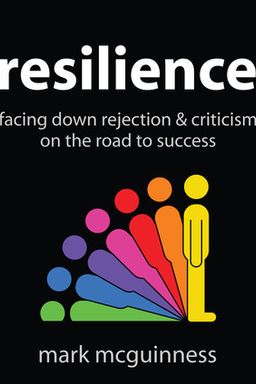
What do you do when you’ve poured your heart into something only to have it dismissed, ignored, or torn apart? In Resilience: Facing Down Rejection and Criticism on the Road to Success, coach and poet Mark McGuinness argues that the ability to recover from setbacks—what psychologists call resilience—is what separates achievers from quitters. Success, he insists, isn’t just about talent or opportunity; it’s about learning to handle the sting of rejection and the burn of criticism without losing your drive.
McGuinness draws on decades of coaching creative professionals—artists, entrepreneurs, performers, and leaders—to show that resilience is a learnable skill. His approach blends psychological insight, mindfulness practice, and practical strategy, making the book a survival kit for anyone who dares to pursue meaningful work. The challenge, he writes, is universal: if you create, compete, or care deeply about your craft, rejection and criticism are inevitable companions on your journey. What matters is how you respond.
The Guardians at the Gate
In the first chapter, McGuinness uses the ancient image of temple guardians in Kyoto to illustrate the fear that greets anyone attempting something new. Those who shrink from rejection or scathing feedback fail the entry test; those who walk through the gate learn that fear is a signal of growth. These twin forces—rejection and criticism—are not meant to destroy you, but to test if you’re ready for the path you’ve chosen. They are the price of creation and the toll for ambition.
He argues that the scale of our dreams often mirrors the intensity of our fears: the bigger the dream, the bigger the pressure. This tension isn’t a flaw—it’s a sign that you’re aiming for something that actually matters. Like an athlete learning to thrive under pressure or a performer stepping on stage, you grow by leaning into discomfort rather than escaping it.
Why Pain Feels Personal
McGuinness explores why rejection and criticism cut so deeply. Humans evolved to depend on their tribes for survival. Being rejected once meant expulsion from safety; public criticism could signal loss of status and resources. That primal alarm still rings in our brains. When an artist’s work is dismissed, or a professional’s idea is ridiculed, their nervous system reacts as though their very survival is threatened. It’s not weakness—it’s biology.
But because pain and purpose occupy the same territory, the hurt also points to meaning. “If it stopped hurting,” McGuinness writes, “it would mean you’d stopped caring.” The solution isn’t numbing yourself but strengthening your ability to recover—expanding your range for discomfort without losing focus.
Making It Worth Dying For
At the heart of the book lies an existential challenge: if you’re going to expose yourself to rejection and criticism, make sure you’re doing it for something worth the pain. This doesn’t mean courting martyrdom—it means choosing goals aligned with your deepest values. McGuinness lists ideals like justice, generosity, achievement, inspiration, or wisdom as possible sources of purpose. When you’re anchored to a mission that feels intrinsically important, temporary rejection feels survivable because it sits within a larger story.
He illustrates this through his own loves: poetry and coaching. Poetry gives him joy but attracts constant rejection; coaching fuels his daily life but requires thick skin. What unites them is meaning. “When you have something worth dying for,” he says, “you already have the reason to keep living for it.”
Resilience as Practice, Not Personality
Resilience isn’t innate; it’s cultivated like muscle. McGuinness compares it to mindfulness—a steady presence that grows stronger with daily training. His “twenty minutes of sitting still” exercise shows that simple attention to breath and sensation can calm the nervous system, helping you face criticism with composure instead of panic. Mindfulness, he argues, doesn’t erase pain but transforms your relationship with it. It gives you a small but vital pause between stimulus and response—the space in which choice lives.
(Context: This aligns with modern research on emotional regulation and stress resilience popularized in books like Jon Kabat-Zinn’s Wherever You Go, There You Are and Daniel Goleman’s work on emotional intelligence.)
Facing Rejection and Criticism Without Crumbling
The book divides into two halves—Rejection and Criticism—each exploring how to convert pain into progress. Through examples from authors rejected by publishers, artists facing public mockery, and entrepreneurs enduring ridicule before breakthroughs, McGuinness shows that rejection is not proof you lack talent. It’s a filter for persistence. Criticism, when approached wisely, is a tool for refinement. Even your harshest “inner critic,” he says, can become your best coach once you learn how to listen skeptically but kindly.
McGuinness provides practical tactics: “roll with the punches,” “laugh at yourself,” “find your tribe,” and “play the numbers game.” These are not gimmicks but mindsets—ways to stay in motion when circumstances try to freeze you. Each principle reinforces a single truth: resilience is less about being tough and more about staying open, curious, and playful in the face of difficulty.
Redefining Success and Failure
Ultimately, McGuinness reframes how we define success. It’s not about “winning,” but about continuing—returning to the field each time life pushes you down. Success, ironically, brings its own challenges: fear of losing credibility, fear of selling out, and the constant temptation to protect ego instead of growing further. The book closes with a powerful metaphor from Japanese culture: leaping from the temple of Kiyomizu-dera—a call to leap before you feel ready, trusting resilience to carry you through the fall.
“Sooner or later, you will have to expose yourself to rejection and criticism—and find ways to face them down and move forward regardless.”
In sum, McGuinness delivers a clear message: You can’t avoid pain on the way to doing work that matters. But with the right mindset, that pain becomes the raw material for growth. Resilience is both shield and compass—the skill that lets you not only survive rejection and criticism, but emerge wiser, steadier, and more fully yourself.