
Idea 1
Resetting Your Life from the Inside Out
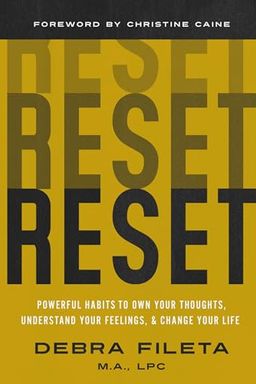
When was the last time you felt stuck—caught in the same patterns no matter how hard you tried to change? In Reset, licensed counselor and author Debra Fileta invites you to step off the treadmill of surface-level behavior change and go deeper. She argues that lasting transformation—spiritual, emotional, mental, and even physical—must begin from the inside out. You can’t “duct tape” unhealthy habits or negative emotions and expect them to heal; you must address the crossed wires beneath the surface. Her message is both practical and spiritual: true healing happens when we understand how our thoughts lead to feelings, and our feelings lead to behaviors.
Fileta offers 31 practices, one for each day of a month-long journey, guiding you to pause, reflect, plan, and reset. Each practice blends psychological principles with biblical truth, connecting proven therapeutic techniques to the wisdom of Scripture. Her goal isn’t a self-help quick fix but a sustainable rhythm of renewal—and she makes it clear that change is not a one-time event but a lifelong process of resetting and realigning with God’s truth.
The Core Message: Change Starts Beneath the Surface
At the heart of Reset lies the conviction that external change requires internal awareness. Fileta explains that most of us try to improve our lives by modifying behavior—waking up earlier, reading more, eating less, working out—but we inevitably relapse into old habits because we haven’t understood why we act the way we do. She compares this to duct-taping a broken car window rather than repairing the underlying wiring. Real change, she says, happens when we move from the outside in: from behavior to feeling to thought. Her counseling experience reveals that once clients understand the thoughts–feelings–behaviors sequence, they can finally turn off the autopilot and steer intentionally. Thought change leads to life change.
A Spiritual-Psychological Approach
Unlike many secular approaches that stop at cognitive reframing, Fileta argues that ignoring God’s role in transformation leaves healing incomplete. Citing Romans 12:2 (“be transformed by the renewing of your mind”), she integrates Christian faith into psychological process. Each practice becomes a spiritual discipline—pausing, acknowledging, praying, expecting, deciding, asking for help—not merely therapeutic but worshipful. She sees mental health and spiritual health as inseparable: our souls, minds, and bodies are deeply interwoven, and wholeness requires caring for all three.
Why a Reset Matters Today
In a world addicted to hustle and noise, few people stop long enough to truly know how they’re doing. That’s why the book begins with Pause—a command, not a suggestion. Fileta observes that most of us drown in outer noise and inner distraction, numbed by screens, busyness, and obligations. “Pausing is the start of the work,” she writes, because silence makes space for God to speak. From there, she teaches readers to expect something new from God, to own their junk through honesty, and to acknowledge uncomfortable emotions and past wounds.
The book’s 31 chapters cover an ambitious but structured journey through emotional, mental, and spiritual reset. Early chapters are introspective—naming unhealthy habits, exploring mental patterns, confronting cognitive distortions, facing childhood pain—while later chapters build practical systems for living differently: planning for change, resting, setting boundaries, practicing soul-care, and connecting with others. Throughout, Fileta’s therapist’s empathy and Christian conviction shine in warm, story-driven prose. Her anecdotes—from a car with crossed wires to a surgeon husband’s patience to stories of clients like Hannah, Carla, and Brett—humanize complex psychological truths.
The Power of Practice
A defining feature of Reset is its emphasis on daily practice. Each chapter ends with practical exercises: journaling prompts, prayer reflections, and behavioral steps. Fileta calls these practices “habits of inner work,” insisting that willpower alone can’t create transformation—it’s “the power of your practices.” This echoes the ancient spiritual disciplines discussed by authors like Richard Foster (Celebration of Discipline) and Dallas Willard (The Spirit of the Disciplines), but with therapeutic precision shaped by modern counseling. She bridges science and Scripture—neuroplasticity meets spiritual renewal—and shows that practice rewires the brain and reshapes the heart.
From Awareness to Action
Fileta maps change as a progressive journey: awareness (pause), acceptance (acknowledge), preparation (plan), and active reset (live differently). This mirrors behavioral psychology’s “stages of change” model—pre-contemplation, contemplation, preparation, action, maintenance—which she explicitly connects to Christian living. The process begins with humility—admitting what’s broken—and moves toward faith-filled participation with God’s healing. The “reset” becomes a rhythm of life: whenever old patterns reemerge, we can pause, examine, and choose to respond differently.
Why It Matters
In a culture that prizes performance and outward productivity, Reset challenges you to slow down, face your inner reality, and embrace healing as holy work. Drawing from both counseling science and biblical truth, Fileta reframes growth not as striving but as response—the practice of tuning your mind, body, and spirit back to God’s design. Whether you’re battling anxiety, burnout, broken relationships, or spiritual apathy, her message is simple but profound: change is possible, but only when you dare to stop, look in, and reset from the inside out.