
Idea 1
Building a Thriving Anywhere/Anytime Culture
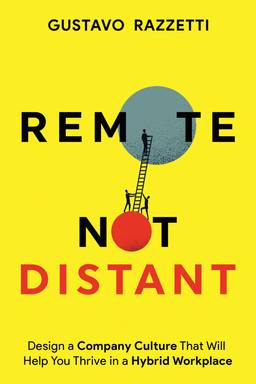
Have you ever wondered if a team can truly feel connected when everyone’s working from different places? In Remote, Not Distant, Gustavo Razzetti shares a resounding “yes.” He argues that the best organizations of the future aren’t those clinging to offices—they’re the ones learning to build an Anywhere/Anytime Culture. Culture isn’t about the physical presence of people—it’s about how people think, feel, and act together, no matter where they are.
Razzetti’s central claim is simple but revolutionary: You don’t need an office to have a strong culture. Thousands of leaders suspected that physical offices were the glue of collaboration, but the pandemic proved otherwise. When people went home, many teams not only survived—they thrived. Productivity increased, creativity rose, and flexibility became a new expectation. Yet while people adapted, many organizations didn’t. As Razzetti shows through detailed case studies and frameworks, the culture that got us here—the office-centric model—won’t get us there.
Culture Is a System, Not a Slogan
One of the book’s foundational insights is that culture isn’t just a set of slogans, perks, or values pasted on walls. It’s a living system made up of three interacting layers: the Core (purpose, values, and priorities), Emotional Culture (belonging, safety, feedback), and Functional Culture (agility, decision-making, norms). This system pulses and adapts depending on how people behave and understand what’s rewarded—and what’s punished. In other words, culture isn’t what you say—it’s what you tolerate or encourage daily. (Edgar Schein’s organizational theory strongly influences Razzetti’s view.)
The Hybrid Revolution Has Arrived
According to Razzetti, the pandemic accelerated the evolution of work into a hybrid reality—a spectrum that includes fully remote, fully office-based, and every mix in between. The real opportunity isn’t just where we work but how intentionally we design collaboration, belonging, and purpose. Apple’s misstep in mandating three office days showed how easily old thinking clashes with new expectations. Employees want flexibility, autonomy, and meaningful connection—not a return to old norms disguised as progress.
To help teams adapt, Razzetti offers a roadmap: five critical steps to design a culture fit for the hybrid age—Reset, Reimagine, Reignite, Rethink, and Release. Each step shifts the focus from nostalgia about the office to creating systems that support collaboration and belonging virtually.
Why Culture Matters More Than Ever
Research cited in the book underscores that culture directly drives performance. Organizations with healthy foundations outperform benchmarks like the S&P 500 index, showing nearly double growth. Culture amplifies strategy—it doesn’t replace it. Razzetti warns that leaders who romanticize their pre-pandemic identity risk decay; culture must evolve alongside people’s realities. It’s dynamic, co-created, and human-centric. The goal is not perfection but progress through experimentation.
The Human-Centered Future of Work
Ultimately, Remote, Not Distant reframes what success looks like in the modern workplace. A thriving anywhere culture meets three fundamental human needs—autonomy (to choose how you work), belonging (to feel part of something meaningful), and purpose (to understand why your work matters). These aren’t “soft” values—they’re the drivers of innovation, adaptability, and motivation. As Airbnb’s Brian Chesky says, “The best thing for shareholders is for society to want us to exist.” That sentiment captures Razzetti’s vision: the future belongs to organizations that serve humanity, not hierarchy.
Through research, real-world examples, and actionable tools like the Culture Design Canvas, Razzetti gives leaders and teams a playbook for designing culture intentionally—not by default. The coming chapters expand on how to reset outdated ways of working, reimagine shared futures built on purpose, reignite belonging through safety and rituals, rethink collaboration around asynchronously smart systems, and release agility through trust and freedom. In short, it’s a call to build workplaces that are remote but never distant.