
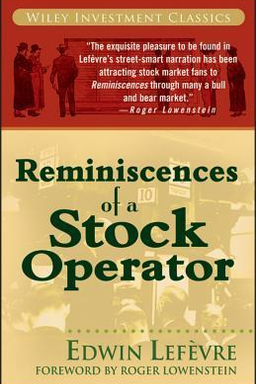
Reminiscences of a Stock Operator cover

Reminiscences of a Stock Operator

by Edwin Lefevre

Explore the trading world of Jesse Livermore through the lens of Larry Livingston, uncovering strategies, psychological challenges, and invaluable lessons in market behavior. This classic offers insights to both novice and seasoned traders, emphasizing discipline and self-reliance.

The Market Talks in Prices, Not Stories

Why do most traders lose while a few accumulate fortunes? Reminiscences of a Stock Operator—Edwin Lefèvre’s portrait of the legendary Jesse Livermore (fictionalized as Larry Livingston)—answers that question through a lifetime of mistakes and rediscoveries. Its central argument is that markets reveal themselves first in prices and volume, not in news or reasoning. If you learn to read that immediate expression—the tape—you acquire the only reliable edge in speculation.

The book unfolds as both autobiography and manual. It follows Larry from bucket-shop prodigy to Exchange operator and then through bankruptcy, redemption, and reflection. Each stage teaches that speculation is an intelligence game where discipline, patience, and self-command matter more than any secret tip. Over time you learn to think in probabilities, detect crowd psychology in price behaviour, and act without stories to comfort you.

From tape-reading to trend recognition

Early chapters show Livingston’s education in “reading the tape.” At Cosmopolitan bucket shop he watches quotations spooled from a telegraph and spots how collective buying or selling repeats in recognizable rhythms. That habit—treating prices as clues rather than commentary—builds muscle memory for action. News, dividends, and broker gossip arrive hours late, when the real chance has passed. (Note: This principle parallels modern quantitative trading, where behavior precedes explanation.)

Price action, not opinion, tells you when the market’s mood shifts. Larry’s maxim—"Your business with the tape is now, not to-morrow"—means you act on what the tape shows, not what stories predict. Even when his reasons seemed sound—like expecting a drop before a dividend announcement—the delay in brokerage executions taught him that timing and venue define reality.

Speculation versus investing

Lefèvre contrasts speculators and investors to clarify the inner game. Investors seek long-term value through fundamentals. Speculators study crowd movement and general conditions. You cannot play both at once. If you buy a stock for a quick trend but justify it as a long-term investment when it falls, you have already lost discipline. Speculators profit from trend and timing; investors from endurance. Mislabel yourself and confusion follows.

Psychology, patience, and capital management

Later chapters transform these tactical lessons into character lessons. Being right about direction means little if you lack patience to hold through corrections. Livingston’s greatest regret is cutting profits prematurely—what he calls failing to sit tight. Old Partridge’s constant reminder, “This is a bull market,” expresses the same wisdom: don’t trade the wiggles when the tide is running. Emotional interference—fear, tips, or gratitude—dissolves conviction faster than error analysis ever fixes it.

Speculation, he learns, must align mind with method. The “line of least resistance” describes how prices travel where buying or selling faces least opposition. You start small, test direction, and only enlarge after confirmation. The arithmetic protects you from fatal overconfidence and ensures your capital compounds along proven movement, not hunches alone.

Human traps: persuasion, favors, and domestic pressure

Several episodes—Percy Thomas’s cotton folly, Williamson’s well-meaning check, and the sable coat gambles—show how social forces ruin discipline. Charismatic advice replaces self-testing; gratitude ties hands; personal cash needs turn speculation into gambling. Livingston’s story makes these moral, not merely technical, errors. He sells profitable wheat to protect a cotton fantasy, trades to buy coats, and obeys benefactors against his better judgment. Every loss teaches that emotion disguised as decency or urgency costs more than a bad market call.

Resets and survival

After collapse Livingston discovers that bankruptcy, while humiliating, restores mental peace. Free from creditors, he starts right—a small stake, deliberate patience, six weeks of study before his Bethlehem Steel entry. That disciplined restart converts ruin into recovery. By waiting for the psychological moment (a break above par) and adding only after proven strength, he reestablishes method over emotion.

Manipulation, tips, and the unexpectable

As his career matures, Larry observes manipulation—the market advertising used by syndicates like James R. Keene. Understanding how activity and publicity shape demand allows him to avoid traps, not resent them. He also learns that politics can upend logic: his coffee campaign during wartime fails due to a Price Fixing Committee’s intervention. Regulation adds a category of risk beyond precedent—the "unexpectable." It teaches humility before forces beyond tape reading.

Ultimately, Reminiscences isn’t about winning trades but about cultivating judgment. The market rewards disciplined thinking, independent conviction, and emotional control under uncertainty. Price tells truth first; stories follow after profit is gone.

Core message

Trade your own observation, not borrowed conviction. Master patience, sizing, and self-command. In a world full of tips and noise, the tape is your only honest reporter.


Reading the Tape Properly

Tape-reading means seeing the market as it truly acts, not as it is discussed. To read the tape you interpret succession of prices as continuous sentiment flow. Each tick records buying or selling pressure and the crowd’s emotional temperature. Lefèvre’s trader learns that rumor, rationalization, and printed reasons arrive too late. The tape is your real-time truth.

How to read what matters

Follow recurring behaviour. Larry kept a mental “dope book” tracking repetition—the way particular stocks rose on specific volumes or failed to react to good news. This habit replaces listening with watching. When the tape prints higher lows despite bearish headlines, demand outweighs fear. When volume increases without price advance, distribution is beginning. You read action, not explanations.

Venues and execution pitfalls

The Cosmopolitan bucket shop taught him that even mechanical details—how telegraph clicks transmit prices—change what the tape means. In May 1901 he was correct about a pending break but lost because his broker executed late. This created a disastrous lag between tape observation and market reality. The practical lesson: understand your quote source and how quickly you can act on it. (Modern parallel: latency and execution slippage remain decisive in digital trading.)

Livingston’s shorthand

“Your business with the tape is now—not to-morrow.” Act on evidence you can see; explanations belong to historians.

When you anchor judgment directly to printed prices and volume, stories lose power. You learn to buy when the market tells you, not when columnists justify why it moved yesterday. This shift—from narrative to observation—is the book’s foundation for all later mastery.


Speculation as a Discipline

Speculation is not guessing. It is organized decision-making under uncertainty. Lefèvre’s narrator explains that being a speculator means studying general market conditions and exploiting swings for profit—not clinging to long-term value. Confusing speculation and investment leads to contradiction and emotional errors.

Separating the games

Investors build wealth slowly through dividends and fundamentals. Speculators aim to capture movement. The investor accepts daily noise; the speculator trades it. Larry admits he is a speculator, which frees him from pretending to value permanence. His job is reading sentiment and timing opportunity. The critical question is always: Are you following a verified trend or chasing a hope?

How speculators think

You examine money supply, bank reserves, and industry conditions. In 1906–07 Larry predicts a liquidity crunch from railroads’ installment financing and acts bearishly. His study of broad conditions, not single tips, delivers profits. Speculation demands systemic awareness—recognizing when the tide changes in all stocks, not one name.

Practical creed

Stay aligned with the market’s main swing. Buy when the majority are buying but only early before enthusiasm peaks; sell when conditions turn heavy. Never let prospectuses or “exclusive facts” override tape-confirmed direction. Trade for trend, not talk.

Once you accept that speculation is timing, sizing, and self-mastery, not intelligence contests, you stop confusing patience with paralysis and speculation with gambling. You become deliberate, not impulsive.


Patience and the Art of Sitting Tight

Being right about direction is easy; staying right long enough to profit is rare. Lefèvre turns this simple truth into a law: large fortunes come from holding a correct position through its full swing. “Sitting tight” bridges the gap between correctness and wealth.

Why sitting tight matters

Impatience kills compounding. Traders book small profits to feel smart but forfeit major gains. Larry once made four points where twenty were waiting. Experience teaches him that premature exit wastes insight. Old Partridge’s mantra—“This is a bull market”—means stop exploiting minor fluctuations and let the tide work.

How to develop the habit

Begin with small positions you can afford to hold. Size makes patience tolerable. Review historical precedents—keep a mental dope book—to remind yourself that corrections are normal, not fatal. Incremental testing during early profit confirms conviction; once proven, avoid daily fiddling. Sitting tight is trained conviction, not stubbornness.

Cognitive payoff

Learning to sit teaches emotional neutrality. You stop equating movement with opportunity and start equating trend with discipline. When Larry held through 1907 panic recovery, his composure converted insight into fortune. The better you master sitting, the more your success depends on patience, not prediction.

Livingston’s credo

“It never was my thinking that made the big money for me—it always was my sitting.” Thinking finds direction; discipline keeps you on it.


Controlling Risk Through Position Size

Sizing is arithmetic discipline turned wisdom. Larry calls it trading the line of least resistance: let the market confirm your idea before betting heavily. This principle of progressive commitment saves him where prediction would fail.

Start small and test

Begin with a probing stake. If the market responds favourably—price moves as expected—add progressively. If not, exit early. This self-verification method transforms each trade into an experiment. You pay little to test being wrong and much only when right. (Comparable logic appears in modern trend-following and pyramiding systems.)

Spotting the line of least resistance

Prices tend to move along routes where buying or selling faces least resistance. Breakouts across key thresholds—like Larry’s cotton trade above $1.20—signify momentum ready to compound. Observe absorption: when your selling finds eager buyers, you can exit large lines safely. When the crowd refuses supply, step back; liquidity is gone.

Timing exits

Larry sold 140,000 bales precisely when newspaper excitement created demand. Understanding market psychology transforms selling from surrender into distribution. This arithmetic approach—add on proof, exit on absorption—ensures growth via confirmation rather than hope. Your position size becomes the reflection of your balance between evidence and risk tolerance.

Follow these mechanics and speculation becomes measurable: test small, build confidence through market action, scale responsibly, and never force liquidity. You move with the market’s proven strength, not against it.


Psychological Traps and Mental Reset

The market punishes traders not only for errors but for motives. Lefèvre catalogues temptations—persuasive experts, gratitude debts, and urgent cash needs—that dismantle objectivity. Success demands independence of judgment and freedom from external pressure.

Persuasion and authority

Percy Thomas, armed with ten thousand correspondents and charm, converts Livingston from bearish to bullish in cotton. The error isn’t gullibility; it’s surrendering self-trust. Charisma replaces testing. He averages down losses, sells profitable wheat to feed illusion, and calls it his "supersucker play." Lesson: never let another man's conviction override yours; test all data independently.

Favors and gratitude

Dan Williamson’s generosity—loaning money and office—creates moral obligation that limits trading freedom. Larry feels it improper to act against benefactors. The cost is opportunity. His own principle later emerges: gratitude belongs to the man, not to the trade. If moral consideration conflicts with market judgment, ethics and speculation must remain separate.

Personal financial pressure

Trading to pay bills or buy luxuries turns strategy into desperation. The "sable coat" episode and his $200,000 emergency prove that markets cannot be forced to meet personal timelines. Urgent needs produce reckless bets. Planning your finances off-market preserves objectivity. The resolve to make the market your piggy bank is the busiest hoodoo on Wall Street.

Resetting the mind

Bankruptcy renews clarity. Free from creditors, Larry trades again with serenity. His Bethlehem Steel entry—waiting six weeks, buying near $98—embodies mental reset at work. Emotional neutrality returns power to analysis. The paradox: losing everything restores judgment.

You cannot trade well while anxious, indebted, or influenced. Freedom—financial and psychological—is prerequisite to rational speculation. Detachment, not tips, is your ultimate insurance.


Manipulation, Tips, and External Hazards

Markets are social theatres. Behind visible trades are manipulators shaping perception and regulators changing rules. Lefèvre’s mature chapters reveal how to detect these forces and survive their impact.

Understanding manipulation

Manipulators like James R. Keene move markets to distribute stock profitably. Their method is advertising via the tape: accumulate quietly, create activity, sell into public demand, support price gently on declines. Recognizing these rhythms lets you distinguish organic strength from contrived enthusiasm. Watching volume control and price steadiness exposes distribution phases.

Tip-theatre and crowd behavior

Tips are manipulation’s retail arm. Wisenstein’s dinner tip on Borneo Tin to Mrs. Livingston illustrates how charm spreads market interest. Groups amplify rumors; false exclusivity seduces the untrained. Tip-takers become drunk on borrowed conviction, thinking it removes uncertainty. The professional instead checks whether price action confirms the tip; if not, he fades it.

The unexpectable: regulation risk

Even correct analysis can fail under external shock. The coffee campaign wins on fundamentals but loses when a Price Fixing Committee caps prices. Some events are not unexpected but unexpectable—beyond history’s patterns. Regulation and politics add a hidden layer to speculation. Anticipate when public interest may override private enterprise; size accordingly.

Together these lessons teach vigilance: verify motives behind movement, distrust free information, and respect structural risk. Human psychology drives markets; human institutions sometimes stop them.

Dig Deeper

Get personalized prompts to apply these lessons to your life and deepen your understanding.

Go Deeper

Get the Full Experience

Download Insight Books for AI-powered reflections, quizzes, and more.