
Idea 1
A Promise Between Liberators and the Liberated
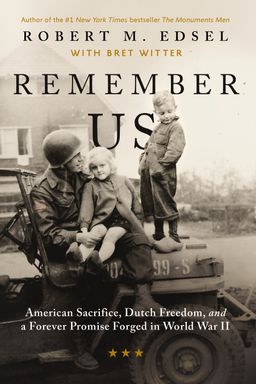
What keeps a nation’s sacrifice from fading into names on stone? This book argues that remembrance becomes durable when it is shared, lived, and organized—when logistics meet love. You watch that truth emerge at the Netherlands American Cemetery at Margraten, where some 8,200 Americans rest and about 1,700 more are inscribed on the Walls of the Missing. The heart of the narrative is a transatlantic covenant: Dutch villagers adopt American graves, and American institutions—the American Battle Monuments Commission (ABMC) and the Defense POW/MIA Accounting Agency (DPAA)—maintain a rigorous, humane system that honors every individual. Together, they fulfill a vow first expressed locally in 1946: no fallen American lies without a mourner.
Memory you can touch
You feel remembrance as a civic practice, not a holiday. Ordinary Dutch citizens—families like the van Schaïks and the Michiels van Kessenichs—tend graves, preserve photographs, and teach children to say names. Thirty thousand Limburgers gathered at Margraten on Memorial Day 1945; the following year, forty thousand returned. The grave-adoption program ensured every cross and Star of David had a human counterpart. This is not a single ceremony but a ritualized, generational commitment that began with handwritten appeals and flower drives and endures as an inheritance (Note: where many war narratives end at the armistice, this story begins its most important work after the guns fall silent).
Logistics as moral language
Behind the cherry trees and marble markers stands the American Graves Registration Service (GRS), which turned battlefield chaos into dignified certainty. You see a practical ethic in action: bodies recovered quickly but “in a most considerate manner,” dog tags documented, personal effects returned, and remains buried without regard to rank, religion, sex, or color. That system—codified in field manuals and carried out by exhausted soldiers with clipboards and shovels—became the backbone for grief itself, allowing families like Elizabeth Land (widow of Second Lieutenant John Land) to receive rings and records and to trust the story of what happened.
Human stories knit the epic
Military operations take on faces and fates. You jump with Lieutenant Colonel Robert G. Cole into Normandy; you sit in a flak-riddled B-24 over Berlin with John Low and Bill Moore; you feel the Norton twins’ first and last mission; you grieve with Jacob Herman’s Oglala Lakota mother after Nijmegen. Chaplain Paschal Fowlkes’s effects reach his wife Lib; Staff Sergeant George Peterson rests among comrades; Major General Maurice Rose lies as an equal among equals. These names become more than entries because civilians adopt their graves and write letters back to America. War’s statistics turn into relationships.
Race and the mirror of equality
The book insists you hold two truths at once: Black soldiers like Jefferson Wiggins (960th Quartermaster Service Company) and Bill Hughes (784th Tank Battalion) performed indispensable labor and courageous combat in a segregated Army—and returned to Jim Crow. At Margraten, their work dignified all the dead; in Alabama and at Camp Claiborne, they faced buses that pushed them to the back and MPs who sided with local racists. The headstones at Margraten stand in identical rows—Black beside white, general beside private—offering a visual equality that the United States had not yet achieved at home (Note: this juxtaposition echoes works on the “double victory” campaign; here, the cemetery itself becomes the argument).
Civilians as strategists of remembrance
Women and local leaders translate gratitude into structure. Emilie Michiels van Kessenich organizes “pleasant dance meetings” for exhausted soldiers, then channels letters from widows like Mabel Feil into a mass adoption program. She travels to the United States—not as a diplomat but as a mother—to collect addresses and promises: “Your son will never be alone.” Frieda van Schaïk turns private loss into public care, placing tulips on Walter Huchthausen’s grave and later her bridal bouquet, borrowing fifteen lawn mowers to prepare the grounds, and writing to American families with photographs. Their small acts become infrastructure.
Terrain, art, and the underground
You descend into the limestone galleries of Sint Pietersberg, where the Dutch move Rembrandt’s The Night Watch and other masterpieces for safekeeping. Dave (“Pappie”) van Schaïk uses geological expertise to mislead German inspectors away from militarizing the caverns, while the same tunnels and a smuggler’s hole help ferry refugees and downed airmen like John Low. The topography of resistance—maps, holes, and narrow passages—doubles as the topography of culture, where a nation shelters its soul and its people underground.
From temporary field to permanent vow
Captain Joseph J. Shomon sites Margraten on high ground near the Rijksweg; villagers and GRS teams lay corduroy roads, straighten crosses, and plant windbreaks. The Army plans for temporary interment, assuming families will repatriate remains. Yet the adoption program and local beautification alter the calculus: approximately 46 percent of the 17,738 originally interred Americans remain permanently at Margraten—higher than the global average of 39 percent. Design firms later curve marble rows around a central tower, while technicians disinter, stabilize, and reinter with tags pinned and wired so identity is never lost.
Put simply, this book teaches you that remembrance is built—by soldiers in rain and mud, by mothers with lists and lamps, by teenagers guiding airmen through hedgerows, by priests and superintendents and translators hunched over card files. It is also contested: jealousy and bureaucratic obstruction threaten to fray the fabric, but the promise holds because thousands of ordinary people keep their part. When you walk through Margraten’s rows, you don’t see a closed chapter; you see an ongoing conversation between liberators and the liberated about what the dead still ask of the living.