
Idea 1
Building Insightful Success
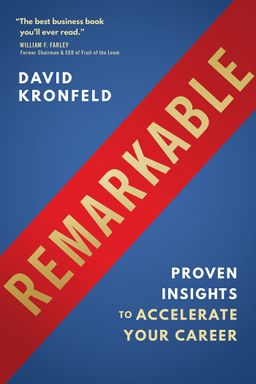
How do some professionals consistently make the right calls and advance faster, while others with equal intelligence plateau? In his book, David Kronfeld argues that the differentiator is insightfulness—a disciplined, repeatable ability to see reality clearly, analyze it correctly, and influence outcomes effectively. Insightfulness is not intuition or luck; it's a practiced craft that blends logical rigor, situational awareness, and strategic behavior.
Kronfeld’s central claim is simple but profound: career success is not only about competence, but about consistently producing correct understanding and visible results that others value. That requires more than working hard—it requires seeing what others miss, communicating that insight persuasively, and shaping the conditions for successful outcomes.
From insight to insightfulness
Kronfeld begins by defining insight as the disciplined ability to evaluate all relevant information and discern the true nature of a situation to reach a correct perspective. Insightfulness, in turn, is the capacity to do this consistently. Where others rely on occasional flashes of intuition, the insightful thinker uses methodological observation and analysis to generate reliable conclusions.
He splits this ability into two teachable dimensions: accumulated wisdom—patterns learned from experience and mentors—and situational analysis—the capacity to dissect new, ambiguous problems with analytical precision. Together, these form the foundation of Kronfeld’s career philosophy: good decisions follow from the right mental process, and that process can be learned.
A method for disciplined thinking
To make insight actionable, Kronfeld introduces a four-step method: (1) define the correct challenge precisely, (2) create directional categories of possible actions, (3) decompose those into actionable sub-steps, and (4) iterate until concrete execution. This is not a mechanical formula but a way to force completeness and clarity. He applies it to everything—from designing resumes to structuring negotiations—demonstrating how rigorous framing prevents wasted effort and confusion.
For example, in redesigning his Wharton resume, Kronfeld redefined the problem (its goal is to secure interviews, not narrate history). That single reframing led to a concise, one‑page design optimized for the recruiter’s scanning behavior—producing interviews and job offers. This repeatable process demonstrates what he calls the operational definition of insight: correct framing leads to correct outcomes.
Competition and influence as career engines
Kronfeld’s worldview is direct: business is competitive. Promotions and opportunities go not to those who “do their best,” but to those who outperform peers and get noticed for the right reasons. Success is a relative metric, and your ability to demonstrate superior results—aligned with what decision-makers care about—is what advances you. He emphasizes competing intelligently, not destructively, by aligning with your boss, amplifying good work, and avoiding visible mistakes that become reputation anchors.
Influence, in his system, is an extension of insight. True influence means owning outcomes—being responsible not just for sound analysis, but for ensuring it’s implemented. Drawing from his Booz Allen experience, where success was measured by implementation rates as much as recommendations, Kronfeld reframes persuasion as outcome engineering. He advocates empathy, outcome-framing, and emotional discipline—illustrated through examples like negotiating music rights or winning buy-in from skeptical executives.
Thinking, speaking, and negotiating differently
Communication, to Kronfeld, is inseparable from insight. To influence without alienating, he urges you to ask guiding questions instead of asserting conclusions. This subtle habit makes others feel ownership of the solution, reduces defensiveness, and strengthens relationships. He also warns against “liability proxies”—phrases or tones that signal negativity or arrogance—and offers disarming alternatives that preserve both truth and trust.
His analyses of interviews, resumes, and deal negotiations reinforce a consistent theme: in competitive settings, differentiation arises not from superficial polish, but from showing depth of thought—whether through structured reasoning (decision trees), clear data testing, or sharp segmentation. You win by being the candidate, manager, or negotiator whose thinking feels one layer deeper.
Ethical foundations and leadership
At the core of Kronfeld’s philosophy is respect for truth and people. He insists on giving credit freely, treating everyone with dignity, owning mistakes, and never competing against your boss. These rules are not sentimental—they are practical mechanisms for influence. People who trust your honesty and generosity support your advancement, while dishonesty or vanity destroys careers silently.
His managerial rule—never punish truth, only lies or repeated incompetence—creates cultures where people surface problems early, allowing faster, better fixes. Combined with disciplined thinking and competitive awareness, these principles equip you to build both organizational and personal credibility that compound over time.
Core message
Kronfeld’s framework fuses rational analysis, competitive realism, and moral integrity into one practice: think deeply, speak with precision, compete fairly, and engineer outcomes. Insightfulness isn’t mystical—it’s deliberate craftsmanship of thought and behavior that lets you see clearly, act decisively, and lead others effectively.
(Taken as a whole, the book resembles a bridge between strategic consulting logic and leadership ethics—something like a pragmatic blend of Peter Drucker’s discipline with Dale Carnegie’s empathy.)