
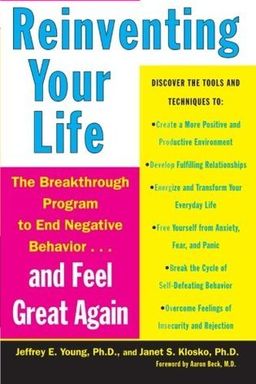
Reinventing Your Life cover

Reinventing Your Life

by Jeffrey E Young and Janet S Klosko

Reinventing Your Life guides you through identifying and overcoming negative patterns, or Lifetraps, rooted in childhood experiences. Through an actionable seven-step process, it empowers you to achieve personal growth and happiness, transforming destructive behaviors into positive life changes.

Escaping the Lifetraps That Shape a Life

Have you ever wondered why the same painful patterns keep repeating in your relationships, career, or emotions—why logic alone doesn’t change them? In Reinventing Your Life, Jeffrey Young and Janet Klosko argue that old emotional programs, called lifetraps or schemas, shape how you think, feel, and act. These patterns begin in childhood when basic needs aren’t met and persist into adulthood, replaying pain as if on automatic pilot. The book teaches you how to identify, understand, and change these lifetraps through emotional and behavioral work.

What lifetraps are

A lifetrap is a self-defeating theme born from unmet needs or trauma. It feels like part of your identity—so much so that you might say “I’ve always been this way.” Yet these patterns are not destiny; they were adaptations that once kept you safe. For example, Jed keeps choosing emotionally cold partners because he learned to equate neglect with love (the Emotional Deprivation lifetrap). Heather avoids subways and travel because her parents’ overprotection taught her the world is unsafe (the Vulnerability lifetrap).

How lifetraps form

Young and Klosko combine attachment theory and cognitive psychology to show that lifetraps arise from a mix of temperament and family experience. A fearful temperament and an unstable or critical parent make some children internalize danger or defectiveness. Others develop lifetraps through neglect, abuse, or overprotection. Even overindulgence—being spoiled or never taught limits—creates traps like Entitlement. These patterns become mental maps that interpret the world in a consistent, self-reinforcing way.

Why lifetraps survive

Once formed, lifetraps persist because they offer predictability. They shape perception and emotional interpretation, making you notice confirming evidence and ignore contradictions. They embed into relationships so you unconsciously recreate painful dynamics. Insight alone rarely helps because lifetraps operate emotionally, not rationally. They resist change until you feel the old wound and practice new behaviors. That’s why therapy integrates cognitive, behavioral, and experiential methods, not just logic.

The lifetrap map

The authors identify eleven core lifetraps, covering basic human needs: safety (Abandonment, Mistrust), connection (Emotional Deprivation, Social Exclusion), autonomy (Dependence, Vulnerability), self-esteem (Defectiveness, Failure), expression (Subjugation, Unrelenting Standards), and limits (Entitlement). These categories form a map—diagnostic and practical—helping you trace recurring emotional themes across life domains.

Coping styles that keep traps alive

Everybody manages their lifetrap differently. You may Surrender (repeat the pattern passively), Escape (avoid triggers through distraction or addiction), or Counterattack (act the opposite, controlling or dominating others). Alex, burdened by Defectiveness, surrenders and chooses people who belittle him. Brandon escapes through drinking. Max counterattacks with arrogance to hide shame. These coping styles determine how the same lifetrap appears across individuals.

The path to change

Healing means breaking the emotional, cognitive, and behavioral components of lifetraps at once. The book outlines systematic steps: label the trap, revise its story, re-experience the wounded child through imagery, build rational counter-statements, conduct behavioral experiments, and alter relationships that reinforce old dynamics. “Label it, feel it, test it, act differently” becomes the guiding formula. Even deep traps such as Mistrust & Abuse can change when safety, boundaries, and gradual trust are re-established.

The ultimate goal

By naming and confronting lifetraps, you stop blaming yourself for repeated suffering and start re-parenting the child within. You learn to perceive situations accurately, respond consciously, and build evidence for new beliefs. Over time, the emotional charge behind your old scripts weakens, and you regain freedom of choice. Young and Klosko’s message echoes modern schema therapy: your lifetraps made sense in childhood—but as an adult, you can rewrite them. The book’s promise is simple: identification brings clarity, feeling brings healing, and action brings transformation.


The Anatomy and Origins of Lifetraps

Young and Klosko describe lifetraps as emotional blueprints shaped by a child’s environment and temperament. You inherit certain sensitivities—some children are innately cautious, emotional, or impulsive. When these traits meet inconsistent parenting, emotional neglect, or trauma, lifetraps form. You might see the world as unsafe (Vulnerability), yourself as flawed (Defectiveness), or people as unreliable (Abandonment). Understanding origins helps you stop moralizing what are, in fact, survival adaptations.

Temperament and family interaction

Temperament interacts with family treatment. An anxious child may invite overprotectiveness, while a headstrong child may provoke harsh discipline. Heather’s fearful sensitivity met her parents’ Holocaust-based hypervigilance, forging lifelong Vulnerability. Patrick’s chaotic home with an alcoholic mother bred chronic Abandonment anxiety. These examples show how biology and environment combine to produce distinct emotional schemas.

The six unmet childhood needs

Drawing on Donald Winnicott’s idea of “good-enough” parenting, the authors define six core needs: safety, connection, autonomy, self-esteem, self-expression, and realistic limits. Serious deficits in any domain create a specific lifetrap. Abuse undermines safety; neglect damages connection; overprotection thwarts autonomy; constant criticism erodes esteem; suppression blocks expression; indulgence breaks limits. These deficits are not small—they organize how you interpret adult life.

Why understanding origins matters

Seeing how lifetraps made sense in childhood transforms guilt into compassion. When you reinterpret a destructive pattern as an outdated coping mechanism, you can release shame and start change. You stop asking “what’s wrong with me?” and start asking “what happened to me?” That reframing—from defect to adaptation—is the emotional pivot that makes therapy effective. (Note: This parallels Gabor Maté’s approach in In the Realm of Hungry Ghosts, which reframes addiction as an adaptation to pain.)

In short, knowing how lifetraps develop gives you both empathy and leverage: empathy for the child that built them, and leverage to challenge them now.


Coping Styles That Fuel Repeat Pain

Recognizing a lifetrap is only half the task. You must also study how you cope with it. Young and Klosko identify three universal coping styles—Surrender, Escape, and Counterattack—which explain why people with identical lifetraps behave so differently as adults.

Surrender: living the trap

When you surrender, you obey the lifetrap’s message. You choose situations and people that reinforce it. Alex, believing he is defective, picks partners who humiliate him, perpetuating shame. His compliance confirms that old voice saying “you’re not good enough.” Surrender feels familiar but shrinks your world.

Escape: avoidance and numbing

If escape is dominant, you run from the trap through distractions or addictions—work, alcohol, compulsions, or emotional withdrawal. Brandon, also burdened with Defectiveness, numbs with alcohol and superficial relationships to avoid rejection pain. Escape offers temporary relief but prevents healing because the underlying story remains untouched.

Counterattack: overcompensation

Some fight shame or fear by acting the opposite—superior, aggressive, contemptuous. Max hides his Defectiveness behind arrogance, belittling others to avoid vulnerability. While this protects him from the pain of exposure, it isolates him. Counterattack appears strong but it is fragile armor built over an injured child.

Key takeaway

Each coping style sustains the lifetrap differently. In therapy, confrontation and skill-building dismantle surrender; emotional tolerance breaks escape; and empathy softens counterattack. You need distinct tools for each.

Most people blend all three, switching by context. The goal is not to eliminate coping but to replace rigid defenses with flexible responses grounded in reality.


Mapping the Eleven Lifetraps

Young and Klosko’s map of eleven lifetraps provides a panoramic view of recurring emotional suffering. Each trap corresponds to a thwarted childhood need and leaves specific adult signatures. Below is how they cluster.

Safety traps

Abandonment breeds panic in separations (Patrick, Danielle, Abby). Mistrust & Abuse breeds hypervigilance and fear of exploitation (Madeline, Frank). Both damage the basic sense of safety that others will protect you.

Connection traps

Emotional Deprivation leaves inner emptiness, as with Jed’s chronic dissatisfaction. Social Exclusion creates the outsider feeling—Debra’s self-consciousness, Adam’s detachment. Both threaten the need to belong and be known.

Autonomy traps

Dependence makes you fear coping alone (Margaret, William). Vulnerability creates catastrophic expectations of harm (Heather, Robert). Both shrink independence, either by clinging or avoidance.

Self‑esteem & expression traps

Defectiveness drives shame and hiding. Failure causes chronic underachievement or impostor syndrome. Subjugation buries your needs beneath guilt or fear. Unrelenting Standards enslaves you to perfectionism. Entitlement denies limits and reciprocity. These shape how you perform and express selfhood.

The diagnostic value

The map reveals patterns across life domains: the partner who resembles a parent, the workplace echo of childhood dynamics. Seeing the overlap clarifies which wounds drive your behavior.

Since lifetraps often co‑occur, identifying the dominant ones—those that trigger the strongest emotions—gives you leverage. Change begins with clarity.


How to Dismantle a Lifetrap

Change follows a structured, pragmatic method. The authors teach you to combine feeling and action so insight becomes transformation. The process unfolds in six steps you can practice with or without therapy.

1. Label and identify

Begin by naming your lifetrap. Use questionnaires or reflection to detect patterns. Danielle realized her panic during separations came from an Abandonment trap—the first moment awareness turned into power.

2. Reconnect with the wounded child

Re-experience old feelings using imagery or journaling. Talk to the child within as an adult offering comfort, love, and safety. This experiential reparenting heals emotion frozen in childhood.

3. Build rational counter‑evidence

Make two lists—evidence for and against the lifetrap belief—and create a portable flashcard summarizing truth. Danielle’s card reminded her: “People can be dependable; small separations aren’t abandonment.”

4. Vent and confront the past

Write letters to hurtful figures, expressing anger and grief. When safe, confrontation or boundary-setting stops reinforcement. Validation matters more than forgiveness.

5. Pattern analysis & behavioral change

Track how the trap operates day‑to‑day, then design small behavioral experiments. Start with manageable actions—assertiveness practice, solo errands, social exposures—and build upward.

6. Persevere

Setbacks are normal. When obstacles arise—counterattacking, avoidance, disbelief—return to the mantra: Label it. Feel it. Test it. Act differently. Repetition rewires emotion.

Core idea

You are re‑parenting your inner child through deliberate practice. Each successful action gives new evidence, reshaping belief through lived experience, not theory.

Whether done in therapy or self‑work, this sequence transforms emotional learning into freedom—lifetraps fade as new patterns prove themselves reliable.


Healing Specific Lifetraps in Practice

The book devotes detailed chapters to common traps, demonstrating how change techniques apply concretely. Each lifetrap has particular themes and recovery demands.

Abandonment and Mistrust

Abandonment heals when you learn separations aren’t catastrophes—tracking cycles of anxiety, grief, anger and practicing safe solitude. Mistrust & Abuse demands trauma‑informed work: containment, boundaries, and re‑learning to test trust gradually with reliable people. Both center on rebuilding safety.

Connection and autonomy traps

Emotional Deprivation and Social Exclusion heal through progressive contact with caring, dependable others while learning to accept warmth. Dependence requires practicing independence stepwise; Counterdependence requires asking for help and tolerating vulnerability. Vulnerability demands graded exposures to feared situations until the world feels manageable again.

Self‑esteem and limit traps

Defectiveness calls for self‑compassion and truth-telling: imagery, letters to critics, flashcards fighting shame. Failure reverses avoidance through realistic hierarchies of achievement. Subjugation heals through assertiveness and anger expression practice. Unrelenting Standards requires lowering perfection systematically to reclaim joy. Entitlement needs honest cost-benefit analysis and real consequences to re‑introduce empathy and limits.

Common thread

Each trap breaks an essential human need. Recovery rebuilds that need through corrected emotional experiences—trust where there was betrayal, autonomy where there was control, tenderness where there was coldness.

Across cases like Danielle, Heather, Jed, Alison, and Carlton, the book shows that emotional relearning—through consistent safe contact and practice—creates enduring change. You are not repairing pathology but re‑establishing the life capacities childhood denied you.

Dig Deeper

Get personalized prompts to apply these lessons to your life and deepen your understanding.

Go Deeper

Get the Full Experience

Download Insight Books for AI-powered reflections, quizzes, and more.