
Idea 1
Capitalism as Rebellion and Moral Crusade
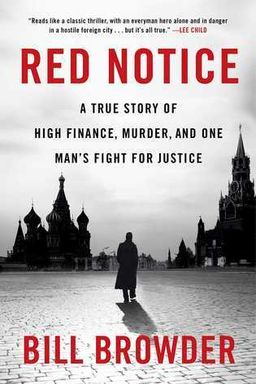
What happens when a young man rebels not by rejecting his upbringing, but by overturning it? In Red Notice, Bill Browder tells how he transformed his family’s communist past into a capitalist mission—and later, into a moral crusade for justice. The book charts his evolution from investor to activist, from exploiting political chaos to confronting the very state that enabled his wealth.
From family paradox to financial purpose
Browder grows up in a household shaped by extremes: his grandfather Earl Browder once led the American Communist Party, while his father Felix became a decorated mathematician scarred by McCarthy-era discrimination. Determined to rebel against this intellectual-communist lineage, Bill resolves to pursue capitalism with zeal. That decision—capitalism as defiance—underpins his life’s trajectory. He studies at Colorado and Chicago, finds his footing in consulting at Bain and BCG, and earns admission to Stanford by turning his family legacy into a narrative of reinvention.
This blend of contrarian thinking and storytelling gives him both analytical rigor and self-definition—a combination that will prove decisive when he positions himself at the edge of history’s next frontier: post-Soviet Eastern Europe.
The discovery of asymmetric opportunity
In the early 1990s, as the Eastern Bloc collapses, Browder sees what others miss: the privatization of entire economies creates a moment when information asymmetry and chaos yield markets no business school could have predicted. At BCG, his trip to Poland’s rusting bus plant, Autosan, teaches him two lessons—that human suffering and market opportunity can coexist, and that privatizations price assets irrationally low. When he makes small personal bets that multiply tenfold, he discovers his formula: in dislocation lies fortune, if you dare to participate early and understand the plumbing.
At Salomon Brothers, he scales this thesis. By buying Russian vouchers worth $25 million for access to massive energy companies, he turns that stake into $125 million. It is capitalism in its rawest form—where knowledge of obscure regulations and local mechanics produces staggering returns. Yet, the story isn’t just greed—it’s curiosity applied with audacity.
From investor to activist
When Browder launches Hermitage Capital with financier Edmond Safra’s backing, he finds that frontier investing demands both operational thrift and courage. His Moscow office runs on picnic tables and metal chairs, but his ideas fuel huge returns. Exploiting anomalies like preferred shares, Hermitage grows quickly. Yet as corruption intensifies, Browder pivots from trading inefficiencies to defending shareholder rights—a shift that transforms him from capitalist rebel to governance activist. His analytical drive morphs into a new kind of rebellion: truth-telling in a rigged economy.
When justice clashes with power
Browder’s “stealing analysis” method—interviewing insiders, verifying data from bureaucratic registries, and exposing theft through the Western press—uncovers Gazprom’s massive asset stripping. But in Russia, sunlight draws predators. His victories over dilution schemes at Sidanco and exposure of corrupt oligarchs make him a target. When he is expelled from Russia in 2005, the tension between markets and politics fully collapses: the state that once let him profit now brands him a national-security risk.
From that point, the story darkens. Raids on Hermitage’s offices by officers Kuznetsov and Karpov lead to the theft of company documents and the massive $230 million tax-refund fraud uncovered by lawyer Sergei Magnitsky. Sergei’s subsequent arrest, torture, and death reveal the system Browder helped navigate is not broken—it is designed to reward loyalty and punish exposure.
From capital to conscience
The second half of Red Notice shifts from financial memoir to political indictment. Browder, once a market opportunist, becomes a justice campaigner. He weaponizes digital media—YouTube documentaries, dossiers, international press—and mobilizes foreign laws to pursue accountability. The outcome, the Magnitsky Act, pioneers a new idea: individual sanctions that target corrupt officials’ wallets and visas rather than entire nations. Yet Russia retaliates with propaganda, fake trials, and an adoption ban. Browder’s life becomes that of an exile fighting an invisible state machine.
In the end, Red Notice is the story of transformation: rebellion against one ideology becomes confrontation with another. It’s a case study in how personal conviction, financial insight, and moral resolve can converge to challenge authoritarian power. You learn that rebellion, when disciplined by evidence and courage, can ripple beyond markets into global activism—a reminder that capitalism, when wielded ethically, can expose the very systems that once enriched it.