
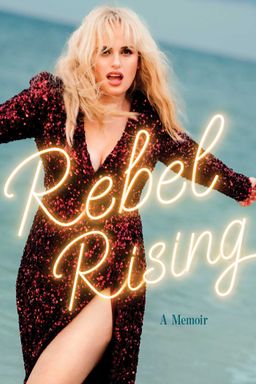
Rebel Rising cover

Rebel Rising

by Rebel Wilson

The comedic actress shares impactful experiences from her childhood in Australia to more recent obstacles in life.

Reinvention, Risk, and Self‑Authorship

How do you turn raw insecurity, rejection and tabloid assault into a life you author? In Rebel Rising, Rebel Wilson argues that you do it by reinventing identity on purpose, manufacturing your own opportunities, and pairing ambition with deep emotional work. She shows that identity is both a shield and a megaphone; career is an improv set you build as you perform; and health, love and motherhood are projects you pursue with the same rigor you bring to craft. The result is a practical playbook for self-authorship in a ruthless industry that looks a lot like any competitive arena you face.

You watch Melanie Elizabeth Bownds become Rebel Wilson—first privately, then legally—as she decides to be distinctive enough for agents to say, “we didn’t have anyone like her.” You see how the child who eats lunch in toilets learns social engineering at Tara (talk to five new people a day, join clubs, take visible risks) and then applies that same psychology to Hollywood’s “Water Bottle Tour.” The big argument is simple but powerful: reinvention isn’t denial—it’s choice—and you can practice it repeatedly across body, career, and love.

Identity as a tool you shape

Wilson treats identity as craft. She uses accents at school to regulate belonging, then fashions a public brand as the “fat funny girl” while protecting her private Melanie through diaries. A legal name change, character voices, even the audacity to throw herself (sometimes literally) at goals—these are deliberate levers. Identity becomes offensive (to stand out at WME) and defensive (to control how others joke about her body before they can weaponize it).

Making work when you’re shut out

After repeated rejections from NIDA, she writes The Westie Monologues with $2,000 of savings. That DIY show begets Fat Pizza, The Wedge and Bogan Pride, building a résumé that makes her legible to U.S. agents. In L.A., she grinds the “Water Bottle Tour”—thirty meetings and auditions that yield symbolic swag and real visibility—until one improvisational hour with Kristen Wiig, Allison Jones and Paul Feig turns into Bridesmaids. Improv creates Fat Amy’s voice in Pitch Perfect (director Jason Moore prefers her natural Australian), and the crystal-meth and burrito gags help birth an icon.

Body politics and the Year of Health

The book refuses to romanticize transformation. PCOS explains rapid weight changes, facial hair and cyst pain; food functions as comfort against loneliness and rejection. Hollywood perversely pays her to stay big; a fertility doctor bluntly reframes this as a medical risk: “You’d have a much better chance if you were healthy.” That comment catalyzes a values-led “Year of Health” (two-hour daily exercise, calorie tracking, therapy with Dr. Habib Sadeghi and Purge Emotional Writing). Contracts like Jenny Craig collide with creative freedom (she exits when Pitch Perfect filming needs body flexibility), underscoring how bodies become workplaces with clauses and risks.

Costs of fame and the politics of power

Fame amplifies vulnerabilities. Early on she lives alone in Los Feliz, pays $3,500 to join SAG, and sometimes has $60 a week after rent. Post-Pitch Perfect, the paparazzi, steroid shots to perform through bronchitis, and the “actors say YES” culture reveal a profession that trades bodies for schedules. Harassment shows up in grotesque ways: a DoP marks her crotch, a director propositions sex, and extended coercive episodes with Sacha Baron Cohen blur “creative” with abuse. She also fights back: she sues Bauer Media for malicious falsehoods and—despite an eventual reduction—wins a landmark jury judgment that helps reclaim her narrative.

Love, grief, and motherhood as late-bloom arcs

Family complexity (Mum’s grit, Dad’s volatility, Nanny’s dementia) shapes coping and drive. A malaria hallucination in South Africa becomes vocational clarity: pursue acting like your life depends on it. Themed years structure change (Year of Fun, Love, Health). Dating ranges from Mickey to a high-society scion to the Tennis Player, but meeting Ramona reframes possibility. When a newspaper threatens to out their relationship, Wilson tells the story on her terms; later she proposes in Disneyland. A grueling, six-figure fertility journey (failed thaws, genetic testing, a “reanimating” embryo) ends with the birth of her daughter, Royce, via surrogacy.

Key Idea

Self-authorship is iterative: you rename yourself, build stages when doors close, renegotiate health against incentives, assert boundaries amid power plays, and choose love and parenthood on timelines that fit your truth.

Use this book as a blueprint. Name the identity you’re willing to live into. Manufacture visibility when gatekeepers stall. Pair emotional work with concrete habits. Expect fame (or any rapid success) to test boundaries. And remember that big life chapters—coming out, forgiving a parent, having a child—can arrive out of order and still complete your story. (Note: Wilson’s themed years echo Shonda Rhimes’s Year of Yes; both show the power of constrained, time-bound commitments.)


Identity As Strategy

Wilson treats identity like a toolkit you actively pack. Born Melanie Elizabeth Bownds, she grows up with the secret nickname “Rebel” from her mum, Sue. Choosing to use—and later legally change to—Rebel aligns her inner sense with an external brand that stands out at agencies like WME. This isn’t a cosmetic tweak. It’s the thesis of the memoir: who you call yourself determines which rooms invite you in and how you perform once you’re there.

Names carry strategy, not just sentiment

“Melanie Bownds” reads private-school Tara and middle-class path; “Rebel Wilson” shouts distinctiveness. When she arrives in Los Angeles, WME reps say they “didn’t have anyone like her.” A name telegraphs difference, and difference translates into meetings. You see how subtle label choices—on business cards, socials, credits—shape who remembers you after a 30-minute general.

Performance as offense and defense

As a shy kid who ate lunch in toilets, she practices voices to enter groups. The American accent on the playground is a rehearsal for Toula on Fat Pizza; both let her control the joke rather than be the joke. Later, branding herself as the “fat funny girl” gives her leverage: she makes the first move on body humor (Fat Mandi sketches, Fat Amy) and shapes tone before critics can. That’s tactical vulnerability: disclose on your terms to blunt outside attacks.

Two paths, one person

Wilson keeps Melanie—the diary-writing, observant kid—alive while Rebel—the billboard brand—goes to work. The diaries become both therapy and raw material; the public persona becomes armor and amplifier. You can live with this productive split: a private self that metabolizes pain and a public self that converts it into performance. The trick is consent: Rebel consents to the caricature while protecting Melanie’s integrity.

Engineered popularity and “practice being”

At Tara, she designs a social ladder she can actually climb: speak to five new people a day, join drama and debate, and float across cliques via Tournament of Minds. Stunts—fake cigarettes on a field trip, the Canberra prank—generate buzz (and sometimes blowback, like the chaotic Sweet Sixteen party). She proves popularity can be a skill stack, not fate: exposure, talk-value, and mentors like Mr. Haigh create network effects that later map onto the Hollywood tour.

Owning difference without erasing pain

Owning “Rebel” doesn’t erase Melanie’s hurts—dad Warwick’s rages, money stress, or hiding in bathrooms. It converts them into a story engine. When she literally falls through a rig in Fiddler on the Roof and keeps going, or when a Whoopi Goldberg encounter turns clumsy obsession into a comedic bit, you see the payoff of “acting as if.” Confidence by performance leaks into real confidence over time.

Key Idea

Reinvention isn’t denial—it’s deliberate authorship. You’re not faking; you’re choosing which truths to foreground so your life fits your intentions.

How to apply it

  • Name your lane: pick a label that cues the work you seek (comedian-writer, data storyteller, design-strategist).
  • Build the split: keep a private practice (journaling, therapy) while cultivating a public brand (newsletter, reels, portfolio).
  • Control the frame: preempt stigma by telling your story first—on your channels, in your words.

(Note: This play echoes Lady Gaga’s performance armor and Trevor Noah’s accent-laced identity flexibility in Born a Crime; strategic self-making is common among artists navigating hostile or volatile systems.)


Build Your Own Break

When institutions say “no,” Wilson builds the stage herself. Multiple NIDA rejections become the spark for The Westie Monologues, a $2,000 self-produced show that draws Channel 7 attention and Paul Fenech’s Fat Pizza role. That DIY momentum funds an apartment, yields The Wedge and Bogan Pride, and becomes the proof portfolio she takes to L.A. The lesson is portable: a scrappy MVP can compound into a career if you design it for visibility.

The Water Bottle Tour mechanics

Landing at WME is an entry ticket, not a coronation. The “Water Bottle Tour” is a gauntlet of generals where you swap your story for attention and a plastic souvenir. Wilson runs thirty meetings and auditions in a year—Cameron Crowe’s We Bought a Zoo tests, TV pilot work with Debra Messing—learning to pitch herself in 30 minutes. You’re auditioning not for a role but for a career memory: leave a distinctive impression and a line of dialogue people can quote back.

Improv turns meetings into moments

At Bridesmaids, Kristen Wiig asks her to riff. Wilson improvises for an hour in front of Allison Jones, Paul Feig and Judd Apatow. She doesn’t get the lead (Melissa McCarthy does) but she gets written in as Brynn. That pattern repeats in Pitch Perfect: she leans into an unapologetically Australian Fat Amy, and improvised lines (the crystal-meth quip; the burrito chaos) become cultural artifacts. Improv is creative R&D in real time; it’s also business development.

Crafting a unique package

Wilson arrives as a multi-hyphenate: actor-writer-producer who can carry scenes and shape scripts. Add Australian cadence, plus-size comedic confidence and a habit of self-creation, and you have something U.S. agents can sell. The “we don’t have anyone like her” comment is market positioning in plain English. If you bring cross-functional skills and a mapped audience, rooms open faster.

Risk with a parachute

Moving countries with one big meeting is risky, but Wilson isn’t leaping blind. Westie Monologues → TV credits → WME creates a chain of increasing proof. Even her migration to Los Angeles is hedged by a built-in story: the bush-to-Hollywood arc she can tell in those bottled-water meetings. High-variance bets work better when you arrive with differentiators and receipts.

Your replicable playbook

  • Prototype your role: write, stage or code a small project that proves a capability and invites gatekeeper attention.
  • Treat meetings as micro-performances: prepare a 30-minute story with a vivid hook and a memorable line.
  • Improvise on structure: learn the form (beats, jokes, product demo) then riff to reveal range.

Key Idea

Gatekeepers notice gravity. Make a small thing that pulls bigger things toward it, then narrate that momentum in every room you enter.

(Parenthetical note: This mirrors Issa Rae’s Awkward Black Girl web series → Insecure path and Lin-Manuel Miranda’s in-concert Hamilton demos → Broadway; the product precedes the permission.)


Body Politics And Health

Wilson’s body story is medical, cultural and economic—not a tidy willpower tale. PCOS explains rapid weight gain, dark facial hair, ovarian pain; culture adds shame and yo-yo dieting; Hollywood layers a market incentive to stay big because the “fat funny girl” sells. Food becomes both comfort and career strategy. Then a fertility doctor’s frank line—“You’d have a much better chance if you were healthy”—reframes her size from brand to barrier. That’s the hinge: identity meets biology and values.

Food as coping, not character flaw

From childhood candy raids (Fruit Pastilles after a lucky $800 trifecta) to adult Ben & Jerry’s nights, eating regulates anxiety and loneliness. Post-Bridesmaids isolation in Los Feliz—recognized by strangers, unknown to neighbors—fuels binges. The pattern is familiar: public performance by day, private numbing by night. Recognizing this helps you swap moral judgment for problem definition.

Industry incentives vs. personal health

Agents caution her not to lose weight; roles pay better when she’s larger. A Jenny Craig deal, with weight clauses, collides with the creative needs of Pitch Perfect. Contracts can literally legislate your body. Wilson chooses the film over the endorsement, signaling a shift from managing to pleasing others toward aligning with long-term goals like fertility and stamina.

Designing the Year of Health

Wilson frames 2020 as a “Year of Health,” pairing structure with meaning (similar to Shonda Rhimes’s Year of Yes). She stacks daily two-hour movement (walks, gym, tennis), calorie awareness, hydration and sleep with therapy through Dr. Habib Sadeghi and Purge Emotional Writing. That blend—habits plus healing—turns a resolution into a system. Progress stalls and rebounds; the arc isn’t linear, but cumulative gains stick.

Fertility as the forcing function

Egg harvests, IVF cycles, genetic testing and thaw failures create urgency and focus. Losing weight improves egg quality probabilities; the medical stakes puncture the “brand” logic. She spends six figures across years, rides hope-crash cycles, and keeps going until an embryo reanimates and tests normal. Later, a female embryo succeeds too. Health becomes less about optics and more about life design: the stamina to parent and the biology to get there.

Your health strategy, de-dramatized

  • Medical clarity first: get diagnostics (PCOS, thyroid, insulin resistance) before crafting plans.
  • Incentive audit: identify who benefits from your current state (financially, socially) and rebalance stakes toward your values.
  • Themed year: carve a 12-month container, stack habits with therapy, and expect plateaus.

Key Idea

Change holds when it’s value-anchored, medically informed and systemized. A number on a scale can start a story; a purpose—parenthood, longevity—finishes it.

(Note: Wilson’s account contrasts with glossy “before/after” memoirs by foregrounding PCOS and contract politics, aligning more with Roxane Gay’s candid body narratives about context and complexity.)


Fame, Power, And Boundaries

Success solves access but creates pressure. After Bridesmaids and Pitch Perfect, Wilson faces a paradox: household-name visibility with patchy cash flow and thin social support. She pays $3,500 to join SAG, sometimes has $60 weekly after rent, and learns that premiers don’t fix loneliness. The industry’s production-first ethic nudges her to sacrifice health (steroid shots for bronchitis, pushing through injuries) because “actors say YES.” Fame’s hidden curriculum is boundary-setting under surveillance.

Loneliness under the spotlight

Living alone in Los Feliz, recognized at Gelson’s but unknown in her building, Wilson describes sitting fully clothed in a bathtub and shaking—overstimulated, under-held. Old acquaintances surface to “stay at her house,” and paparazzi orbit post-Pitch Perfect. You may recognize this mismatch in your career: the moment you get the title or the press but not the community to metabolize it.

Harassment patterns and set politics

Power concentrates misbehavior. A director invites sex in a hotel room. A DoP sets a mark over her crotch. Sacha Baron Cohen, by Wilson’s account, blurs “bit” and coercion—asking her to run naked, to perform sexual acts framed as “creative choices,” and to reshoot under pressure. Agencies and studios often prioritize finishing the film over an individual’s dignity, with warnings about blacklisting echoing in the background.

Legal and narrative self-defense

Wilson chooses different shields in different arenas. She sues Bauer Media for defamatory falsehoods and wins a headline-making jury verdict (later reduced on appeal), signaling that some fights need courtrooms. On the Cohen project, she finishes the shoot but refuses to promote the film, withholding her platform. She documents, consults lawyers, and uses silence as a form of protest when speech would be weaponized.

Boundaries as infrastructure

Set clear lines early: no closed-door meetings without allies; intimacy coordinators for sexual content; written parameters for improvisation. Build outside power, too—mentors, publicists and legal counsel not beholden to the specific production. Your leverage isn’t just fame; it’s alternative support that lets you walk away or say no without imploding your livelihood.

Money and energy hygiene

  • Stage your lifestyle: don’t inflate costs faster than contracts mature; sudden fame invites expensive traps.
  • Protect the instrument: no shoot is worth chronic damage; build norms (sick days, safety pauses) into deals.

Key Idea

Fame expands options but compresses margins of error. Boundaries transform that compression into a sustainable lane.

(Note: These dynamics rhyme with #MeToo-era accounts from Mira Sorvino and Ellen Page/Elliot Page; Wilson adds a comedic performer’s lens on how “it’s just a bit” can be weaponized to erode consent.)


Family, Grief, Love, Motherhood

Family is Wilson’s origin story and ongoing classroom. Mum Sue is tireless—a dog-show entrepreneur (Petcetera Etc., Osco Pet Products) raising four kids; dad Warwick is volatile—gambling, rage, the occasional blow-up that leaves scars on furniture and hearts. From that tension, Wilson learns hustle (collecting cans, selling lollies at a curbside “LOLLY SHOP”), people-pleasing, and the habit of hiding pain behind humor. Those strategies fuel her escape and later her ability to return with resources and clarity.

Crisis as compass

A near-fatal malaria episode in South Africa becomes vocational revelation: in a fever dream she delivers a rhymed Oscar speech, and wakes with a vow to act. A harrowing stage fall during Fiddler on the Roof proves grit; a karate tournament humiliation teaches self-protection. Each crash supplies data: keep going when it pays; exit when it costs your soul or safety.

Reconciling with the past

Nanny’s dementia introduces a slow grief—visiting a loved one who is present but not. Warwick’s sudden death triggers a faster kind. Wilson writes a long, honest letter for the funeral, naming warmth (the races, playful “doormat” games) and wounds (temper, legal battles). That letter is a ritual of integration: acknowledging paradox so it stops leaking into food, romance and work.

Themed years to rewire patterns

Year of Fun loosens rigidity; Year of Love opens her to dates from Mickey to a high-society scion to the Tennis Player; Year of Health aligns behavior with long-term values like fertility. These time-boxed experiments turn abstract hopes into structured sprints, preventing overwhelm and creating post-mortems you can actually analyze.

Love that reframes identity

Meeting Ramona (via Hugh Sheridan) starts as playful vocal coaching and deepens into partnership. When the Sydney Morning Herald threatens to out them, Wilson posts her truth first—another act of narrative control. Family responses soften; Disneyland becomes proposal ground. Sexual identity arrives as a lived reality, not a PR plan, and Wilson treats it with the same authorship she applies to career and name.

Motherhood, finally

After years and over $100,000 of IVF attempts, thaw failures and genetic tests, an embryo “reanimates” and proves normal; later a female embryo follows. Surrogacy navigates the legal and ethical maze; the birth of Royce crowns the Year of Health with meaning. Motherhood doesn’t conclude ambition; it reorients it around stamina, stability and joy.

How you can use this arc

  • Write the hard letter: to a parent, partner or younger self—naming paradoxes to reduce their hidden tax.
  • Time-box growth: give themes a year; make them observable (habits, budgets, dates scheduled).
  • Design parenthood: research fertility options, costs and laws early, especially if biology or age may complicate timelines.

Key Idea

Grief, love and parenthood are iterative identities. You don’t discover them once; you practice them into place.

(Parenthetical note: The reconciliation-through-letter device recalls Joan Didion’s The Year of Magical Thinking in its ritual of meaning-making after loss, though Wilson’s tone is more comedic-pragmatic.)

Dig Deeper

Get personalized prompts to apply these lessons to your life and deepen your understanding.

Go Deeper

Get the Full Experience

Download Insight Books for AI-powered reflections, quizzes, and more.