
Idea 1
The Collective Power of Diverse Thinking
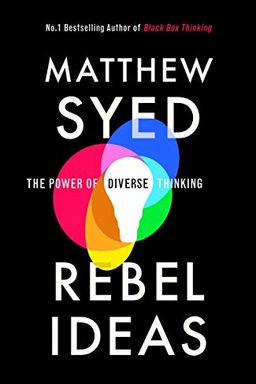
Have you ever wondered why some groups—of people, teams, or even entire societies—seem to see opportunities invisible to everyone else? In Rebel Ideas: The Power of Diverse Thinking, Matthew Syed argues that our greatest leaps in innovation, understanding, and progress rarely come from lone geniuses, but from groups capable of thinking differently together. His central thesis is stark: diversity isn’t just a moral ideal—it’s the engine of collective intelligence.
From Individual Excellence to Collective Intelligence
Syed opens with a cautionary tale—the CIA’s failure to prevent 9/11—not because its analysts were incompetent, but because they were too similar. Homogeneity of perspective blinded even the brightest minds to the threat that Osama bin Laden posed. From this “collective blindness,” Syed builds a case for rethinking how we define intelligence itself: not as a property of brilliant individuals, but as something that emerges from difference—from minds that see the world through contrasting frames.
He moves from this tragedy to triumphs of cognitive diversity, such as the mixed group at Bletchley Park who cracked the Enigma code in World War II. Instead of filling rooms with identical mathematicians, the British government recruited musicians, linguists, chess players, and crossword enthusiasts—rebels who combined logic, intuition, and playfulness in ways that looked chaotic but proved decisive. The bottom line: groups succeed not when they are filled with the “best” individuals, but when they maximize the variety of perspectives brought to the table.
The Architecture of Diverse Thinking
To understand why this works, Syed introduces the concepts of homophily (our tendency to cluster with those who think like us) and cognitive diversity (the variety of mental models and perspectives we bring to problems). While homophily feels comfortable—it validates our worldview—it traps teams in echo chambers. Cognitive diversity, by contrast, is messy and sometimes frustrating, but it expands the group’s ability to see hidden patterns and contradictions. Drawing on complexity science (notably the work of Scott Page at the University of Michigan), Syed argues that diverse teams consistently outperform homogeneous groups, even those composed of top performers, when facing complex tasks.
This is because each person operates with a distinct frame of reference—a lens shaped by cultural background, experience, education, and personality. Where a physicist sees equations, a sociologist sees networks, and an immigrant entrepreneur might see unmet needs. Combined, these perspectives form a more complete picture of reality than any single lens could provide. As Syed writes, “they are both wrong in different directions—but together, they get it right.”
Innovation, Networks, and the Collective Brain
The heart of Rebel Ideas is the principle of what Syed calls the collective brain—the idea that progress is driven not by isolated geniuses, but by connected thinkers exchanging and recombining ideas. From the Scottish Enlightenment’s coffeehouse debates to Silicon Valley’s open social networks, the most explosive periods of innovation have coincided with the loosening of intellectual boundaries. Syed draws insight from the economist Joseph Henrich, who argues that humanity’s evolutionary success stems from our ability to share and build upon one another’s discoveries. The human brain itself evolved bigger and more capable because our social networks grew richer.
But our modern institutions—schools, corporations, political systems—often ignore this lesson. Standardization, hierarchy, and fear of dissent suppress the very friction that fuels creativity. Syed demonstrates this with examples ranging from the Air Force’s cockpit design (based on the “average pilot” who didn’t exist) to the downfall of Boston’s Route 128 tech corridor, which suffocated under secrecy while nearby Silicon Valley thrived through open collaboration and “idea sex.”
A Manifesto for Rebels—and Listeners
Syed is not glorifying chaos. His message is that structured diversity—teams with psychological safety, deliberate recruitment of outsiders, and open exchange of dissenting views—creates environments where creative tension is productive rather than paralyzing. He advocates for leaders who earn prestige through listening, not dominance, echoing the leadership models of Satya Nadella at Microsoft and Jacinda Ardern in New Zealand. And he calls on you, the reader, to cultivate what he terms the outsider mindset: the ability to see with fresh eyes, imagine recombinations others overlook, and question when everyone else seems certain.
Ultimately, Rebel Ideas is a celebration of humanity’s collective potential. The most profound shifts—from the Industrial Revolution to artificial intelligence—have come not from solitary visionaries, but from what Syed calls “ideas having sex.” His blueprint for progress—embracing diversity, flattening dominance hierarchies, and designing systems that amplify difference—is as much a strategy for innovation as it is a moral stance. In a world divided by echo chambers and standardized thinking, his message feels both radical and vital: our survival depends on our ability to think differently—together.