
Idea 1
Finding Light in the Dark: Why Life Is Worth Staying Alive For
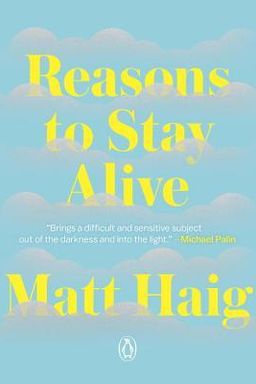
Have you ever been so overwhelmed by fear or sadness that life itself seemed impossible? In Reasons to Stay Alive, Matt Haig takes you inside that experience—his plunge into suicidal depression, his painstaking climb out, and his long-standing quest to understand how to keep living when the world feels unbearable. This isn’t a clinical manual or a detached psychology text; it’s a human conversation, built on vivid memory and hard-won empathy. Haig’s core message is simple but profound: depression lies, but life—despite its pain—is still full of reasons to stay.
Haig argues that mental illness is not weakness, madness, or an isolated curse. It is part of being human. He paints depression and anxiety as storms of the mind, illnesses intertwined with modern living, identity, and the fragility of existence. Yet unlike many gloomy accounts, his story is ultimately an ode to resilience and gratitude. By connecting small moments of survival—running by rivers, conversation with loved ones, warmth in the morning—to the vast beauty of experience, Haig reframes survival itself as a kind of creative act.
An Intimate Memoir of Breakdown and Recovery
Haig begins with the day he felt his mind explode: in Ibiza, age twenty-four, collapsing under panic and depression so intense that death seemed the only peace. Yet love—his partner Andrea, his parents—kept him tethered. He describes hiding under blankets, trembling behind doors, and bargaining with time itself, stacking days like fragile Jenga towers. Depression, he tells us, feels infinite. But it isn’t. Its clouds eventually part, revealing the enormous universe of being alive.
Through reflective storytelling, Haig shows recovery not as a miracle but as a gradual acceptance. Every act—walking to the corner shop, surviving a minute of pain, learning to breathe—becomes a victory. He transforms ordinary days into lessons in endurance. That honesty makes readers feel less alone. His conversation across time between “THEN ME” (the depressed self) and “NOW ME” (the recovered self) turns despair into dialogue—proof that hope survives inside hopelessness.
The Universe Within Us
One of Haig’s most startling metaphors compares depression to quantum physics: it dismantles your simplified notions of self and reveals the vast, complex universe inside the human body and mind. You don’t just contain sadness—you contain galaxies. His reflection that we might have “evolved too far,” capable of feeling a universe’s worth of darkness, reframes mental pain as a side effect of consciousness. He invites readers to see themselves not as victims, but as extraordinary beings cursed and blessed with infinite awareness.
The Root of Modern Anxiety
Haig also ties his private torment to a collective one. He exposes the modern world as a machine designed to depress us—an economy that profits on insecurity, a culture of comparison and speed. Happiness is counter-commercial. “To be calm,” he says, “is a revolutionary act.” In his later writings and Notes on a Nervous Planet, he builds this into a social critique: the digital age bombards us with panic, perfectionism, and validation loops. Our bodies may have evolved, but our minds are still Stone Age organs facing information hurricanes.
The antidote, Haig suggests, is slowing down, grounding in physical reality, reconnecting with ourselves and others. Exercise, travel, love, and art are not diversions but medicine—the ways we return to being human.
A Celebration of Small Happinesses
Ultimately, Reasons to Stay Alive is a grateful list: for books, music, laughter, peanut butter sandwiches, sunsets, and children’s terrible jokes. Haig’s message isn’t that depression vanishes—it changes shape. The goal is not perfection but presence. Even pain can be reinterpreted as connection: “The wound is the place where the light enters you,” he quotes Rumi. Living becomes an act of ongoing courage.
So if you’ve ever asked “why stay alive?” Haig’s answer is that life expands beyond suffering; that the mind heals when met with love, awareness, movement, and time. His book is a human manifesto against silence—a reminder that we are all fragile, infinite, and capable of joy beyond despair.