
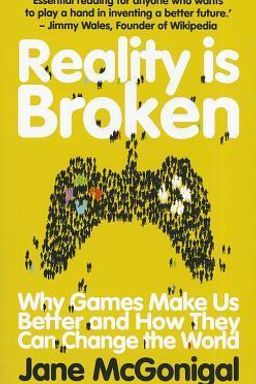
Reality is Broken cover

Reality is Broken

by Jane McGonigal

Reality is Broken by Jane McGonigal explores how the principles of gaming can revolutionize our approach to everyday challenges, foster meaningful social connections, and inspire solutions to global issues. Discover how embracing gaming can enhance happiness and drive positive change worldwide.

Games as Engines of Human Flourishing

What if the time, energy, and creativity we pour into games could make real life as engaging and purposeful? In Reality Is Broken, Jane McGonigal argues that games are not escapes from reality but models of how reality could work better. Her core claim is that the structure of a well-designed game—clear goals, voluntary participation, fast feedback, and meaningful obstacles—meets deep psychological needs that modern life often neglects. If you can recognize and apply these design principles outside the screen, you can make daily life more rewarding, resilient, and connected.

McGonigal draws on Mihály Csíkszentmihályi’s research on flow, Martin Seligman’s work on learned optimism, and Bernard Suits’s philosophical definition of play as “the voluntary attempt to overcome unnecessary obstacles.” When you line these up, games emerge not as entertainment but as exercises in flourishing—systems that reliably generate satisfaction, social bonds, and even meaning. The book unfolds by showing how this works in stages: how games create joy, how they teach hope and cooperation, and how they can transform institutions, cities, and global problem solving.

Why We Love “Unnecessary Obstacles”

In ordinary life, you usually seek efficiency. In games, you do the opposite: you embrace constraints. According to McGonigal, this voluntary friction is what makes games fun and meaningful. A golf hole far away is deliberately inefficient—it makes every swing a test of focus. Tetris blocks falling too fast keep you at the edge of mastery. You choose obstacles because they invite skill, feedback, and satisfaction. When life feels directionless, it’s often because its “game design” is weak: unclear goals, fuzzy feedback, and compulsory participation undermine engagement. Understanding game structure offers a fix.

McGonigal translates this structure into practical design for happiness. Give yourself clear goals. Accept productive rules. Seek instant feedback. And, above all, make participation voluntary. That recipe turns routine work into chosen challenge—a small but profound psychological shift.

The Chemistry of Flow and Joy

Games are fast highways into flow—the brain’s optimal state of engagement. Csíkszentmihályi identified flow as the sweet spot between boredom and anxiety. McGonigal shows that games, from Breakout to World of Warcraft, engineer this balance with precision. The result is neurochemical bliss: dopamine and endorphin cascades that accompany challenge and mastery. Players also experience fiero—explosive triumph when you win after struggle—which activates reward circuits associated with pride and perseverance. This helps explain gaming’s addictive appeal—and its potential to train real-world motivation.

Designers have even built “fatigue systems” to guard against burnout, proving that self-regulation can be designed too. For McGonigal, the key takeaway is not to eliminate games but to learn from their motivational blueprint: design real-life tasks with achievable challenges, rapid feedback, and visible progress so that you can hit mini-flow moments daily.

The Deeper Human Rewards

Games thrive because they satisfy four intrinsic cravings psychology identifies as crucial for well-being: satisfying work, hope of success, social connection, and meaning. These are “autotelic” rewards—self-sustaining satisfactions that don’t fade like money or fame. When you play, you do visible work toward a clear goal; you cultivate justified optimism through fair failure; you deepen relationships through teamwork or friendly rivalry; and in epic contexts like Halo, you feel part of something larger. Each trait teaches how to design real systems for human happiness.

Consider World of Warcraft: its quest loops deliver clear goals, tangible progress (through phasing and achievements), teamwork, and story. That “blissful productivity” explains why players feel more effective in a virtual world than in many offices. The message isn’t to abandon real life but to redesign it so effort visibly matters.

From Micro-Wins to Epic Meaning

When games move beyond individual joy to collective purpose, they generate awe and meaning. Halo players, for instance, see their stats archived in communal history; the game’s design echoes cathedrals in scale and sound. Awe, studies show, enlarges empathy and commitment to service. McGonigal believes that this “epic frame” can be harnessed to inspire civic and global participation.

The book culminates with real-life experiments—Alternate Reality Games (ARGs) and “happiness hacks”—where ordinary spaces and actions become playful, prosocial missions. From Chore Wars (turning chores into shared quests) to SuperBetter (recovery through gameful framing), she shows how to apply player psychology everywhere. Ultimately, the line between gaming and living can dissolve in a productive way: reality enhanced, not escaped.

The central promise

When you understand how games satisfy deep human needs, you gain tools to make real life work more like a good game—purposeful, social, and built for growth.

(Note: The book’s argument aligns with trends in behavioral design and positive psychology. Like Daniel Pink’s Drive or Csíkszentmihályi’s Flow, McGonigal’s vision reframes motivation from external pressure to intrinsic reward—but she grounds it in playful, everyday practice.)


Flow, Feedback, and Hopeful Failure

McGonigal shows that games distill what people crave most: frequent triumphs, fair challenges, and rich feedback. To understand this, she breaks down the experience into neuroscientific and emotional ingredients—flow, fiero, and optimistic failure. Together they explain how games transform effort into joy and persistence.

The Flow Formula

Flow happens when challenge and skill balance perfectly. In this state, your brain floods with dopamine, attention sharpens, and time dilates. Games engineer flow through instant feedback loops: in Breakout, the ball’s trajectory shows success instantly; in Tetris, rising speed matches your improvement. As David Sudnow documented, players reach peak concentration within seconds. That speed of feedback is hard to replicate in offices or classrooms, where results often lag.

McGonigal argues that life design should mimic these loops: shorten the distance between action and consequence so effort feels worth it. Mini rewards and visual progress bars (from Fitbit dashboards to WoW achievements) produce waves of satisfaction that sustain motivation.

Failure as Energizing Practice

Contrary to intuition, players love losing—if it’s designed well. In Super Monkey Ball 2 experiments, emotional sensors showed joy peaks right after failure. The reason: clarity and fairness. You see exactly how you failed, which invites the next try. Nicole Lazzaro calls this “fun failure.” Games let you fail better each round, gradually training optimism and resilience.

McGonigal ties this to Seligman’s concept of flexible optimism: adjust your expectations based on feedback, persist intelligently, and treat setbacks as data, not doom. This mindset—rehearsed emotionally in games—transfers powerfully into real resilience at work and in relationships.

The Language of Triumph

Gamers call moments of victory fiero. Neuroscientists find these bursts activate the brain’s reward centers like a small dose of achievement euphoria. McGonigal warns that chasing nonstop fiero can lead to fatigue or “gamer regret,” but when paired with reflection and purpose, it fuels persistence. The most effective games—and the healthiest lives—alternate between effort, feedback, fiero, and rest.

If you want to motivate sustained improvement, borrow this rhythm. Create micro-challenges that elicit short fiero bursts, followed by visible progress. Whether coding, studying, or exercising, you can design your days to feel more like an evolving level-up sequence than an endless to-do list.


Work That Feels Worthwhile

In many workplaces, feedback is slow, goals are vague, and effort feels invisible. Games solve all three problems through structure. McGonigal labels this state “blissful productivity”: you feel deeply satisfied not because tasks are easy, but because you can see progress at every step.

Visible Progress and Next Steps

World of Warcraft embodies this principle. Every quest comes with a map marker, clear action steps, and measurable rewards. Completing one starts the next. This perpetual clarity keeps you in flow. Compare that to many jobs, where you complete work that disappears into an email thread. McGonigal suggests restructuring projects as “quests”: name them, give them completion criteria, and show visible results (a finished dashboard, a posted article, a public milestone).

Even small wins matter. Casual games like Bejeweled deliver microbursts of progress that executives use between meetings to feel momentarily effective. The brain interprets progress—no matter how small—as agency and growth.

Feedback as Identity Building

Games turn abstract effort into identity. Earning a badge, leveling up, or watching the world “phase” around your actions reinforces the story that what you do matters. That’s why McGonigal considers good game systems powerful models for workplaces. They convert invisible labor into shared accomplishments. (Note: similar arguments appear in Daniel Pink’s discussions of mastery and purpose.)

The design lesson

To make work more motivating, make results visible, goals sequential, and collaboration rewarding. Don’t gamify labor; make it genuinely gameful—voluntary, skill-building, and meaningful.

You can borrow these ideas today: divide long projects into named missions; celebrate micro-completions; use progress dashboards; and acknowledge every collaborator’s contribution. This reintroduces a sense of competence and belonging that modern work too often erodes.


Connected Play and Shared Emotions

Games aren’t just personal escapes—they’re powerful social technologies. McGonigal’s research, backed by Dacher Keltner and others, shows that play fosters recurring contact, trust, and even prosocial emotions like vicarious pride (naches). Whether it’s Scrabble with your mother or a raid with strangers, games structure how you reconnect.

Micro-Interactions and Bonds

Social games such as Lexulous and FarmVille turn daily check-ins into rituals of care. Clicking to help a neighbor’s crops might seem trivial, but these light interactions multiply connection. McGonigal calls them “social conjunctions”: small but regular reasons to reach out. They sustain relationships that might otherwise fade amid busyness.

Even online guilds and multiplayer quests build real friendship networks. Studies of World of Warcraft players find that introverts especially benefit from ambient sociability—being alone together in shared virtual spaces—giving them practice for deeper engagement offline.

Emotions That Strengthen Trust

Games generate unique emotional blends: happy embarrassment when teasing friends, or naches when watching a teammate succeed. These emotions build empathy and belonging. (In psychological terms, they heighten oxytocin and reduce social anxiety.) A well-designed cooperative challenge offers these safe emotional rehearsals, training you for vulnerability and shared joy in real interactions.

To strengthen your own network, McGonigal advises choosing play that invites teamwork and humor rather than pure competition. The playful frame lowers ego defenses, letting generosity and trust flourish. Games, at their best, are rehearsal spaces for prosocial living.


Epic Meaning and the Power of Awe

Beyond joy and connection lies a deeper function of play: meaning. McGonigal argues that epic games like Halo or large-scale online projects give players experiences of awe that real life seldom orchestrates. Awe quiets self-focus and renews purpose—it makes you part of something bigger.

Large Stories, Larger Selves

Halo’s universe, for example, situates every action inside a mythic saga of human survival. Bungie’s player service records archive your contributions to the shared story, giving your virtual deeds symbolic weight. This mirrors the sense of participation pilgrims felt building cathedrals: collective purpose expressed through awe-inspiring environments.

Architecture for Awe

Game worlds use aesthetic scale—massive spaces, solemn soundtracks, luminous art—to evoke reverence. McGonigal compares these to digital cathedrals (Gobekli Tepe as a historical analogue). She suggests designers consciously build for awe because it amplifies cooperation and altruism. When you feel small inside something vast yet benevolent, you care more about others’ well-being.

Awe as motivation

Awe transforms pleasure into purpose. Games that evoke it teach you how to connect action to legacy—a psychological engine for meaning.

In your own life, McGonigal encourages finding epic contexts—projects, causes, or creative endeavors that outlast you. When you combine progress feedback with collective narrative, ordinary chores become part of a grander story.


Happiness Hacking and Reality Design

After exploring why games work, McGonigal turns to how you can use their mechanics to improve real life directly. She calls this movement happiness hacking—creating small, voluntary systems that nudge joy, connection, and purpose into everyday settings.

Alternate Reality Games as Laboratories

Alternate Reality Games (ARGs) like Chore Wars, Quest to Learn, and SuperBetter transplant game structure into classrooms, households, and health care. Each uses goals, feedback, allies, and story to gamify mundane or stressful experiences. In SuperBetter, for instance, players battling injury imagine themselves as superheroes completing power-up missions; they recruit allies to celebrate small wins. The format turns recovery into adventure, enhancing optimism and compliance.

ARGs prove that voluntary play can transform obligation into progress. They also demonstrate “social scaffolding”: adding others multiplies motivation. Nike+ and Foursquare extend this model, converting exercise and exploration into public competitions that sustain habits.

Designing Light but Lasting Interventions

Happiness hacks take the same principle to micro scale. In Cruel 2 B Kind, players fight with kindness in public spaces. In Tombstone Hold ’Em, visiting a cemetery becomes an act of remembrance and empathy. In Top Secret Dance-Off, masks and silly missions overcome social fear to unleash endorphin-boosting movement. Each game re-engineers a space of discomfort into curiosity, bonding, and joy.

These designs share traits: playful constraints, easy joinability, and meaningful context. By adding a rule (“dance without moving feet”), you make freedom feel safe. By using public metrics or photo sharing, you create collective momentum. The result: small acts that ripple outward as communal well-being.

Reality as a Game Platform

McGonigal’s radical proposal is that anyone can treat reality itself as a design space. The same ingredients that make a smartphone app addictive can make civic kindness contagious. To do so ethically, design for intrinsic, not extrinsic, reward—make the doing itself uplifting. You don’t bribe people into better behavior; you invite them into meaningful play.


Mass Collaboration and the Civic Game

In her final chapters, McGonigal scales up: how can gaming principles mobilize millions for real-world challenges? The answer lies in social participation games, where micro-actions create macro impact. By borrowing game structures—clear missions, instant feedback, public recognition—organizations can convert complex civic tasks into collective adventures.

Crowdsourcing as Play

The Guardian’s Investigate Your MP’s Expenses turned document review into a national game. Leaderboards, color-coded tasks, and communal data analytics replaced drudgery with engagement. Volunteers classified 170,000 pages in three days. The design formula—real impact plus social feedback—made contribution addictive. McGonigal calls this competing in the “engagement economy,” where attention and emotion drive participation more than pay.

Other examples like FreeRice or Foldit show how gamer instincts translate into philanthropy and science. FreeRice converts vocabulary answers into food donations; Foldit players solved protein structures that computational models couldn’t. These games prove that intrinsic satisfaction—and proof of impact—outperform monetary incentives.

Epic Wins, Real Consequences

Apps like The Extraordinaries and Groundcrew let you perform small, immediate acts of goodness—mapping defibrillators, fulfilling local requests, reducing energy use—that scale upward as civic “epic wins.” The secret is visibility: when you can see that your quick mission helped someone or saved energy, you feel connected to collective success. That emotional loop encourages repetition.

From Civic Games to Global Foresight

McGonigal’s most ambitious projects—The Lost Ring, Superstruct, World Without Oil, and EVOKE—train what she calls collaboration superpowers: high ping quotient (quick connection), collaboration radar (network awareness), and emergensight (seeing patterns in chaos). These abilities, cultivated in play, are prerequisites for tackling climate, inequality, and future crises.

Collective imagination is a skill

When people practice large-scale collaboration inside a game, they rehearse for real global coordination outside it. Games train hope as a collective technology.

The book ends on a call to action: harness player energy for planetary resilience. Games already teach optimism, cooperation, and systems thinking—the skills humanity most needs. The next step is to play for real.

Dig Deeper

Get personalized prompts to apply these lessons to your life and deepen your understanding.

Go Deeper

Get the Full Experience

Download Insight Books for AI-powered reflections, quizzes, and more.