
Idea 1
Mindfulness as a Path to Real Change
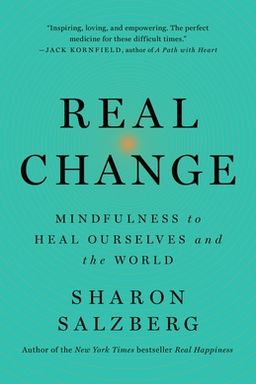
How can we create meaningful, lasting change in a world where suffering, injustice, and chaos seem ever-present? In Real Change: Mindfulness to Heal Ourselves and the World, meditation teacher Sharon Salzberg argues that true transformation—whether personal or societal—begins with awareness and compassion cultivated from within. She contends that while action is necessary, action without mindfulness and emotional balance perpetuates burnout, anger, and despair. Real change, she insists, comes when activism and mindfulness meet: when the heart fuels the hands.
Salzberg builds her argument around a timeless Buddhist insight: we are not in control of everything that happens, but we can control how we meet what happens. She explores how mindfulness and lovingkindness help us respond to both our private suffering and our collective crises with clarity rather than overwhelm. Drawing on her decades of teaching meditation and her deep involvement in social movements, Salzberg weaves stories of activists, educators, survivors, and caregivers who found resilience through awareness—a doctor treating neglected diseases, a parent surviving unimaginable loss, or an aid worker facing burnout. Through these voices, she shows how compassion and equanimity are not retreats from the world’s pain but radical tools for engaging it.
From Presence to Action: The Core Argument
At the heart of Real Change is the insight that our internal states mirror and shape the outer world. When we act from greed, anger, or delusion, even good causes falter; when we act from steadiness and love, our actions become medicine rather than contagion. Salzberg’s message echoes Thich Nhat Hanh’s idea of “engaged Buddhism”—that mindfulness is not for mountaintops but for the marketplace, the protest, and the family living room. She integrates ancient Buddhist teachings like the Eight Worldly Winds—gain and loss, praise and blame, pleasure and pain, fame and disrepute—with modern stories of resilience and activism. The key, she argues, is balance: the ability to hold joy and sorrow, hope and grief, engagement and acceptance simultaneously.
A Spiritual Toolkit for a Turbulent Age
Throughout the book, Salzberg introduces practices that help you stay present and compassionate amid turmoil. She teaches how to cultivate agency in the face of fear (chapter 2), transform anger into courage (chapter 3), move from grief to resilience (chapter 4), and nourish yourself without guilt (chapter 5). Later chapters explore interconnection, clear-sightedness, and equanimity—qualities that sustain long-term engagement without despair. Her guided meditations, such as lovingkindness and equanimity phrases (“I care about your pain, and I cannot control it”), provide readers tangible ways to anchor awareness in daily life.
Each of these teachings reflects key Buddhist principles reframed for modern activism. Like the Dalai Lama’s “simple religion of kindness” or bell hooks’s idea of “love as a practice of freedom,” Salzberg’s mindfulness is practical and revolutionary. It’s about reclaiming presence when the world demands panic. “Change,” she writes, “is not just what we do, but how we do it.” Her counsel is especially resonant in times of crisis: pandemics, inequality, ecological upheaval. In such times, mindfulness is not withdrawal—it’s resilience in motion.
Why It Matters Now
Salzberg wrote Real Change during an era of global uncertainty—political division, climate anxiety, and pandemic isolation—but her message transcends its moment. She invites us to ask: What does it mean to stay awake and compassionate when the world feels overwhelming? What if mindfulness could fuel social justice instead of numbing us to suffering? In answering these, she reframes activism as a spiritual practice and meditation as an act of courage. Her stories—from the civil rights movement’s songs of hope to children meditating in Baltimore schools—illustrate that awareness and love are not luxuries but vital resources for anyone working toward change.
Across eight chapters, Salzberg leads readers through a journey: finding agency in times of paralysis; turning anger into clarity; embracing grief as connection; replenishing self-care; awakening to interconnection; seeing through bias to systems; cultivating equanimity; and finally, acting with love and wisdom. She closes where she begins—with presence. “The most precious gift,” she echoes Thich Nhat Hanh, “is our presence.” From this presence, real change grows—like grass in Hiroshima after devastation. This, Salzberg suggests, is both an ancient truth and a modern necessity.