
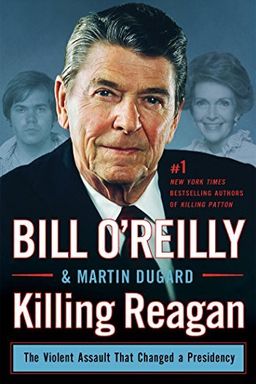
Idea 1
The Making and Meaning of Ronald Reagan
How does a shy Midwestern boy become one of the most effective communicators and transformative presidents of the twentieth century? The book argues that Ronald Reagan’s political persona was the product of biography, media craft, and moral conviction. It invites you to see Reagan not as a contradiction—Hollywood actor turned conservative president—but as the seamless result of personal needs and cultural moments that aligned over decades.
From Vulnerability to Performance
Reagan’s life in Dixon, Illinois, introduces his formative duality: insecurity from an alcoholic father and moral confidence from a charitable mother. His father Jack’s volatility made affection conditional, whereas his mother Nelle’s piety taught him human dignity. Those lessons fostered both empathy and a constant search for approval. Performance—reciting essays, acting in plays, narrating sports—became his therapy. From boyhood, applause was emotional repair, and that pattern never left him. When you see Reagan’s geniality on camera or behind a podium, you’re witnessing a lifelong exchange: intimacy translated into performance.
Voice, Camera, and Power
Reagan’s mastery of radio and film turned him into a prototype for the television age. At WOC/WHO he learned how to make sparse telegraph codes sound like vivid football games—compressing data into narrative. Hollywood then gave him a face audiences trusted. Films like Knute Rockne and Kings Row taught him disciplined image-making. During WWII, uniformed film work made him a symbolic soldier for millions, merging patriotism and performance into a unified public brand. (Note: In communication studies, Reagan is often compared to Roosevelt for voice control and to John F. Kennedy for television intuition.)
Ideology Through Experience
Reagan’s political ideas evolved less from intellectual theory than from lived conflict. He adored Franklin D. Roosevelt as a young man and supported the New Deal when it helped his unemployed father. Yet postwar realities—Hollywood labor turmoil, Communist infiltration fears, and the General Electric years—shifted his trust from government to individual initiative. As Screen Actors Guild president, he saw union disputes become ideological battlegrounds and concluded that excessive collectivism risked liberty. His GE tours later reframed that conviction into polished speeches celebrating free enterprise. Each new role—actor, spokesman, candidate—sharpened his argument that freedom depended on personal responsibility rather than bureaucracy.
Performance Becomes Politics
By the 1960s the entertainer had become a politician fluent in image and narrative. The 1964 speech “A Time for Choosing” transformed him from company spokesman into conservative icon, and the California governorship tested whether his rhetoric could survive policy constraints. His law‑and‑order responses to student unrest and pragmatic tax compromises displayed a hybrid: principled messaging with managerial learning. He learned persuasion works best when moral storylines connect to voters’ lived anxieties—tax burdens, regulation, global insecurity. His understanding of media timing and tone turned him into the first “television governor” and, eventually, the “Great Communicator.”
Moral Optimism Meets Cold War Reality
As president, Reagan applied his personal optimism to global hard power. His moral vocabulary—evil, freedom, faith—translated geopolitical struggle into drama between right and wrong. The same storytelling instinct that once made him a film hero now defined his foreign policy. Yet behind the clarity lay ambivalence: in Lebanon, Grenada, and Central America, his administration oscillated between idealism and improvisation. SDI (“Star Wars”) embodied this duality: a futuristic defense project that was technically uncertain but politically brilliant, shifting the Cold War narrative toward hope over fear.
Communication, Crisis, and Legacy
Across the book, you see how Reagan’s communication gift—once a coping mechanism—becomes a governing instrument. His short radio stories in the late 1970s rehearsed the simplicity that framed his 1980 campaign themes: lower taxes, moral renewal, and strong defense. As president, he used humor in debates (“There you go again”), symbolism in tragedy (the Challenger speech), and moral narrative in diplomacy (“Trust, but verify”). The Iran‑Contra scandal exposed his managerial blind spot: faith in subordinates and preference for uplifting themes over procedural rigor. But his farewell rhetoric and dignified handling of decline restored much of the trust lost. The core argument you carry from this book is that Reagan’s life, more than any ideology, explains his power: a performer who turned faith, optimism, and narrative into tools of persuasion strong enough to reshape politics, media, and the American imagination.