
Idea 1
A Good God in a Broken History
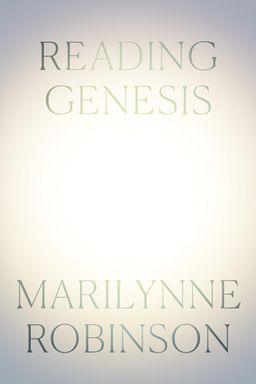
How can you read Genesis as both truthful about evil and confident about God’s goodness? In Reading Genesis, Marilynne Robinson argues that Genesis is a theodicy cast as narrative: it accounts for evil without denying the Creator’s goodness, and it does so by tracing a series of declensions, covenants, and recoveries in which human freedom and divine providence meet. Robinson contends that Genesis makes its case not by abstract argument but by a literary sequence—Creation, fall, fratricide, flood, Babel, and the patriarchal sagas—through which you see the tragic reach of human agency and the persistent resourcefulness of divine grace.
When you enter Genesis with this lens, you stop asking it to be a laboratory report or a tidy morality tale. Instead, you watch how a good creation encounters loss and how God chooses a covenantal path that honors human dignity even as it constrains violence. The book’s realism is unsparing: patriarchs lie, families fracture, cities fall. Yet its theological claim is steady—law and judgment arise within, and are tempered by, grace. This is why the text preserves both the stain and the sanctity of its protagonists, trusting you to reckon with moral ambiguity rather than sanitize it.
From Declension to Promise
Genesis unfolds as ordered movements that matter for meaning. Eden shows a moral rupture that does not erase original goodness. Cain’s murder makes visible the cost and reality of human freedom. The Flood stands as judgment and a painful restart, followed by a universal covenant marked by a rainbow. Babel scatters ambition that, left unchecked, could become a catastrophic power. Each episode narrows the field and raises the stakes for how God will relate to a creature who is “still sacred, still beloved,” yet capable of atrocity.
Out of these declensions, covenant emerges as God’s chosen mode: with Noah, God promises never again to unmake the world; with Abraham, God binds His purpose to a family so “all families of the earth” might be blessed. These promises run on long time—waiting, wandering, and the discipline of patience—so that history itself becomes the medium of divine faithfulness. (Note: Robinson draws here on the biblical cadence where a thousand years are like a day, inviting you to read delay as form, not failure, of providence.)
Monotheism Against Myth
Genesis also repositions the ancient imagination. Against Near Eastern myths like Enuma Elish and Gilgamesh—where gods feud, fear, and fashion worlds from corpses—Genesis says, “In the beginning God created,” and calls it good. Humans are not menials for divine appetites; they bear the divine image and receive stewardship. This shift grounds a moral universe where human life has intrinsic worth, and where evil cannot be shrugged off as divine temper. God judges, grieves, and covenants, but does not capriciously devour.
Human Freedom and Moral Realism
Because Genesis honors freedom, it honors culpability and transformation. Robinson shows you characters who live with consequences: Abraham lies about Sarah; Jacob deceives and is deceived; Judah sells his brother and must later confess to Tamar, “She has been more righteous than I.” The text refuses hagiography. It treats sanctity as God’s elective purpose working through flawed agents, not as the tidy virtue of spotless heroes. This realism keeps you from collapsing the narrative into either fatalism (we are pawns) or moralism (we are self-made saints).
Providence Without Excuse
Providence, in Genesis, does not cancel responsibility; it widens meaning. Joseph says to his brothers, “You meant evil against me; God meant it for good,” naming both culpability and a larger design. Dreams, promises, and providential turns make the plot cohere, but the text never substitutes metaphysical alibis for human choices. You live in two times at once—the immediate moral present where deeds matter, and the covenantal horizon where God works patiently for life.
Finally, Robinson stresses that Genesis often borrows cultural motifs only to transform them. The flood, cosmic imagery, royal priesthoods, and dream lore appear—but now they serve a monotheistic, ethically serious vision committed to human dignity and the preservation of creation. The result is a literary theology—an artfully edited, purposely sequenced text—that teaches you to see mercy as strength, law as a tutor for compassion, and time as the theater of a God who keeps promises without abolishing your freedom. (Parenthetical note: This reading resists both reductionist source-slicing and modern cynicism, aligning more with narrative theology’s interest in Scripture’s final form.)