
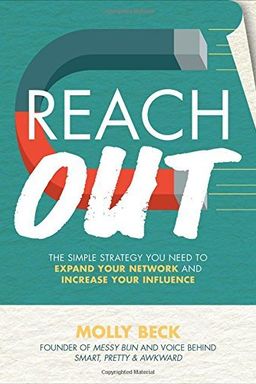
Reach Out cover

Reach Out

by Molly Beck

Reach Out by Molly Beck is a practical guide that empowers you to expand your professional network and amplify your influence. Learn the essentials of strategic communication, from leveraging weak ties to mastering the art of giving, to enhance your career and personal growth.

Reach Out: Building a Bigger Life Through Connection

How can you transform the course of your career, your relationships, and even your confidence—all by sending one message a day? In Reach Out: The Simple Strategy You Need to Expand Your Network and Increase Your Influence, Molly Beck argues that success isn’t reserved for those born with the right contacts, but for those willing to build them. Beck contends that real opportunity flows through human networks, and that the simple, disciplined act of reaching out digitally to one new person each weekday can change everything—from your professional prospects to your sense of agency.

At its core, Beck’s message is both strategic and deeply hopeful: you do not need wealth, elite schooling, or perfect confidence to change your trajectory. You need curiosity, consistency, and a laptop. The book invites you to adopt a deliberate system—the Reach Out Strategy Plan—that transforms networking from something awkward or transactional into a daily habit of generosity and connection. Over time, these small acts of outreach compound, giving you more influence, more insight, and more joy in your interactions.

The Power of the Edge of Your Network

Beck builds on sociologist Mark Granovetter’s famous idea of “weak ties”—acquaintances who, precisely because they occupy different social circles, bring us new information, fresh perspectives, and unforeseen opportunities. Your inner circle loves you, she notes, but their knowledge overlaps with yours. The breakthrough contacts—the ones that lead to the next job, the next project, or the next city—come from the fringes of your network. Beck’s mantra: opportunity lives at the edge, not the center.

(In Give and Take, Adam Grant similarly emphasizes that generosity within networks fosters long-term success—a theme Beck extends by making it practical and measurable.)

A Strategy Born from Necessity

Beck recounts her own origin story. Moving to New York City after college, with no safety net beyond internships and a blog, she realized that the people thriving around her weren’t necessarily smarter—they simply knew more people. One evening at a party, that insight clicked: influence is built, not inherited. So she opened her calendar and wrote the letters “RO”—short for Reach Out—on every weekday. That small act became transformative. By constantly connecting with people on the edges of her network, she built friendships, landed jobs, and launched creative projects, including MessyBun.com, her podcast creation platform.

Networking Redefined: From Verb to Noun

Traditional “networking” can feel forced—a room full of nametags and awkward smiles. Beck redefines the word “network” as simply “the people you know.” It’s not about attending events you dread, but about deepening real human relationships. Every email or message is an extension of kindness: you offer a small gift (a compliment, a helpful link, a genuine question) and sometimes a favor (a short, specific request). Done consistently, these micro-connections weave you into a web of genuine reciprocity. Your network expands because it is nourished rather than exploited.

The Anatomy of the Reach Out Plan

Throughout the book, Beck walks you through creating your personalized Reach Out Strategy Plan: identifying career goals, mapping your potential targets, crafting effective messages, managing responses, and tracking progress. You learn about the four types of Reach Outs—Re-ROs to people you already know, Follow-Up ROs to recent contacts, Borrowed Connection ROs to “friends of friends,” and Cool ROs to total strangers. By varying these types, you maximize response rates and confidence. Her advice is methodical but friendly: she demystifies email templates, social media etiquette, and even inbox organization, treating each as part of a holistic system of relationship-building.

Why a Daily Practice Changes Everything

The daily rhythm—one message per weekday—is the heart of the strategy. Beck insists that consistency transforms outreach from anxiety into habit. Much like journaling or exercise, it’s easier to do something every day than “some days.” Regular practice dissolves fear and self-doubt; you stop fixating on individual responses and begin focusing on the process of connection itself. Over time, these small efforts compound. At the end of a year, you’ll have reached out to roughly 260 people and likely begun over a hundred authentic conversations that could change your career.

A Philosophy Grounded in Generosity

Underlying every practical tip is an ethical stance: communication should be rooted in gratitude and joy. When someone reaches back, you respond quickly, kindly, and appreciatively. If they don’t, you send a short “Nudge Update” or simply move on without bitterness. Beck’s motto—“Be responsive and joyful”—turns networking into a form of service rather than self-promotion. As she quotes her grandfather, “Never talk down to anyone. And never let anyone talk down to you.”

In a world driven by fleeting digital contact, Beck’s message feels surprisingly human. What she offers is both a strategy and a mindset: meaning grows from connection, and connection grows from initiative. You have to raise your hand, send the first email, and be out there where the light can hit you. That’s how you build not only a bigger network—but a bigger life.


The Gift and the Favor: Networking Through Generosity

Beck’s secret weapon for building lasting connections is deceptively simple: every Reach Out must contain at least one Gift—something you give—and sometimes a Favor—something you ask. This structure turns outreach from a request into a relationship. Instead of asking for attention, you offer value.

The Psychology of Giving First

Drawing inspiration from Keith Ferrazzi (Never Eat Alone), Beck explains that the human instinct to reciprocate is hardwired. When someone receives a thoughtful gesture, they feel both appreciated and motivated to respond. That’s why it’s smart to begin every message with a compliment or a gift: you create emotional energy that opens the door for dialogue. It’s the digital equivalent of bringing a small token to someone’s house—not necessary, but disarmingly polite.

Five Kinds of Gifts

  • Gift #1: A sincere compliment tied to the recipient’s work or impact. This must be personal and specific—“I loved the insight in your May 10 post about women in tech” beats “Great article.”
  • Gift #2: A relevant article or book recommendation, showing shared interests and awareness of trends.
  • Gift #3: Unique access or creation—whether it’s a ticket, insider knowledge, or custom content you’ve made.
  • Gift #4: A press opportunity—the chance to be featured, interviewed, or celebrated publicly.
  • Gift #5: Free advice or help drawn from your expertise.

These gifts aren’t expensive; they’re thoughtful. When blogger Kirsten emailed Beck to compliment her site and suggest a book she might enjoy, that small act led to a podcast collaboration months later. Similarly, Austin Iuliano offered free business advice to a peer, expecting nothing—but his generosity earned him invitations to speak at events and lifelong collaborators. Giving activates opportunity.

Crafting an Effective Favor

Unlike gifts, Favors require precision. Beck warns against vague or lazy requests like “Can I pick your brain?” or “Can you mentor me?” Instead, frame a short, specific ask—something that can be answered quickly and that’s not publicly available. For example, “What’s one book you’d recommend to an early-stage entrepreneur?” or “Which conference gave you the best ROI last year?”

Good favors respect the recipient’s time and expertise. They communicate that you’ve done your homework and that you value their perspective. And when combined with Gifts, they create balance: you give before you ask, which makes the request feel natural rather than extractive.

Networking by Reciprocity, Not Extraction

This approach reframes networking from being opportunistic to being reciprocal. You’re not chasing responses; you’re curating relationships. Over time, the compound effect of giving first builds a reputation for generosity. People remember you as helpful, pleasant, and professional—a triad that opens more doors than any single strategic email.

A Lesson in the Power of Small Gifts

“One of the most generous things we can do,” Beck writes, “is tell someone how they’ve impacted us.” Words, not objects, often become the most memorable gifts.


The Four Types of Reach Outs

Beck categorizes every outreach into four types, each reflecting your relationship level with the recipient. Understanding these helps you plan strategically, boost response rates, and stay confident even when someone doesn’t write back.

1. The Re-RO: Reconnecting

A Re-RO is reaching out to someone you already know—from old colleagues to classmates. Because they recognize your name, these have the highest response rates (around 80%). They’re ideal starting points because they mix familiarity with freshness. Beck encourages starting with Re-ROs to build early success and confidence.

For example, Alessia Tenebruso, launching her cake company, began by messaging an old high-school contact who’d started a brownie business. That simple reconnection led to support and momentum she needed to keep going.

2. The Follow-Up RO: Cementing New Connections

These are follow-ups to people you’ve met recently—at events, panels, or even parties. Timing matters; write while your name is still top-of-mind. Beck’s rule: if you take someone’s business card, you must follow up. Add a compliment about your meeting and a small gift like an article or idea. Lane Sutton used Snapchat to connect after conferences, turning casual meetups into professional speaking engagements.

3. The Borrowed Connection RO: Friend of a Friend

Borrowed Connections leverage others’ networks—a warm introduction through someone you both know. They can feel intimidating but are often magic. If your mutual contact emails an introduction, thank them immediately and move them to BCC to save their inbox. These “friend-of-friend” bridges drastically increase trust and response.

Irnande Altema, a Maryland attorney, found her law career starting with just such an RO. Her former boss connected her to a legislative consultant who hired her and connected her to a senator. Through one borrowed link, a career took root.

4. The Cool RO: Cold Outreach

Cool ROs are direct messages to strangers—authors, CEOs, or journalists you’ve never met. They have the lowest response rate (~25%) but can lead to extraordinary outcomes. Cody Miles, a marketer frustrated with a client project, cold-emailed Andy Weir (author of The Martian) for advice. Against all odds, Weir replied within a day. His encouragement helped Cody reset his career.

Mixing It Up for Momentum

Beck advises keeping Cool ROs to under 20% of your outreach and focusing mainly on Re-ROs and Follow-Ups for more predictable engagement. By diversifying types, your weekly mix stays balanced and energizing. Like investments in a portfolio, some contacts yield steady returns, while others hold the chance for big wins. Over time, you grow both reach and resilience.

Grant’s Connection Principle

Adam Grant’s research on reciprocity underlines Beck’s framework: nurturing weak and dormant ties multiplies opportunities exponentially. You don’t just gather contacts—you build bridges to the future.


Mastering the Art of Communication

If generosity is the engine of the Reach Out strategy, communication is its vehicle. Beck dedicates entire chapters to teaching the craft of writing effective messages, both by email and on social media, with a balance of professionalism and personality.

The Perfect Email Structure

Her “Email Template of Your Dreams” turns writing into a formula anyone can replicate. It starts with deciding whether to send from your personal or work email (personal is preferred), then crafting a subject line that sparks curiosity: mention a mutual connection, reference something specific, or note a shared interest. This beats boring lines like “Quick question.”

Once you open with a warm greeting and one-sentence bio, you offer your Gifts, then—if appropriate—add a Favor. End with gratitude and a polished signature that highlights who you are and what you do. The result? Short, thoughtful, and human.

The Role of Tone

Tone, Beck insists, is everything. Emails should be conversational yet respectful. Overly formal language (“Kind regards,” or “To whom it may concern”) feels cold; slang feels sloppy. She quotes examples of effective outreach, like Kirsten’s witty book recommendation or Jennifer Lawrence’s playful message to Amy Schumer beginning “I’m in love with you.” The takeaway: authenticity beats perfection.

Social Media Reach Outs

When it’s hard to find someone’s email, social media provides an alternative. Platforms like LinkedIn, Twitter, and Instagram let you message directly and show snippets of your professional life. Beck offers a modified template for shorter, more casual exchanges. The same principle applies: open warmly, give a gift, keep the favor small, and include your email so the conversation can move to a more formal channel.

For instance, Maria Yuan reached out to venture capitalist Albert Wenger via Twitter, noting his interest in civic tech. Her tweet led to a deeper exchange over email and substantive advice. One 140-character interaction opened doors that cold emails rarely could.

Rules for Responsiveness

Beck emphasizes that professionalism continues after the “Send.” When people reply, answer within 24 hours—quick, kind, and thankful. A 2010 study cited in the book (by Francesca Gino and Adam Grant) shows that expressing gratitude doubles helping rates. A simple “Thank you so much!” isn’t optional—it’s strategic kindness that builds reputation. If someone doesn’t respond, send a polite “Nudge Update” four weeks later, adding new value rather than pestering.

Your goal is not one perfect message, but a sustained rhythm of respectful contact. Over time, people remember those who write well, sound sincere, and make it easy to say yes.


Managing Fear and Building Confidence

Few obstacles loom larger than self-doubt. Beck opens up about her own anxiety before sending her first Reach Out email—hands shaking, stomach twisting, imagining someone replying “You’re stupid.” But she assures readers: fear is not a signal to stop; it’s a sign you’re expanding.

Understanding the Psychology

Through insights from Vancouver psychotherapist Megan Bruneau, Beck explains that fear of rejection is our mind’s attempt to avoid emotional discomfort. We dread being judged, dismissed, or ignored because those outcomes trigger feelings of inadequacy. Yet the cure isn’t avoidance—it’s repetition. Reaching Out daily exposes you to rejection until it loses its sting.

(This mirrors cognitive-behavioral techniques for exposure therapy, where small, repeated contact with fear reduces its power.)

Reframing Rejection

Beck invites you to imagine worst-case scenarios and write them down—then email them to yourself. Once you receive your own “worst response,” you’ll see that survival is easy. Over time, rejections fade, and only successes stand out in memory. This mindset flips rejection into resilience training.

The Habit that Heals Anxiety

By sending one Reach Out daily, you build momentum that overpowers insecurity. Each small success builds evidence that you’re capable, valuable, and worthy of connection. Beck’s story about emailing Judy Kou Kasper, founder of Sunday Brunch Dress, shows how this works. Her genuine message led to a friendly meeting, validating that people are often kind when approached with sincerity. Even when other emails went unanswered, she barely remembered them—only the wins remained vivid.

“All Life Is an Experiment”

Beck quotes Ralph Waldo Emerson to remind us: the more experiments we make, the better. Each email is one data point in the adventure of expanding your world.

For anyone struggling with fear of visibility, this chapter feels like a gentle friend’s pep talk. You don’t need to banish fear; you need to act anyway. Every sent message whispers a quiet truth: courage grows through action, not contemplation.


Making Time and Tracking Progress

Everyone says they’re too busy. Beck dismantles that excuse with time management strategies that make daily outreach sustainable. She introduces two schedules—A and B—to adapt to any lifestyle and emphasizes the importance of tracking your progress like a professional.

Schedule A: The Weekly Batch

If you prefer structure, dedicate one weekly 45-minute block (Friday afternoon or Sunday night) to plan the week’s five Reach Outs. Draft or schedule all messages in advance using tools like Boomerang or email drafts. This batch system suits planners who like to front-load tasks before the week begins.

Schedule B: The Daily Routine

For others, Beck recommends sending one Reach Out per workday—ideally at a consistent time, like mornings with coffee. This pattern, she notes, keeps outreach automatic and stress-free. It’s easier to do six minutes daily than 30 once a week. Gretchen Rubin’s insight (“It’s easier to do something every day than some days”) perfectly supports Beck’s mantra.

The Reach Out Tracker

To avoid chaos, Beck urges using a simple spreadsheet to log each outreach: name, date, method, type, gifts offered, favor requested, and result. Over time, patterns emerge—who responds fastest, which messages resonate, and how your confidence grows. You can upgrade into specialized versions:

  • Career Inspiration Tracker: Adds fields for education, career paths, and insights from admired professionals, revealing trends and models for future moves.
  • Project Help Tracker: Categorizes contacts by expertise, allowing entrepreneurs to quickly identify potential advisors or collaborators.

These tracking habits turn networking into data. Diana Murakhovskaya and Irene Ryabaya of Monarq used their tracker to efficiently locate startup lawyers from hundreds of event contacts, saving weeks of effort.

Inbox Strategy for the Time-Crunched

Appendix A adds practical advice from professionals for inbox control: use folders like “Deal with Friday,” apply the two-minute rule, or dedicate 20-minute cleaning sessions thrice daily. Each technique reminds you that communication is not a burden but momentum.

Beck’s Challenge

“If you Reach Out to one person every business day,” Beck writes, “you’ll have connected with 260 people in a year.” Assuming a 40% response rate, that’s over a hundred new conversations. Not bad for a few minutes a day.


From Networking to Influencing: Taking It Further

In the final chapters, Beck turns your individual practice into community impact. Once you’ve mastered the mechanics, she shows how to become the person others reach out to—a magnet for opportunity and generosity.

Becoming Someone Else’s Target

After months of consistent outreach, expect others to start contacting you. Beck calls this transformation “becoming the Target.” To encourage it, keep your email and social handle visible, respond quickly, and always radiate joy. Billboard editor Adelle Platon aims to reply to every email within seconds because responsiveness signals reliability and enthusiasm. Even if you can’t match her pace, Beck insists that promptness and positivity make you memorable.

Connecting Others

One of the most advanced uses of your network is introducing two people who could help each other. Beck outlines two options: introduce both parties in a single email (her recommended method) or pass along one’s address with permission. Always check that both sides consent and gracefully step out of the thread. This turns you into a bridge-builder who compounds connections and goodwill.

Starting a Reach Out Initiative

The Reach Out Initiative (ROI) functions like a book club for connection. Gather 2–10 participants, define SMART goals, pair accountability buddies, and track progress via a shared spreadsheet. Celebrate successful goals with a group dinner or storytelling night. The message: community amplifies consistency. As Beck notes, when people focus on their outreach successes, those successes multiply.

The Ripple Effect

Beck’s vision extends beyond career advancement—it’s cultural. She writes that after you’ve spent months of reaching out, you change not only how others see you but how you see yourself. You move from waiting to volunteering, from hoping to acting. And that ripple spills outward: generosity and responsiveness spread through your network like positive contagion. In a divided, distracted world, her approach feels radical in its simplicity—kindness done consistently becomes influence.

Her closing words echo with possibility: “You have to volunteer to stand in the spotlight. You have to send the first email.” It’s a manifesto for courage and connection—because in Beck’s worldview, networks aren’t about power; they’re about participation.

Dig Deeper

Get personalized prompts to apply these lessons to your life and deepen your understanding.

Go Deeper

Get the Full Experience

Download Insight Books for AI-powered reflections, quizzes, and more.