
Idea 1
The New Work Order and the Crisis of Security
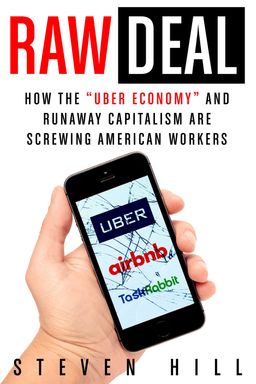
You now live in what the author calls the new work order—a shift as profound as the Industrial Revolution. Work is increasingly mediated by apps, platforms, algorithms, and automation, reshaping the relationship between labor and capital. The book argues that this transformation is not simply technological; it’s political and moral. It asks whether this emerging digital economy will empower millions as independent earners or recreate a pre–New Deal landscape of insecurity and inequality. Everything from how you hail a ride to how you earn a paycheck is subject to this realignment.
The rise of the freelance society
Over a third of U.S. workers already participate in freelance or contract labor. Platforms such as Uber, Airbnb, TaskRabbit, and Upwork act as intermediaries, matching buyers and sellers but avoiding the obligations of employers. They sell freedom and flexibility—“be your own boss,” they say—but deliver volatility instead of stability. Behind every empowering slogan lies a shift of risk from corporations to individuals. (Note: This mirrors sociologist Arne Kalleberg’s concept of “precarious work,” which predicts such fragmentation.)
Platform narratives vs. the lived reality
Airbnb co-founder Brian Chesky promises belonging; Uber’s Travis Kalanick promises an end to car ownership. Yet the book shows how Airbnb drives housing shortages by converting residential units to quasi-hotels and how Uber drivers face ping-driven shifts, self-financed equipment, and no safety net. You, the worker, lose employer-provided benefits, absorb self-employment taxes, and manage your own health coverage while competing globally in race-to-the-bottom bidding wars.
Digital labor markets such as Upwork, Fiverr, and TaskRabbit have turned freelancing into high-speed auctions. Tasks are decomposed into “micro-gigs” and “nano-gigs,” optimized by algorithms for efficiency but ignoring workers’ well-being. The more desperate the worker pool, the lower the price floor sinks. That is why many treat these platforms not as empowerment vehicles but survival mechanisms. Kevin Roose summarized it best: “The sharing economy isn’t about trust. It’s about desperation.”
Fissured workplaces and misclassification
Meanwhile, traditional employers have learned from the platform playbook. They “fissure” the workplace—subcontracting janitors, truck drivers, warehouse crews, even technicians—to avoid labor law obligations. When companies misclassify workers as independent contractors, they dodge payroll taxes and obligations worth 20–30% of labor costs. The stories of Fritz Elienberg (an cable installer abandoned after injury) and Nissan’s contract workers illustrate how this legal maneuver deprives millions of foundation protections such as overtime, unemployment insurance, or workers’ compensation. Enforcement struggles to keep pace, since no single entity claims responsibility.
Automation and the looming singularity
Automation deepens these structural shifts. Robots now prepare hospital pharmacy medications, algorithms analyze X-rays, and AI like IBM’s Watson assists in law and medicine. An Oxford study estimated up to 47% of U.S. jobs could be automated within two decades. Unlike earlier waves of mechanization, this new frontier threatens middle-skill cognitive jobs—paralegals, radiologists, and accountants—not just factory roles. Productivity soars, but purchasing power lags, raising the specter of what the author calls an Economic Singularity: when machines produce abundant goods that humans no longer earn enough to buy.
Core question
Can technology be harnessed to broaden prosperity—or will it render the majority of people economically irrelevant while concentrating gains among a few?
Why moral and policy choices matter
The book’s deeper thread is moral: people like Maria Fernandes, the Dunkin’ Donuts worker who died asleep in her car between part-time shifts, reveal that these abstract economic patterns have a human cost. Her death symbolizes the invisible toll of a society without institutional safeguards. The author argues that addressing that injustice requires structural responses—modern safety nets, labor-law reform, and portable benefits that travel with workers across gigs and platforms. This is not just economics; it’s civic repair.
Across its narrative arc, the book traces how your work life is reshaped by forces of platform capitalism, automation, and political capture—but it also offers pathways out: collective organizing (Freelancers Union, Workers Lab, local wage campaigns), new benefit designs (Individual Security Accounts), and local policy innovation (city-level minimum-wage and health programs). At its core, it calls for rebuilding the social contract around portability, inclusion and dignity. You’re asked not just to adapt to the new work order but to demand its moral and institutional reconstruction.