
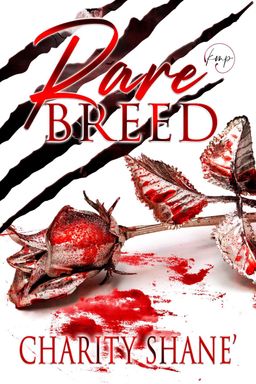
Rare Breed cover

Rare Breed

by Sunny Bonnell and Ashleigh Hansberger

Rare Breed is a daring guide to success for those who refuse to conform. Authors Sunny Bonnell and Ashleigh Hansberger offer strategies to embrace your uniqueness, break norms, and follow your passions to create a distinctive path to personal and professional achievement.

Owning Who You Are in a World That Fears Difference

Why do the very qualities that make us unique often make us feel like outcasts? In Rare Breed: A Guide to Success for the Defiant, Dangerous, and Different, Sunny Bonnell and Ashleigh Hansberger argue that the traits society calls flaws—rebelliousness, obsession, weirdness, intensity, emotion—are actually your greatest strengths. Their bold message is that you don’t succeed despite being different; you succeed because of it. Conventional leadership and self-help books tell you to control, suppress, and mediate your impulses. This book says the opposite: amplify them, sharpen them into superpowers, and use them to redefine what success means.

The Case for the Rare Breed

Bonnell and Hansberger built their creative agency, Motto, on this exact philosophy. In their early twenties, they launched a business with $250 and a few dangerous ideas, only to face skepticism, sabotage, and bankruptcy scares. As they tell it, the moment that saved them came when Sunny’s father told them, “You two are a rare breed. The ones who get you will never forget you.” It was a revelation: maybe what made them too bold, too emotional, too intense was the entire point. Hence, the creation of the “Rare Breed” mindset—a modern manifesto for anyone tired of conforming to the world’s narrow definition of success.

According to the authors, every industry rewards obedience but quietly depends on defiance. They divide the book into seven “Virtues” that are usually treated like vices: Rebellious, Audacious, Obsessed, Hot-Blooded, Weird, Hypnotic, and Emotional. Each virtue reveals a paradox: your “too much” is also your power. The authors pair historical figures, cultural icons, and modern entrepreneurs—from Harriet Tubman to Beyoncé—with practical mantras that teach how to refine each trait without losing its wild edge.

From Conformity to Courage

The book opens with a reminder that we’ve all been trained to fit in. Society, education, and corporate culture are designed to iron out eccentricities. Bonnell and Hansberger liken this conditioning to laboratory animals accepting their restraints—living within invisible limits they no longer question. The Rare Breed rejects that programming and sees rebellion as the source of progress. Every breakthrough, from Steve Jobs’ early computers to Amelia Earhart’s flights, required someone to disobey. As Oscar Wilde wrote (and they quote approvingly), “Disobedience, in the eyes of anyone who has read history, is man’s original virtue.”

The Dangerous Duality

Each virtue, however, has a shadow side. Audacity can slip into arrogance, obsession into burnout, emotional sensitivity into fragility. Being a Rare Breed doesn’t mean romanticizing chaos; it means learning to control the voltage of your own power. The authors use mythic and modern cautionary tales—from Icarus flying too close to the sun to the tech narcissists who crash their companies—to explore the fine line between visionary and reckless. As Carl Jung argued, transformation requires “a tension of opposites.” The more self-aware you become, the better you can channel your wildness toward greatness rather than self-destruction.

A Roadmap for the Defiant

This book isn’t a set of career hacks but a philosophy of life. Through stories of entrepreneurs, artists, and activists, the authors show you how to turn defiance into value. You meet chefs like Chad Houser, who trains previously incarcerated youth, and innovators like Miki Agrawal, who turns taboos into multimillion-dollar movements. You learn that greatness often starts with being doubted or dismissed. The authors’ call to action is clear: stop sanding down your edges, start amplifying them. Your rebellion, audacity, or weirdness might be the exact spark the world needs.

Bonnell and Hansberger’s Rare Breed journey also reframes success as moral and creative fulfillment, not just wealth. They end the book with a challenge borrowed from Dead Poets Society: “The powerful play goes on—and you may contribute a verse.” What will your verse be? For those struggling to balance authenticity with ambition, Rare Breed is more than motivation—it’s permission to be fully, fiercely yourself.


Rebellion as a Force for Change

The first Rare Breed Virtue, Rebellious, begins with a provocation: revolutions aren’t just fought in the streets but in boardrooms, classrooms, and living rooms. Bonnell and Hansberger argue that rebellion is the origin of progress. Every social, technological, or artistic leap came from someone saying, “Enough.”

Rebellion Has a Legacy

The authors anchor this virtue with the story of Harriet Tubman. Enslaved in Maryland, Tubman not only escaped bondage but returned again and again to rescue others. Her unyielding courage redefined rebellion as moral duty. “There was one of two things I had a right to, liberty or death,” she said. Her example shows that rebellion becomes heroic when it serves others rather than ego. The lesson: your rebellious streak means little unless it dismantles something oppressive—whether that’s an outdated business model, a toxic workplace, or your own fear.

The Conditioning to Conform

Since childhood, we’ve been trained to behave—to “stay in line,” “play nice,” and “follow the rules.” The book argues this training is psychological conditioning designed to suppress curiosity and resistance. The authors cite Steve Jobs’ reflection that “everything around you that you call life was made up by people no smarter than you.” When you realize that, you can stop asking for permission.

Rebellion with Purpose

Rare Breeds rebel for reasons that matter: to disrupt broken systems, to “right a great wrong,” or to defy conformity that kills creativity. Examples include Emma González, who fearlessly addressed the NRA after the Parkland school shooting, and entrepreneurs like Matt Scanlan, who upended the Mongolian cashmere trade to pay herders fair wages. Their message: rebellion guided by justice and empathy leads to creation, not chaos. The authors warn, however, of destructive rebels—those who burn everything without rebuilding. Hitler, they note, was a rebel without a moral compass, proving that rebellion without conscience becomes tyranny.

Ultimately, rebellion isn’t about outrage but ownership. It’s standing for something so strongly that you can’t stand by. The book urges you to ask: What am I rebelling against? and What do I want to build in its place? Only by answering both can you become a creator, not just a destroyer.


Audacity: The Art of Doing What Can’t Be Done

Audacity, the second virtue, is the courage to try what others call impossible. Bonnell and Hansberger describe audacious people as “emissaries from a world that doesn’t yet exist but will.” To be audacious is to see future possibilities others can’t imagine and to act on them despite ridicule or fear.

Daring Beyond Limits

Examples fill the book: Larry Page and Sergey Brin founding Google despite established giants, Ruth Bader Ginsburg redefining gender equality, and the authors themselves re-pitching their rejected book under the same title that publishers said would never sell. They argue that audacity demands irrational optimism—what psychologist Carol Dweck might call an extreme growth mindset. It’s not talent but unflinching belief that bends reality.

Failure as Fuel

Audacious projects often fail spectacularly before they work. Sir James Dyson built 5,127 prototypes of his vacuum before success; the authors faced rejection after rejection for Rare Breed. Their conclusion: every failure is a form of proof that you’re trying something truly new. As Dyson said, “Failure is the path to invention.”

Guarding Against Hubris

Of course, audacity can curdle into arrogance. The authors invoke the myth of Icarus: soar too high, and the wax melts. Fyre Festival’s Billy McFarland—whose vision crashed under greed and denial—illustrates how unchecked ego corrupts ambition. The lesson: temper boldness with humility and research. “There is no easy way from the earth to the stars,” Seneca wrote—and the authors agree, reminding you to balance courage with conscience.

Audacity, then, is not recklessness. It’s radical imagination coupled with accountability. It’s refusing to lower your aim just because the world is comfortable with mediocrity.


Obsession and the Pursuit of Mastery

Under the Virtue of Obsessed, the authors explore how relentless commitment—what others might call madness—defines true excellence. Like Malcolm Gladwell’s “Outliers,” this section rejects the myth of innate genius. What separates the masters from the mediocre isn’t talent but devotion beyond sanity. As they write, “Obsession hands success a blank check and says, ‘Fill in the amount.’”

The Discipline of Perfection

From Nobel laureate Marie Curie experimenting until radiation destroyed her health to sushi master Jiro Ono massaging octopus for forty-five minutes each day, the hallmark of obsession is discipline. The authors highlight Jiro’s apprentices who fail hundreds of times before mastering a single omelette. True mastery, they argue, transforms not just skill but character; you become someone new through suffering and repetition.

The Dark Side of the Burn

Obsession without boundaries becomes burnout. Stanley Kubrick’s 97 takes of a single scene in Eyes Wide Shut left teams exhausted, while geniuses like Sylvia Plath and Avicii were devoured by their perfectionism. The authors caution: even visionaries need rest, systems, and perspective. Your obsession should consume your doubts, not your health.

Turning Obsession into Purpose

Channeling your obsession effectively means aligning it with love and mission. Entrepreneur Ayah Bdeir, founder of littleBits, says, “Unless you feel in your blood that what you’re creating needs to exist, you won’t have fuel to keep going.” Purpose transforms obsession from neurosis into innovation. The takeaway: never apologize for your fixations—just ensure they serve something larger than ego.


Hot-Blooded Passion and Controlled Fire

Passion, the beating heart of the Rare Breed, fuels everything else. To be Hot-Blooded means to feel deeply and act fiercely. But, as the authors insist, fire must be contained or it burns you alive.

Living and Leading with Heat

Examples range from Anthony Bourdain, whose hunger for experience made him a cultural compass, to Serena Williams, whose righteous fury at sexism on the court became a statement for all women. Passion propels us beyond our comfort zones—it’s the antidote to the “meh” life of mediocrity. As Howard Thurman said, “Don’t ask what the world needs. Ask what makes you come alive.”

Harnessing Rage and Energy

Bonnell and Hansberger use Buddy Stephens, the fiery football coach from Netflix’s Last Chance U, as a study in calibration. His temper builds champions but also alienates teams. Likewise, Beyoncé’s Lemonade channels betrayal into art, showing that pain, when translated into purpose, becomes power. The key is transformation, not suppression.

When Fire Meets Grace

The dark side of passion is volatility. Rage without wisdom ignites destruction, from toxic leaders to creative implosions. Yet, as the authors repeatedly note, compassion cools the flame. Passionate strength becomes leadership when it lights the way for others, not just for applause. Controlled passion inspires loyalty; uncontrolled passion scorches trust.


Weirdness as a Superpower

If the previous virtues run hot, Weird celebrates the odd, the offbeat, and the outsiders. Bonnell and Hansberger argue that eccentricity is not deviation—it’s differentiation. Weirdness communicates originality and courage to defy templates.

From Mockery to Magic

Many of the world’s geniuses were misfits long before they were legends: Tim Burton, David Bowie, Cindy Gallop. Each took ridicule as license to go further. The authors trace how this “Red Sneakers Effect” (after a 2013 Journal of Consumer Research study) shows that rule breakers often gain status precisely because they flout norms.

The Creative Alchemy of Contradiction

Weirdness thrives on juxtaposition—like Steve Pateman’s “Kinky Boots” factory saving his family business by making high heels for drag performers or Doug Quint’s Big Gay Ice Cream, which turned joy and audacity into a brand empire. These stories prove that contrast creates resonance. The strange sticks because it surprises.

Owning the Freak Flag

Weirdness isn’t costume—it’s conviction. You embrace your quirks strategically, using humor, art, or shock to spark connection, not alienation. The question isn’t, “Am I too weird?” but “Am I weird enough to be memorable?” For Bonnell and Hansberger, your eccentricities are your brand DNA. Hide them, and the world loses your most compelling story.


Hypnotic Influence and the Power of Story

To be Hypnotic is to connect so deeply that people feel changed after interacting with you. The authors redefine charisma—not as charm, but as the ethical use of influence. In a distracted age, the ability to command full attention is revolutionary.

Presence, Power, and Warmth

Drawing from Olivia Fox Cabane’s The Charisma Myth, Bonnell and Hansberger show how great communicators integrate three elements: presence (complete focus), power (confidence and competence), and warmth (empathy). Barack Obama’s 2004 DNC address, with its refrain of unity, exemplifies how charisma can lift rather than manipulate.

Creating the Reality Distortion Field

Steve Jobs’ “reality distortion field” embodies productive persuasion—rallying others to build what doesn’t yet exist. Similarly, Bishop Michael Curry’s electrifying royal wedding sermon demonstrates inspiration through authenticity. Both show that hypnotic leaders don’t deceive; they invite you into a shared vision.

Ethics in Influence

The boundary between charisma and manipulation is intent. Using your gift to uplift is magic; using it for ego is malpractice. Bonnell and Hansberger celebrate persuasive leaders—from Lena Waithe to Fred Rogers—who communicate with transparency, humility, and conviction. Their unified message: your power to move others carries a moral obligation to serve.


Emotional Intelligence as the Ultimate Leadership Tool

The final Virtue, Emotional, brings the framework full circle. Far from weakness, emotion is the infrastructure of connection. In a rational world, sensitivity becomes radical strength. The authors profile empathetic leaders—Howard Schultz of Starbucks, Indra Nooyi of PepsiCo—who use vulnerability to unite rather than dominate.

Leading with Heart

Fred Rogers is the emotional archetype. His sincerity before a 1969 Senate committee saved PBS funding by melting cynicism with authenticity. Emotional leaders, the authors argue, build trust through transparency and gratitude. Writing a love letter to your team, as Schultz famously did, can be as powerful as any strategic plan.

Vulnerability Without Fragility

Highly sensitive people, they note, risk burnout from empathy overload. The key is balance. Emotion should inform decisions, not drown them. The emotionally intelligent Rare Breed listens deeply but also protects their own energy by setting boundaries and practicing self-care. This blend of heart and discipline turns emotion into intuition, not instability.

Writing Your Verse

The book ends with a universal calling: to contribute your verse—to express your values through work that leaves a trace of kindness or courage behind. Whether you build a brand, save a species, or just make someone’s life better, your emotional legacy is your mark. In the end, being human is the rarest breed of all.

Dig Deeper

Get personalized prompts to apply these lessons to your life and deepen your understanding.

Go Deeper

Get the Full Experience

Download Insight Books for AI-powered reflections, quizzes, and more.