
Idea 1
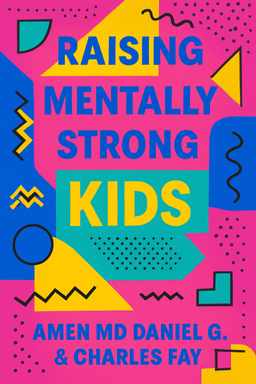
Building Mentally Strong Kids Through Brain‑Smart Parenting
How can you raise calm, responsible, and resilient children in a world that overstimulates and distracts them? In The Brain‑Smart Way to Raise Mentally Strong Kids, Dr. Daniel Amen and Dr. Charles Fay combine neuroscience with Love and Logic's proven discipline model to show that strong minds are the product of healthy brains, patient modeling, and loving, firm connection. They argue that every behavior problem is ultimately a brain problem—one that responds best to understanding, structure, and empathy rather than punishment or permissiveness.
This approach unites brain science with day‑to‑day parenting. You learn how biology (nutrition, sleep, toxins, exercise), psychology (thought patterns and goals), social context (relationships and boundaries), and spirituality (meaning and purpose) interact to shape your child’s development. The authors show that you can upgrade your child’s mental resilience by improving their brain health, setting clear goals, building secure bonds, modeling sound thinking, and living your own One Page Miracle—a one‑page summary of what truly matters in life.
Parenting as Brain Coaching
From decades of imaging research, Dr. Amen observed that everything about behavior—attention, mood, impulse control—traces back to brain function. “When your brain works right, you work right.” The parent’s job is therefore to act as an external prefrontal cortex—guiding choices until the child’s frontal lobes mature, around age 25. When brain health improves, emotional regulation, judgment, and empathy follow. That insight shifts parenting from moralizing to brain training: nourishing, protecting, and stimulating the brain through daily habits.
The Role of Relationship
Connection is the highway through which influence travels. Without emotional safety, discipline backfires. Love and Logic’s Consultant style—high warmth and firm limits—creates this balance. When your child feels noticed, valued, and capable, they listen. “Nothing works without relationship,” Fay repeats, echoing attachment research showing that secure bonds lower teen risk behaviors and boost cooperation.
Healthy Brains, Healthy Minds
The authors summarize the 11 BRIGHT MINDS risk factors that endanger brain health: poor blood flow, irrational thoughts, inflammation, bad genetics management, head trauma, toxins, untreated mental illness, infections, hormonal issues, diabesity, and sleep loss. Each category has concrete, actionable steps: exercise daily, limit processed sugar, treat infections early, and prioritize sleep. Diets high in omega‑3s and low in artificial dyes (like Red 40) measurably improve behavior. A healthy brain is a fertile ground for learning and kindness.
Mental Hygiene and Thought Training
Every family has pests—Automatic Negative Thoughts (ANTs)—that corrode confidence and peace. Teaching kids to name and challenge their ANTs (“Is it true? Are you sure?”) inoculates them against anxiety and pessimism. Regular gratitude, questioning, and reframing become emotional disinfectants. This habit not only changes mood but rewires the neural pathways that regulate fear and impulse (a concept supported by cognitive‑behavioral therapy research).
Goals and the Prefrontal Cortex
The prefrontal cortex is the brain’s CEO; training it means training for focus and purpose. Amen’s One Page Miracle (OPM) puts your top goals—relationships, work, finances, self—on one sheet reviewed daily. Families who create shared OPMs discover alignment and responsibility. Kids write their own versions (“Relationships, School, Myself”) and test each choice against the question, “Does it fit?” That question functions like a moral compass powered by neuroscience.
Discipline as Teaching
Punishment scares but rarely educates. Discipline, by contrast, teaches cause and effect while preserving dignity. Fay’s Love and Logic strategies—empathy first, affordable mistakes, enforceable statements (“I will drive you when I see your gear put away”)—build accountability. The goal is not obedience in your presence but wisdom in your absence. Empathy activates cooperation; lectures shut it down. Even consequences like the “energy drain” technique transform discipline into learning: “I’m too tired to drive to practice after cleaning your mess—how could you replace my energy?”
Creativity, Boredom, and Contribution
Strong brains don’t just consume—they create. The authors contrast skaters (who rearrange existing things) with creators (who make new ones). Weekly “boredom training sessions” remove screens and force children to invent games, repair gadgets, or build crafts. Likewise, chores reframed as “family contributions” teach belonging and responsibility. Each task says: “You matter to this group.” That shift from entertainment to contribution develops grit, purpose, and self‑respect.
Partnership, Conflict, and Recovery
Even the best strategies fail if parents contradict each other. The book’s later chapters teach couples how to end power struggles by listening first, dropping control attempts, and focusing on shared goals. When disagreements arise, parents can treat them as experiments rather than proof of failure. Ending the fight begins when one person says, “I’m sorry. I’ll change my part.” This emotional maturity shields children from anxiety and inconsistent discipline.
When Nothing Works—Look to the Brain
Sometimes, defiance hides a biological issue. A child’s underachievement can stem from ADHD, infections, hormonal problems, toxins, or sleep loss. The authors’ Four‑Circle model (biological, psychological, social, spiritual) ensures nothing is overlooked. Early evaluation, nutrition, and therapy can repair what discipline alone cannot. Hope runs through every page: brains are plastic, love heals circuitry, and small improvements compound over time.
Together, these principles weave a complete philosophy: nurture the brain, connect through empathy, set firm but loving limits, model integrity, and guide with clear goals. Mentally strong kids are made—not by luck or fear—but by parents who blend neuroscience and compassion into daily practice.