
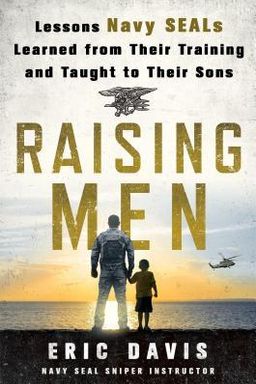
Raising Men cover

Raising Men

by Eric Davis

Raising Men explores transformative military lessons, revealing how Navy SEAL principles like boldness and accountability can strengthen father-son relationships. Learn to raise disciplined, confident sons through real-life SEAL stories and practical guidance.

Raising Men through Navy SEAL Principles

What does it take to raise boys into strong, capable men in a world that constantly pulls fathers away from their purpose? In Raising Men, Eric Davis argues that the same principles forged in the fire of Navy SEAL training can—and should—be used to guide fathers in raising their sons. Davis contends that SEAL discipline, teamwork, perseverance, and purpose aren’t just military assets; they’re life skills that build competence, confidence, and character. His mission is clear: to reclaim fatherhood from passivity and reinstate it as one of the most demanding and rewarding leadership roles a man can have.

Drawing on his experiences as a decorated SEAL and sniper instructor—and as a father who applied those lessons at home—Davis outlines what he calls “extreme parenting.” Through gripping war stories and highly personal reflections, he demonstrates how mental toughness, communication, and teamwork translate seamlessly into family life. SEALs don’t just survive; they thrive under pressure because of rigorous preparation and clear objectives. Davis invites fathers to adopt the same mindset: approach parenting as a mission, train deliberately, and lead from the front.

The Battlefield of Fatherhood

Davis likens parenting to asymmetrical warfare—the kind where conditions constantly change and the opposition (peer pressure, technology, cultural distractions) is unpredictable. Conventional parenting methods, like strict authoritarianism or overprotective gentleness, simply don’t suffice. Fathers must be agile and innovative, balancing structure with flexibility. Just as SEALs adapt to each mission’s terrain, dads must adapt to the evolving landscape of their sons’ emotional and physical growth.

The book begins with an introduction that sets up the comparison between sniper precision and parental effectiveness. SEALs learn never to “chase the bull” — never to overcorrect and miss the mark because they failed to examine deeper causes. Fathers, Davis asserts, make the same mistake when they rely on instinct or culture instead of principles. Parenting—like hitting a long-distance target—requires patience, focus, and systemic understanding.

Purpose-Driven Action

At the heart of Davis’s philosophy is clarity of purpose. He distinguishes between movement (busyness and effort without progress) and action (intentional effort toward meaningful results). Many fathers, he warns, fill their days with activity but fail to achieve purposeful results in their relationships. The antidote is what SEALs call “clear end states”—identifiable goals that define success before any mission begins. For fathers, these end states might be raising respectful, self-reliant, and resilient children, rather than simply keeping them entertained or out of trouble.

Training and Lifelong Practice

Davis presents each chapter as an evolution borrowed from SEAL training, reframed for fatherhood. “Building a Team” explores family unity and communication; “Lead from the Front” highlights the power of example; “Don’t Be Right, Be Effective” teaches humility and problem-solving; and “It Pays to Be a Winner” reframes family achievement as continuous improvement. Later chapters dig into psychological toughness (“Mind Over Matter”), physical resilience (“Get Off Your Ass”), emotional control (“Respect a Fight”), and legacy (“Taking Back What’s Mine”).

In every principle, Davis connects the extreme environments of SEAL life to the daily trials of family life. Hell Week becomes a metaphor for sleepless nights with a newborn; teamwork drills mirror co-parenting partnerships; and “earning your Trident every day” becomes a call for fathers to continuously earn their role through growth and consistency. There’s an irony Davis doesn’t shy away from—the soldier’s world of danger and discipline offers some of the most peaceful and effective lessons for raising children in an unpredictable modern world.

Why This Matters

Ultimately, Raising Men is a manifesto against mediocrity—in both life and parenting. According to Davis, the decline of active fatherhood parallels cultural complacency. He calls on men to “do it on purpose,” turning fatherhood into a mission worth training for. The SEAL father, he writes, doesn’t just protect his family physically but emotionally and psychologically. He models resilience by showing how to fail, recover, and adapt. Parenting, like combat, is won through preparation, teamwork, and presence.

Key Message

Fatherhood is a deliberate, lifelong training evolution: you must learn, practice, and act with clarity and courage. In Davis’s view, raising boys into men requires men to reclaim their strength, gentleness, and integrity—the core of what makes a Navy SEAL an elite warrior and a father an elite leader at home.

For any reader—father, mentor, or son—it offers a compelling challenge: to lead with purpose, to build teams founded on trust, and to never stop earning the title of “dad.”


Building a Team: Family as a Unit

Eric Davis begins his teaching with the lesson that underpins all military and family success: you win with teamwork. In SEAL training, recruits first learn to coordinate their minds and bodies under intense duress. They’re not just tested for strength but for reliability—how they serve their team even when they’re exhausted or in pain. Davis shows fathers how to translate this ethos into family life: every successful household functions as a unified team, not a group of individuals.

Phase One: Basic Conditioning for Parents

Davis compares BUD/S training phases to stages of parenting. The first phase, Basic Conditioning, mirrors the newborn stage: there’s no control, no strategy, only survival. Sleep deprivation, chaos, and uncertainty are the tests. His advice is familiar but profound—maintain composure, don’t get hurt, and never quit. Like a recruit hitting the surf, a father must accept discomfort as part of growth. Each challenge reveals his capacity for endurance and love.

Second and Third Phases: Dependence and Independence

In SEAL training’s Combat Diving and Land Warfare phases, teamwork takes on new meaning. Mistakes can kill more than the individual—they can kill the team. For fathers, this represents the teenage years: the stakes rise, independence expands, and consequences multiply. Davis describes parenting divorced yet cooperative co-parents as “tethered dive buddies.” They have to operate as a unified front, even when pride or pain get in the way. Failure to do so risks the safety and emotional development of the kids. His analogy of oxygen toxicity underwater—where one careless act can poison the entire mission—translates to the toxicity of ego in family life.

Ready to Lead, Ready to Follow

This SEAL maxim captures Davis’s vision for parenting. Every family member should learn when to lead and when to follow. A father must model humility and reliability, teaching that leadership isn’t domination but service. In SEAL teams, camaraderie isn’t about equality—it’s about absolute trust. Within families, this means recognizing that sons learn how to treat others through observation, not orders.

Key Lesson

Teamwork is survival. Like the SEAL’s dive buddy, your spouse and children depend on your steadiness and moral presence. Parenting, Davis insists, is always “we before me.”

The chapter closes with a call to self-awareness. Whether recovering from divorce, fatigue, or failure, the cure is always recommitment to the mission. In SEAL terms, if you fall behind or quit, you can turn back around and step up again. There’s no permanent disqualification—only the requirement to rejoin the team and continue the work.


Lead from the Front: Modeling Excellence

“Be someone your children want to emulate.” That’s Davis’s rallying cry in one of his most personal chapters. Drawing from his father’s Marine and law enforcement background, Davis reveals how leadership isn’t about power—it’s about placement and access. SEAL point men go ahead of their teams to scout danger and clear a path. Fathers, he says, must do the same in life: venture into unknown territory, master the terrain, and return with guidance. Leadership begins not with control but with example.

The Point Man Mentality

SEAL point men are trained to lead patrols into hostile environments, absorbing danger before the rest arrive. For fathers, “walking point” means taking initiative—whether that’s studying financial literacy before teaching it to your son or modeling self-care before preaching discipline. The lesson is clear: you can’t lead anyone to where you haven’t been yourself.

Earn Their Time and Attention

Davis shows that admiration isn’t automatic. SEAL instructors earn recruits’ respect by being able to perform every skill they teach. Likewise, fathers must prove their credibility through lived experience. He shares vivid examples of teaching his kids underwater breathing drills while monitoring their safety. They learned to trust him not because he was an authority figure but because he had earned their confidence. This principle echoes models of experiential education from books like Daniel Coyle’s The Talent Code—skill and example create learning environments that inspire growth.

Learning Never Stops

When Davis says “Lead from the front,” he doesn’t mean fathers should control every aspect of life—rather, they must remain lifelong learners. Many dads stop growing once they leave school, while their children are learning daily. To keep their respect, fathers must stay curious and capable. Davis challenges readers to become “the most interesting person on their child’s calendar.” Explore new hobbies, study new disciplines, keep evolving—the more you grow, the more your children will follow.

Key Lesson

Your leadership begins with self-leadership. You can’t demand respect; you earn it by being capable, honest, and in constant pursuit of excellence. As Davis puts it, “Are you someone you want your son to be like?”

This chapter invites fathers to transform guilt into growth. Absence, whether from work or failure, can be redeemed if you bring back what you’ve learned. Leading from the front means forging ahead not to escape responsibility but to prepare for it—and then returning home as the man your family can depend on.


Don’t Be Right, Be Effective

In this chapter, Davis tackles one of the most overlooked aspects of both leadership and parenting: humility. SEALs, despite their elite status, train to remain teachable. “We don’t rise to the level of our expectations; we fall to the level of our training.” Being right isn’t the goal—being effective is. Fathers often cling to pride or outdated methods, but growth requires admitting mistakes.

Owning Mistakes

Davis illustrates the cost of stubbornness through brutal SEAL training stories—like taping a colleague’s head with duct tape for refusing to own up to a misjudged shot distance. The point isn’t humiliation but accountability. In families, fathers must admit when they’re wrong to model integrity. A memorable example is Davis’s “PlayStation lesson,” when his son refused homework and he smashed the console in the pool—then calmly explained the logic behind consequences. The goal wasn’t dominance but teaching personal ownership.

Fairness and Consequences

Life isn’t fair, he reminds readers, and it shouldn’t be. SEALs often carry teammates who can’t keep up. Success is collective, not individual. Fathers must teach their children that accountability matters more than blame. Davis uses military anecdotes to demonstrate how “team fairness” transcends personal justice—one man’s weakness must be covered until he’s strong enough to contribute. At home, this means carrying emotional loads without resentment.

Getting Good Help

Borrowing from his mentors at the Aji Network, Davis explains the difference between “plus selves” (arrogant individuals who fail alone) and “negative selves” (humble learners who know they need others). SEALs succeed because they always seek expertise—whether in tactics, medicine, or training. Fathers should do the same: admit what they don’t know and get coaching, therapy, or mentorship. Negative selves, Davis says, win the long game.

Key Lesson

Stop trying to be right; start trying to be effective. Your children learn by watching how you handle mistakes more than how you handle success.

By practicing humility, fathers cultivate respect and adaptability. SEALs grow through correction; so do families. In Davis’s philosophy, the most dangerous enemy to fatherhood isn’t failure—it’s ego.


Mind Over Matter: The Power of Mental Toughness

Mental strength, Davis writes, isn’t just about grit—it’s about self-regulation. During a grueling five-hour swim in SEAL training, he learned to control his body and thoughts through rhythmic breathing and visualization. The same techniques that carry soldiers through exhaustion can help fathers through life’s monotony and frustration. Mind over matter means shifting focus from discomfort to purpose.

Reframing Pain

Davis learned that pain’s severity correlates with perception. When training became unbearable, he realized the instructors hadn’t harmed him—he had chosen the suffering. Once he understood his control over meaning, adversity became progress. In parenting, he applies the same reframing: diapers, tantrums, and exhaustion are not punishments but endurance training for love. By altering interpretation, fathers can transform irritation into purpose.

The Three Levels of Regulation

Former SEAL Larry Yatch adds neuroscience to Davis’s insight. Self-regulation happens on physical, emotional, and mental levels, controlled by the anterior cingulate cortex. When one level collapses—fatigue, anger, frustration—the others weaken. Strengthening all three through disciplined routines, emotional intelligence, and purposeful reflection builds resilience. Fathers should teach kids how to endure both physical and emotional discomfort so they can thrive independently.

Purpose Beyond Self

SEALs succeed because their purpose transcends pain—they fight for teammates and mission. Davis applies this altruism to parenthood. When you focus on your child’s safety, growth, or joy instead of your own frustration, discomfort fades. Love becomes a higher purpose that renders hardship irrelevant. Helping others—whether carrying a teammate or supporting a family—creates strength that ego alone never could.

Key Lesson

Mental toughness is the mastery of meaning: your body perceives pain, but your mind defines it. By keeping focus on mission—your children, your family—you turn hardship into growth.

In essence, Davis teaches that motivation isn’t emotional—it’s practical. You don’t wait to feel strong; you act like it. Through repetition, purpose, and perspective, you learn that if you don’t mind, it truly doesn’t matter.


Get Off Your Ass: Activity and Adventure as Healing

Physical movement is mental medicine. Davis, haunted by confinement since childhood, describes his “Curse”—a restless energy cured only by action. The modern world’s sedentary lifestyles, he argues, have turned that curse into a disease for everyone. “The Disease of Being Stuck Inside” produces anxiety, depression, and detachment—not because of psychology but physiology.

Movement as Identity

Davis reminds fathers that boys were built for motion. The industrial and digital revolutions confined men to desks and screens, stripping them of their primal need to hunt, move, and explore. Activity isn’t optional—it’s a biological imperative. SEALs, whose lives depend on constant training, model what healthy engagement looks like. Davis’s own antidote to anxiety has always been motion: surfing, running, or hiking with his family. “Energy begets energy,” he says. Sitting still drains power; moving restores it.

The SEAL Pup Project

To bring this philosophy to children, Davis created SEAL Pups—a program teaching young kids survival skills, navigation, diving, and team leadership. These aren’t militarized drills but confidence-building adventures. When his daughters learned to make rope with a Native American craftsman, he realized that exploration itself could be profound bonding. Adventure breeds trust, resilience, and joy—the same qualities forged in SEAL camaraderie.

Adventure as Connection

Davis’s family climbs cliffs, hikes waterfalls, and sometimes stares down danger. These excursions aren’t recklessness but deliberate tests of teamwork. Facing fear together releases oxytocin—the biochemical glue that bonds teams and families. When his wife cried during a perilous climb, Davis guided calmly, transforming fear into unity. The result wasn’t trauma but connection. Physical adversity becomes an emotional forge, deepening love and cooperation.

Key Lesson

Health, adventure, and bonding are inseparable. Get off your ass not to escape your life but to fully live it—with your children alongside you.

Davis’s command echoes Nietzsche’s idea that we must live physically to know ourselves. “Get Off Your Ass” is more than fitness advice—it’s a philosophy of engagement. By teaching sons to love movement, fathers teach them to love life.


Respect a Fight: Teaching Conflict and Control

In one of the final chapters, Davis explores how SEAL combat training translates directly into emotional maturity. Through the “Box Drill,” where recruits learn to stay safe in conflict, he teaches that true strength comes not from aggression but restraint. Any fight can lead to death—and most can be avoided. Fathers must teach their sons not to fight out of ego but to defend with intellect and purpose.

Levels of Force

SEALs use three levels of response: gentle (de-escalation), firm (self-defense), and lethal (fight for life). This grading system trains discipline over reaction. In families, that means teaching children to pause, assess, and choose the least destructive path. Davis gives examples from playground confrontations—encouraging his kids to seek help, create distance, and avoid violence unless no other option remains. Avoidance isn’t cowardice; it’s tactical intelligence.

Self-Regulation and Power

Larry Yatch’s commentary reinforces that controlling reactions is lifelong self-regulation. Power, Davis says, isn’t domination—it’s choice. Teaching sons to manage emotions and set boundaries ensures they rule themselves before ruling others. In a world that glorifies outrage, this discipline becomes revolutionary. The SEAL’s calm patience, like a sniper’s stillness, turns volatility into stability.

Key Lesson

Respecting a fight means respecting choice. Teach your son that winning isn’t about striking—it’s about staying safe, staying humble, and walking away with integrity intact.

Davis’s final point: most bullies hold power only by taking it from others. When you teach your child to control what he feels and how he reacts, you make him untouchable. As fathers learn from elite combatants, peace—not confrontation—is the ultimate victory.

Dig Deeper

Get personalized prompts to apply these lessons to your life and deepen your understanding.

Go Deeper

Get the Full Experience

Download Insight Books for AI-powered reflections, quizzes, and more.