
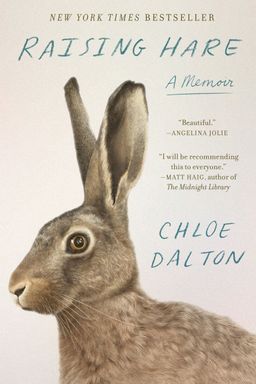
Raising Hare cover

Raising Hare

by Chloe Dalton

A political adviser and foreign policy specialist tells the story of taking care of a wild hare during the pandemic lockdown.

Living With the Wild, On Its Terms

How close can you get to a wild animal without trying to own it? In Raising Hare, Chloe Dalton argues that the richest human–animal relationships aren’t about taming or training, but about radical restraint: creating the conditions for a wild creature to choose contact, keep its instincts intact, and stay free. Dalton contends that true coexistence requires you to soften your routines, your house, and even your ambitions—while refusing the easy comforts of cages, names, and ownership. To live with the wild on its terms is to be changed by it.

Dalton’s memoir opens in a hard winter on British arable land, when she stumbles upon a newborn leveret—eyes open, furred, and utterly still—on a muddy farm track. Against a conservationist’s blunt advice that “it will probably die,” she brings the hare home in a grass-lined shoebox and begins the precarious project of keeping a wild life alive. What follows is part field notebook, part love letter to Lepus europaeus, and part critique of the modern countryside—its roaring machinery, stripped hedgerows, and blood-sports—and a quiet manifesto for a kinder way to inhabit a place.

What the book argues

At its core, Raising Hare makes three intertwined claims. First, wildness can coexist with domestic life if you choose freedom over control. Second, attention changes everything: when you attune your ear to the hush of a hare’s rest or the thrum of wind on hedges, your priorities, schedule, and even your home range shift. Third, the violence we accept as normal—coursing, routine shooting, and the vast, indifferent crush of modern agriculture—extracts an avoidable toll, and there are practical, hopeful ways to repair habitat at the scale of a single garden or a few fields.

The story you’ll follow

You follow one hare from leveret to adulthood and motherhood: bottle feeds with kitten milk; the mistake of a too-neat plastic-sided pen and the decision never to confine again; the hare’s explosive sprints and feather-light drumming on a duvet; injury, recovery, and first winter; then the marvels of leverets born in a flower bed and, later, behind a curtain in Dalton’s office. Along the way, mother-hare’s nightly choreography—arriving precisely at ten, two, and five to nurse—upends the textbooks that say once a day, and the natural history unfolds in close-up: agouti camouflage, 360-degree vision, countershading, boxing, and the eerie “plaintive” cry hunters have described for centuries (Pliny, Aelian, Somervile).

Why it matters—now

Dalton’s pandemic exile to the countryside is a familiar pivot: a hyper-scheduled political adviser discovers she’s been living at a pace that blurs seasons and birdsong alike. The hare slows and schools her, not by asking for affection but by requiring silence, darkness, soft steps, and open doors. This matters because it places responsibility—and power—squarely with you. If a single barn and a few acres can evolve into a haven through hedgerow planting, leaving nettles to host butterflies, restoring a silted pond, and keeping a gate ajar for a returning hare, then your patch can too.

A quiet manifesto

“The best decision I made was my most instinctive: not to keep the hare in a cage. The greater the freedom she had, the more trusting she became.”

What you’ll learn in this summary

You’ll see how to care for a wild animal without domesticating it—the ethics of not naming, the art of feeding (yes to coriander, clover, oats; no to confinement), and the discipline of backing off. You’ll meet the hare as a species, not a cartoon rabbit: a crepuscular sprinter whose heart, muscles, and senses are tuned for flight and subtlety. You’ll reckon with the countryside’s hidden violence—coursing rings and February shoots; tractors that harvest potatoes and, incidentally, leverets—and the practical countermeasures of habitat repair. Finally, you’ll witness how contact with one animal can reorder a life: from constant crisis-management to attention, patience, and a home range mapped by hedges, wind, and hoofprints rather than by airports.

If you’ve ever felt the tug to make room for the nonhuman world without turning it into a petting zoo, Raising Hare offers a model. It asks you to try a harder, braver thing: to let the wild stay wild—and to become, yourself, a little wilder in the right ways.


Finding a Leveret, Finding Yourself

Dalton’s story begins with a winter-black leveret found on a rutted track, its white star on the forehead gleaming against mud and meltwater. A dog had likely chased it; predators circled and buzzards wheeled. She hesitates—leave it and hope the mother returns, or move it and risk rejection? Counting fence posts for a landmark, she walks on. Hours later, the leveret hasn’t budged. She brings it home in a bundle of field grass, sets it on a countertop in a yellow dust cloth, and starts the hard apprenticeship of raising a wild life.

The first 24 hours: rescue and refusal

A conservationist—a former gamekeeper—tells her flatly: return is impossible; the doe will reject it now, and “in decades I’ve never heard anyone raise a leveret.” He’s seen badgers and foxes hand-reared; hares, never. Dalton, a political adviser used to war rooms and all-hours flights, realises she has no plan. Her sister drops off lamb milk powder and steriliser; the kitchen scale reads 100 grams—“less than an apple.” A pipette becomes a bottle; warm drops pool on a sooty chin. The leveret blinks, swallows, dozes in a palm.

Learning to care by unlearning control

Dalton scours the London Library catalogue and the internet only to find cookery and hunting, not rearing. William Cowper’s 18th‑century verses, of all things, offer a diet: oats, sow-thistle, lettuce, apple peel, hawthorn twigs. The leveret snubs lettuce and carrot, but nibbles parsley, devours coriander (leaving pin-cushioned stems and a lemon scent on its fur), and adores plain porridge oats. She builds a plastic-sided pen on expert advice—water bowl, salt lick, gnawing branches—and discovers the first principle of hare care: confinement is cruelty. Pools of urine and red-tinged stress signal that the pen is a jail. She dismantles it and throws open the doors. From then on, the leveret never soils indoors.

(Context: Capture myopathy—fatal shock from restraint—is well-documented in prey species; hares are especially prone. Dalton’s experiment confirms what wildlife rehabbers warn: stress kills leverets faster than hunger.)

Trust without taming

She won’t name it. “To name the hare was to proclaim it a pet.” Instead, she sings the same quiet words before feeds, uses the same black t‑shirt, and limits touch to what’s essential. She even brushes a dried-milk tassel under its chin with a soft antique brush—then puts the brush away. The leveret maps the house by textures, avoiding slippery wood, hopping cushion to cushion, sleeping under the bed by day and sunbathing against a sheepfold wall by late afternoon. It drums a staccato on the duvet at dawn and dusk, spins midair like a gymnast on a garden rug, and, when startled by a fizzy-water hiss, bolts—a reminder that this is not a rabbit bred for laps, but a hare born of wind and distance.

A new listener in the house

Hare-keeping forces Dalton to redesign her soundscape. She keeps pans from clattering and voices low; she stops wearing perfume; she turns off garden lights at dusk so as not to blind a crepuscular guest. Visitors learn the new etiquette; men, oddly, are distrusted more than women. When she removes a battered sofa, the hare boycotts the house until the cushions are sun-aired and the status quo restored. The lesson lands: a hare’s peace depends on predictable places and lines of sight. You aren’t training the hare; the hare is training you—in attention, restraint, and how to make room for a life that isn’t yours.


Hare, Not Rabbit

If you carry the cartoon rabbit in your mind, Dalton replaces it with a precise portrait of Lepus europaeus. Hares are born “ready”—furred, eyes open, no burrow—and evolution has given them an athlete’s kit: agouti camouflage, nearly panoramic vision, extravagant ears for hearing and heat-dissipation, and the muscle mass to outrun everything that wants to eat them. Understanding these differences changes how you behave around them.

Anatomy built for flight

A hare’s lateral eyes provide almost 360‑degree awareness; the iris shifts from newborn black to amber, the slit pupil like a compass needle. Each ear is a radiator and a radar dish, veined and mobile. Fur is agouti—each hair banded light-dark-light—blurring edges against stubble, snow, or shadow. Countershading (white belly, brown back) inverts sunlight, flattening the silhouette (a tactic fish and sharks also use in reverse). The hind foot can reach fifteen centimetres, the tail white beneath, inky above—a flicker you glimpse as they vanish.

Life pattern: twilight, speed, and stress

Hares are crepuscular—their pulse quickens at dawn and dusk. A quarter of the body is muscle; the resting heart purls far faster than yours, primed for explosive sprints. Speeds of 35–50 mph with zig‑zagging jinks mean escape—if they detect the threat. The same physiology makes confinement lethal: capture myopathy, a fatal storm of stress chemistry, is a constant risk (wildlife manuals and Dalton’s vet both warn of this).

Species and extremes

Dalton places her brown hare among cousins: Arctic hares turn white and eat snow; desert hares shrink their bodies and use ears as parasols; mountain hares live amid tundra and taiga. All share vulnerability in the first month. One study she cites finds leveret mortality around 50% in 28 days, much of it due to farming activity—cutters, sprayers, and combines that find “forms” (shallow scrapes) by accident and erase them without noticing.

Myths and the “madness” of March

Folklore calls hares witches’ familiars, hermaphrodites, omens of fire or miscarriage; March boxing seems “mad.” Dalton corrects: the bout is usually a female fending off a male, a prelude to ovulation; the “plaintive” cry of a dying hare—described by Somervile and Siberian hunters—sadly is real. She threads Aelian, Pliny, and Cowper through modern field notes (see Marianne Taylor, Nancy Jennings) to separate marvel from myth: what’s left is no less wondrous, just more exacting in the care and respect it asks of you.


Freedom Over Ownership

Dalton’s ethic is simple and hard: do everything possible to keep the hare wild. That means no name, no cage, and constant choices in favour of the hare’s autonomy—even when it’s inconvenient for you. The relationship ripens not because she asserts more control, but because she relinquishes it.

Why she refuses to name

“To name the hare was to proclaim it a pet.” Names invite performances—of ownership, of tameness—that would blur Dalton’s boundary. She calls it “little one,” a nod to leveret’s French root (lièvre). The distinction isn’t fussy; it’s functional. A named animal drifts toward human scripts. An unnamed hare keeps writing its own.

The pen, the gate, and the wall

The only true mistake Dalton confesses is the translucent pen that produces red-tinged urine and agitation. She dismantles it and never corrals the hare again. Later, when the hare learns to crest a four‑foot drystone wall and vanish down the track, Dalton props the garden gate ajar, heart in mouth—and the hare returns at dusk to eat oats by the fireplace before slipping back into the night. This becomes the ritual: leave, live, return. Choice builds trust.

Sharing a home range

Reading about home ranges—30 to 300 football pitches—Dalton realises her barn sits inside the hare’s mental map. When she removes the sofa, the hare treats it as habitat loss. When she restores it (sun-warmed cushions and all), calm returns. You learn a strange hospitality: arrange your furniture like boulders and briars; keep sightlines open; respect thresholds the hare has scent-marked with its forehead gland.

What freedom demands of you

Freedom means accepting asymmetry. The hare sets terms; you absorb frictions. You open doors at dawn, step outside in rain to use the garden as a corridor (so as not to wake a sleeping guest across the office doorway), and adapt your schedule to crepuscular calls. You risk heartbreak—because a free hare can choose never to return. And yet, as Dalton discovers, the more room she gives, the more often the hare pads back over the threshold and rests within arm’s reach—on her own terms.

Coexistence, not domestication

Domestication reshapes an animal to fit your life; coexistence reshapes your life to fit the animal’s. Dalton chooses the latter—and the trust that follows feels like grace, not conquest.


A Household Reordered by a Hare

Invite a wild hare into your home and it will redesign you. Dalton’s pre‑hare life—war rooms, travel bags, late calls—quietly yields to crepuscular rhythms, silent hallways, and oat bowls at sunrise. What might sound quaint in summary is rigorous in practice: a set of daily disciplines that honour a creature whose safety depends on stillness, shadow, and escape routes.

New rhythms and diets

The hare’s day divides cleanly: invisibility by daylight; activity at gloaming. Dalton learns the grocery list by nose and paw: coriander vanishes leaf by leaf; clover is heaven; kale, a phase; raspberries, a slow, serious delicacy bobbed bead by bead (paws never helping). The hare dust-bathes in a dead tree’s basin and kneads air while feeding, paws quivering with bliss.

Communication without words

A leveret’s chit‑chit clicks fade with age; in their place, Dalton hears a breathy, musical huff she never finds in a manual (snowshoe hares click; brown hares are said to grind teeth). Ears are semaphore: laid back for wind, spread wide for peace, cocked forward for interest, fanned like veined sails in sun. Drumming is language, too—rap‑rap on cardboard, cushions, sheets—a practice run for spring boxing or a sensory exploration of texture and sound.

Designing for a wild guest

Dalton engineers safe passage across shiny floors with a trail of cushions, leaves indoor lights low, and positions bowls so the hare can eat with its back protected and lines of sight clear. Visitors adjust. A journalist sleeps on the sofa; a toddler’s squeals scatter hares to hedge. Even furniture moves at the hare’s cue: removal of the mouse‑chewed sofa triggers a boycott until it’s reinstated. The hare’s sensitivity to environmental change—down to a patched carpet square—becomes the household’s metronome.

The upshot: you don’t “tame” wildness; you negotiate with it. The price of such a treaty is paid in quiet, patience, and the humility to be the one who tiptoes, detours in rain, and goes to bed earlier than the headlines would like.


The Field Is Not Innocent

Predators, weather, and the silent scythe of modern farming make the countryside far harsher than its postcard suggests. Dalton’s pages thrum with kestrels hovering like stones, stoats pouring through drystone walls, and foxes gliding the track at dawn. But the most devastating scenes are industrial: potato harvesters and combines that vacuum earth—and everything hiding in it.

Predators and elements

Buzzards quarter the air above the garden; shadows wheel over the hare’s back and she flattens into grass. Stoats—long, low, and lethal—thread a wall’s inner rubble and spill out like honey onto stone, then disappear into hedge where a leveret sleeps. Spring storms mat a hare’s fur to treacle; winter cold kills soaked leverets in minutes. The hare survives by vigilance, grooming, and placement: rest with a trunk at your spine, a view in front, and ears tall even when eyes close.

Agriculture’s hidden toll

After the small leveret’s sudden death, Dalton walks the freshly harvested potato field and finds a juvenile hare pulped into dirt, another with blood on its tail limping through ridges, and a buzzard with a broken wing likely struck by the same machinery that fed it carrion. “How many lie within the ridges?” she asks—then counts hawks circling. Studies she cites are blunt: mechanised mowing and winter-sown crops shrink cover and food; leveret mortality spikes; populations collapse where set‑aside and hedgerow management vanish.

Blood sports and culture

Coursing rings still operate in secret; hare shoots in February—when does are pregnant or lactating—remain legal in Britain (uniquely, hares lack a closed season). Writers who loved the chase also loved the hare, sometimes in the same breath, from Somervile’s florid lines to Gascoigne’s startling empathy. Dalton threads these contradictions to make a simple request: stop calling this normal.

A moral x‑ray

“From sport to ‘economic efficiency,’ today’s needs outweigh our aspirations for tomorrow… If we are not attentive, there is blood in the harvest.”

The counterpoint arrives later: neighbouring farms move to organic rotation, install wide wildflower margins, and the pond Dalton restores teems with snipe and owls. The field can be gentler—if we choose it.


Care, Injury, and Letting Go

When the hare sprains a front leg leaping the wall, Dalton faces the central dilemma of wildlife care: act and risk harm, or wait and risk worse. Intervention isn’t always kindness with a prey animal whose biology punishes handling. The chapter becomes a case study in “the art of non‑interference.”

When to intervene

A limp turns to three‑legged hobbling; the hare still jumps the wall at dusk. A vet prescribes a small‑dog anti‑inflammatory and asks for a weight; Dalton cradles the hare to a scale—three kilograms now—and reads the leaflet: gastrointestinal side effects. Remembering Cowper’s hare dying from similar treatment, she balks. The syringe sits unused in the fridge.

Reduce stress; increase safety

Instead of dosing, she adjusts the environment: holds the gate open so wall‑leaping isn’t needed; makes food and water plentiful; keeps the house still, dim, and warm. Predation risk rises—a fox pads the gravel inside the wall; a combine roars beyond—but the hare recovers gradually, then entirely. Days later it stands on hind legs to knock plums from a tree, drumming down fruit like rain.

Return as the test of trust

Letting a wild animal choose is risk by design. The hare leaves overnight and returns at first light, mud to ears, then vanishes for a fortnight when Dalton travels, only to reappear as if from air and lie on the living‑room bench as the fire snaps. Absence is part of presence. The reward for restraint is not control but a relationship with its own rhythm: a guest who always looks back before she goes.


Mother Hare: Superfetation and Schooling

Dalton’s most intimate pages are about mothering: does that nurse at ten, two, and five; push leverets back with a soft, insistent nose; scrape invisible circles into carpet as if piling grass; and vanish before you can say thank you. She watches two litters, then a third that suggests a marvel from Aristotle and Aelian—superfetation—might be real in her garden.

Hidden nursery, precise timing

First, three leverets appear in the flower bed, each in a separate form. At dusk, the doe ascends the lawn, covers them with her body, and washes them while they nurse. Two weeks later she resumes night ranging. Next spring she gives birth behind Dalton’s office curtain—no blood, no scent, two perfect dark leverets whose forepaws peek like commas under fabric. The larger drags its hind legs at first, turtle‑like, then gains control across days. Mother returns like clockwork, leverets scramble from hiding, collapse mid‑feed into warm heaps, and are tucked back tight against the wall.

Overlapping litters

Weeks later a tiny leveret plays under a foxglove by the window while the two older house‑born siblings tear about the sitting room. The timing—and the mother’s plumpness and close guarding—points to overlapping pregnancies. The literature calls superfetation rare in the wild but plausible: a second conception while one litter is still developing, with births 24–25 days apart. Dalton’s observations are a field‑note corrective to oversimple textbooks (compare Handbook of the Mammals of Europe and Roellig et al.’s critical review).

Schooling in the margins

The leverets learn edges before open ground: sofa to windowsill, cushion to stair tread, clover patch to lavender arch. They mimic mother’s forms under fruit trees and on the seventh stair. The larger chews a football‑sized hole in a curtain lining with surgical neatness, proving why drapes—and hedges—matter: texture is both playground and cover. They play, then scatter to hide; they come, then are shooed away. Mother enforces wildness even indoors.

Grief in a garden

One late-summer morning the smallest leveret weakens rapidly and dies, perfectly formed. No diagnosis satisfies. Dalton buries her under a rose and learns again the arithmetic of leveret survival: many are born, few endure. Love here requires tolerance for unanswerable loss.


From Leveret to Landscape

The hare changes Dalton’s gaze from creature to context. Once you care for a wild thing, you start caring for what it needs when you’re not there: cover, water, food diversity, safe corridors, and dark nights. Her barn becomes the centre of a modest rewilding: hedges, pond, long grass, nettles, lavender, and fewer mower passes.

Seeing the land anew

Old maps reveal lost hedges; tractor flails explain why living hedgerows look shredded. Dalton plants nearly a thousand native whips—hawthorn, blackthorn, field maple, oak, hazel, dog rose—sets tree guards, and plans to “lay” the hedge in ten years so it thickens into wildlife architecture. She restores a silted horse‑pond, builds log and stone refuges for newts, and leaves nettles standing so peacocks and red admirals can breed. A long, uncut strip behind the house fills with clover and goldfinches.

Habitats, not ornaments

The point isn’t pretty borders; it’s micro‑infrastructure. Long grass hides leverets from buzzards; ungrazed verges offer winter seed; “messy” nettles host larvae; drystone gaps become stoat highways, yes—but also lizard, toad, and beetle byways. There are trade‑offs (more perches for raptors along hedges), yet abundance follows: barn owls ghost the pond; partridges duet on sill and ridge; snipe rustle reeds. Nearby farms convert to organic, sowing herb and legume leys and wide wildflower margins. One patch influences another.

Coexistence as policy and habit

Dalton’s to‑do list scales: set a closed season for hares; incentivise hedgerows and set‑aside; use technology to detect fawns and leverets before mowing; dim lights at night; leave corridors uncut. At home, install a hare‑door (a carpenter finally stops asking why you’d “ruin” good glass), keep gates ajar when safe, and resist tidying that erases shelter. Stewardship isn’t grand; it’s granular.


What the Hare Teaches About a Good Life

Raising Hare doubles as a personal reckoning. A woman built for crisis and speed lets a quiet, wild presence reset her pace and priorities. If you’ve ever suspected your calendar was sanding down your senses, Dalton offers a pattern for getting them back: attention, patience, repair, and gratitude for what leaves as much as for what stays.

Attention as love

The hare teaches Dalton to trade headlines for hedges: to learn birdsong by ear, grasses by seedhead (red fescue, creeping bent, dog’s‑tail), fungi by dangerous beauty, and colour by old mineralogists’ names (“straw yellow,” “Prussian blue”). She starts to think in home ranges, not inboxes; in crepuscular windows, not all‑nighters. Awareness becomes an ethics.

Simplicity and presence

A hare sleeping across the office doorway is a daily summons to step lightly, to rearrange plans, to choose quiet over urgency. Domestic traces are almost nothing—six whiskers, a faint dent in carpet—yet the emotional wake is immense. You learn to honour visitations that cannot be scheduled and to accept that the most meaningful bonds may never be named.

Endings and gratitude

Dalton refuses the illusion of permanence: “No wild animal dies of old age,” Ernest Thompson Seton warned, and hares least of all. The hare may one day not return. The point is not to secure outcomes but to make a place worthy of return while it lasts. In that sense, this book belongs on the shelf with Helen Macdonald’s H Is for Hawk and Annie Dillard’s Pilgrim at Tinker Creek—works where attention itself is the conversion, and the wild remains the wild.

A last look back

Dalton closes with a habit she’s learned to expect: before the hare leaps the wall, she always, first, looks back. That backward glance—freely given, never guaranteed—is the book’s benediction and its ethic in one.

Dig Deeper

Get personalized prompts to apply these lessons to your life and deepen your understanding.

Go Deeper

Get the Full Experience

Download Insight Books for AI-powered reflections, quizzes, and more.