
Idea 1
The Circle of Security: Building Lifelong Trust
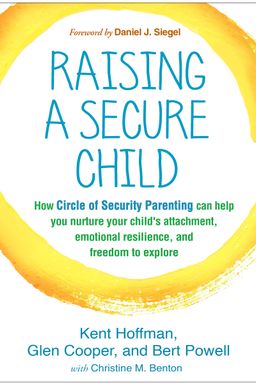
Every parent has felt the moment their child looks for reassurance—a glance, a smile, a hug. The Circle of Security shows that these everyday interactions are the foundation of emotional health, learning, and relationships across life. The authors argue that the essence of secure attachment is a child’s confidence in the possibility of goodness: the belief that help and comfort are available when needed. This book translates decades of research (Bowlby, Ainsworth, Winnicott) into practical steps to strengthen that sense of safety and trust.
Attachment as the scaffolding of development
Attachment isn’t just about love or protection—it’s a biological system built to regulate emotion and exploration. When a child expects comfort from a caregiver, they can venture into the world, learn faster, and recover from stress more easily. Longitudinal studies from Minnesota demonstrate that early attachment security predicts later confidence, empathy, resilience, and healthier friendships.
Children like Danny who check Mom’s smile before joining the sandbox, or Emma who calms on her father’s lap even while he’s distracted, reveal how repeated moments of connection create internal safety. These micro-moments accumulate into a worldview: “I can trust you, and I can trust myself.”
The Circle as a map for parenting
The book’s central image—the Circle of Security—illustrates how children oscillate between two needs: exploration at the top and comfort at the bottom. You, as the caregiver, are the capable hands on the rim. A child moves out to explore (testing, playing, mastering skills) and returns to refuel emotionally. Your task is to help on both sides—watching, delighting, and protecting as needed.
This circular movement mirrors Bowlby’s secure base/safe haven model. When you mentally “map” interactions—asking, “Is my child going out or coming back?”—you transform confusing moments (tantrum, withdrawal, clinginess) into understandable signals about needs for autonomy or closeness.
The practical stance: Bigger, Stronger, Wiser, Kind
Parenting, the authors remind you, isn’t about being flawless—it’s about being the trustworthy hands. “Bigger, stronger, wiser, and kind” means combining authority with empathy. You protect and teach without domination, and you stay warm while setting limits. Rosa’s supermarket moment with her toddler Carmen shows how firmness joined with kindness turns chaos into learning.
Children flourish when they experience dual messages: “You can explore, and I’ll back you up” and “You can rest in me, and I’ll keep you safe.” Extremes—rigidity or permissiveness—break the Circle; balanced guidance keeps it whole.
Repairing rather than perfecting
Because no one stays perfectly attuned, rupture and repair are crucial. A parent’s brief apology (“I’m sorry I snapped; that must have hurt”) restores trust and teaches the child that relationships can withstand imperfection. Winnicott’s “good-enough” parent philosophy runs throughout: what matters is returning, not avoiding mistakes.
The hidden soundtrack: Shark Music
Under stress, you hear “shark music”—that inner alarm that warns some emotional need is dangerous. It’s your own attachment history playing through procedural memory. The book explains that when you recognize this reaction—labeling separation, esteem, or safety sensitivities—you quiet the alarm and respond from the present instead of your past. Maria’s closeness with her son Rory at a playgroup, Sharon’s insistence on performance from Fiona, and Ellis’s distance due to safety fears all show how old wounds distort parent responsiveness.
Reflection as transformation
Reflective functioning—the ability to notice your own shark music and your child’s separate experience—is the bridge between insight and change. Lester’s realization that his drive for achievement was teaching Kevin to miscue affection highlights how reflection rewrites intergenerational patterns. You can earn security, even if your own childhood lacked it, by pausing, naming your signal (“That’s my separation alarm”), and choosing connection over defense.
The book’s promise
Across infancy, childhood, and adolescence, the message remains stable: every behavior communicates an attachment need. When you see through behavior to emotion, respond with attuned presence, and repair ruptures, you foster a secure base your child will carry into adult life. The Circle offers both a metaphor and a method—a repeatable sequence of noticing, naming, and nurturing. In doing so, you give your child not perfection, but the enduring gift of confidence in goodness.
The enduring lesson
Security isn’t a fixed state; it’s a living rhythm between exploration and comfort, shaped by your daily presence. Every glance, hug, and repair builds a child’s lifelong trust in relationships and in themselves.