
Idea 1
Rain as the Lifeblood of Earth and Culture
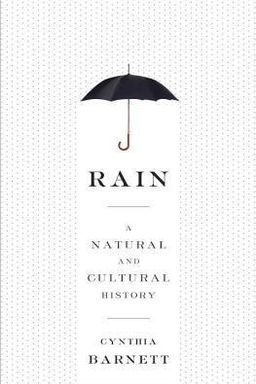
You begin with a question that seems simple: why is Earth alive? Cynthia Barnett’s book shows that the answer is rain. Across twelve thematic arcs—scientific, historical, artistic, and spiritual—she argues that rainfall is the pulse driving planetary habitability, civilization, creativity, and conflict. Rain forms rivers, feeds soil, inspires religion, and fuels culture, yet it also exposes how climate change, industrial pollution, and urban design challenge humanity’s relationship with water in the modern age.
The making of a habitable planet
You start four billion years ago when a molten Earth cooled enough for atmospheric vapor to condense and fall. Barnett guides you from the Jack Hills zircons—tiny mineral witnesses to early rainfall—to comparative planetology showing why Earth, unlike Mars or Venus, retained water. Those primordial downpours carved basins, filled oceans, and seeded a global hydrologic cycle. Each rain today is part of that ancient continuum—a recycling of the same molecules that cooled the Hadean hellscape into the biosphere you inhabit.
From physics to poetry
Barnett’s method unites science and human meaning. Rain is physical vapor condensed by sun, wind, sea, and terrain, but it is also cultural metaphor—Walt Whitman’s “Poem of Earth” stands for how water bridges body and spirit. She invites you to see rainfall as dynamic equilibrium: heated by sunlight, lifted by winds, cooled by mountains, and dropped as renewal. This cyclic precision governs not only ecology but emotion, politics, and story. You realize rain’s mechanism is universal, yet its expression is deeply contingent upon geography and history.
Rain as civilization’s architect
When you trace human history through rainfall, you see its invisible hand shaping empires. Monsoon failure dismantled Harappan cities; millennial droughts destabilized Akkad and Egypt; surplus rains drowned medieval Europe into famine and fear. Barnett uses paleoclimate proxies—tree rings, pollen, stalactites—to reconstruct how water’s variability rearranges societies. Whether blessings or curses, the rains dictate migration, agriculture, belief, and innovation. Repeatedly, imbalance between water supply and demand becomes both ecological and moral crisis.
Measuring and mastering rain
Civilizations learned to quantify and control rain. From Korea’s fifteenth-century tubular gauges to modern satellites, measurement turned mystery into data, yet prediction still falters. Chaotic local convection means radar can miss a 14-inch cell even while satellites capture global storms (Barnett’s Fort Collins story proves this). Attempts to “make” rain—from Dyrenforth’s dynamite trials to GE’s silver iodide seeding—show human hope and hubris. You watch governments oscillate between science and spectacle, culminating in military weather modification and today’s cautious water engineering.
Rain as art, ritual, and identity
Barnett’s sweep extends into religion and aesthetics: Mesopotamian storm gods, Aztec Tlaloc’s sacrifices, Islamic and Jewish rain prayers—all reflect water’s sacred status. Modern politics still invoke rain through public prayer and drought proclamations. In art and music, rainfall becomes muse: Chopin’s “Raindrop,” Dickens’s drizzles, Kurosawa’s deluges, and Seattle’s grunge prove climate molds creative temperament. The scent of rain itself—petrichor and India’s mitti attar—embodies cultural memory as chemistry. You sense that rain is not merely seen or heard; it is lived through sensory inheritance.
Modern paradoxes and future choices
Barnett ends by confronting climate change and urban hydrology. Engineering ambition turned the Los Angeles River into a concrete vein while Miami’s aquifers fight saltwater intrusion. Yet cities now pivot: rain gardens, green roofs, and infiltration parks model a holistic ethic, treating stormwater as asset rather than nuisance. Global warming, however, redefines the stakes—wet regions flood, dry regions parch, and extremes multiply. You are left with a moral calculus: whether humanity can rejoin the cycle as partner, not master, designing life around the rhythms rain teaches.
Essential takeaway
Across time and disciplines, rain emerges as the connective tissue between planet and people—scientific process, cultural symbol, and ethical mirror. Understanding it demands integration: physics with poetry, history with policy, and reverence with reason. Barnett’s argument is simple yet profound: to survive on Earth, you must learn to live with rain, not against it.