
Idea 1
Transforming Your Life by Telling the Truth
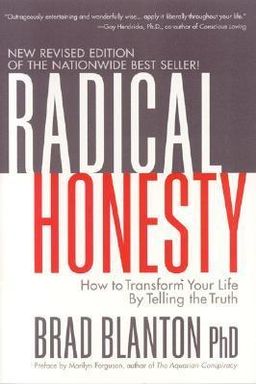
Have you ever noticed how exhausting it is to keep up appearances—to dodge small truths, to tell half-stories, or to bottle up what you think just to seem acceptable? In Radical Honesty, Brad Blanton argues that this constant act of self-censorship is not only tiring but destructive. The lies we tell—especially the lies we tell ourselves—trap us in invisible prisons of shame, fear, and pretense. According to Blanton, the only way out of these mental jails is through what he calls radical honesty: the bold, sometimes uncomfortable practice of telling the truth about everything.
Through thirty years as a psychotherapist, Blanton observed that nearly every form of stress, depression, anxiety, and even illness could be traced back to withholding the truth. We lie to impress our bosses, avoid hurting our partners, appear competent, or live up to moral ideals that were never truly our own. Over time, these lies accumulate and calcify into a suffocating structure of moralism—a kind of self-imposed prison of the mind that keeps us from being fully alive.
Freedom Through Honesty
Freedom, Blanton insists, is not a philosophical idea but a psychological achievement. When we tell the truth, we break out of the mental cell where our carefully rehearsed roles—employee, parent, lover, citizen—have confined us. The being that exists beyond the mind, what Blanton calls the true Self or 'the Being', wakes up again. It’s the same pure awareness we had as infants before we learned to manipulate or pretend for survival. Radical honesty is a way back home to that primal authenticity.
The path to honesty, though liberating, can feel painful at first. Like detoxing from a powerful drug, facing the truths we’ve avoided forces us to feel emotions we’ve buried—anger, shame, grief, even joy. Blanton likens this unraveling process to a body mechanic hammering out a dent: therapy is less about analyzing the past than about getting the being to function again. Telling the truth might make things feel worse before they get better, but it’s the only route to real healing.
Why Lies Hurt Us All
Blanton draws a provocative parallel between personal dishonesty and cultural decay. Just as individuals deaden themselves with withheld truths, societies built on moralism gradually lose vitality. Moralism, he says, is an overgrown reliance on principles and rules at the expense of direct experience. We trade living for thinking, sincerity for pretense. The result is mass neurosis—a civilization that prizes politeness and propriety over authenticity and joy. He quotes e.e. cummings: “We are human beings, for whom birth is an extremely welcome mystery.” To reclaim that mystery, we have to unlearn our obsession with being good and relearn how to be real.
Modern life’s obsession with control—over our image, emotions, and even inner thoughts—has created what Blanton calls a “bullshit jail of the mind.” Our thoughts are excremental byproducts of past experiences, endlessly reprocessed until they clog our psychic systems. If, as Freud said, civilization depends on repression, Blanton counters that civilization is now dying of repression. Radical honesty becomes the mental cleanup we need to stay alive.
The Radical Path Forward
The book leads readers step by step through this process of liberation. In Part One, Blanton explores the nature of being, contrasting it with the mind and showing how children lose touch with direct experience through moral training. In later sections, he details practical levels of honesty—from revealing hidden facts to expressing current emotions and, ultimately, exposing the very stories that define your self-image. You start, perhaps, by telling your parents about old secrets, then progress to sharing your raw feelings in the moment, and end by admitting who you’ve been pretending to be all along.
The final chapters connect individual honesty to broader human issues—anger, love, sex, therapy, freedom, and change. By the end, Blanton expands his psychology into a philosophy of life: to be radically honest is to become fully human again, to make peace with imperfection, mortality, and the ever-changing truth of the moment. Like existentialists before him (Camus, Kierkegaard, Nietzsche), he argues that acceptance of futility—our inevitable failures, contradictions, and deaths—is the key to joy. Once we stop pretending and start living truthfully, even despair turns into vitality.
In essence, Radical Honesty is not just a self-help manual but a call to spiritual rebellion. It asks you to trade comfort for authenticity, approval for freedom, morality for integrity, and fantasy for truth. “Freedom from one’s own mind,” Blanton writes, “is freedom to create.” Through the practice of honesty, you discover that life’s deepest fulfillment lies not in being right, good, or safe—but in simply being alive.