
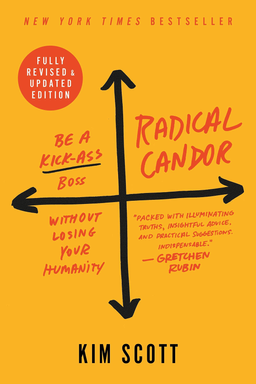
Radical Candor cover

Radical Candor

by Kim Scott

Radical Candor by Kim Scott is a transformative guide for leaders seeking to build genuine relationships with their teams. By advocating for open communication, personal care, and direct challenges, it empowers leaders to foster a culture of trust and growth, ensuring that teams reach their full potential and achieve remarkable results.

The Power of Caring and Directness

Kim Scott’s Radical Candor argues that the best leaders are not those who hide behind polite empathy or unleash brutal honesty, but those who combine both care and clarity in every interaction. Her central idea—Radical Candor—rests on two dimensions: Care Personally and Challenge Directly. When you do both at once, you create guidance that moves people forward while preserving trust.

The Radical Candor framework

Scott breaks feedback culture into four quadrants: Radical Candor (care and challenge), Ruinous Empathy (care but no challenge), Obnoxious Aggression (challenge without care), and Manipulative Insincerity (neither care nor challenge). Each reflects how intentions and words mix during guidance. The goal is not perfection—it’s awareness. You will fall into the wrong quadrant sometimes; the point is to notice and steer back toward Radical Candor.

Her examples ground these ideas. When Sheryl Sandberg told Scott after a great presentation, “You said ‘um’ too much; get a coach,” it modeled Radical Candor—personal care plus direct critique. By contrast, Scott’s mistake with Bob—a likeable but underperforming colleague—represented Ruinous Empathy: she cared but avoided the hard truth, letting his poor performance sink morale. These stories illuminate how feedback shapes relationships and results.

The human relationships behind management

Leadership, Scott insists, starts with trust. Real work happens through relationships, not authority. Caring personally means showing genuine interest in someone’s well-being—remembering birthdays, supporting through crises, or just listening to what motivates them. Her Moscow diamond-cutters story illustrates this power: by promising dignity and understanding their needs, she generated $100 million in annual sales. Caring was not sentimental; it was strategic.

But care alone isn’t enough. Without direct challenge, trust decays into mediocrity or resentment. Scott draws on Fred Kofman’s idea of “bringing your whole self to work” and Jeff Weiner’s definition of compassion as empathy plus action—leaders must notice problems and act to address them. Radical Candor uses care as the foundation for hard truths, not as an excuse to avoid them.

Guidance as a daily habit

Scott urges managers to treat feedback as the “atomic unit of management.” Instead of waiting for annual reviews, practice giving and getting quick, in-person micro-feedback. Ask for criticism first (“What could I do or stop doing that would make it easier to work with me?”), give praise immediately and specifically, and offer criticism privately and promptly. Short, two-minute exchanges done right are more powerful than hour-long reviews.

Systems help normalize this candor: anonymous question boxes, management “fix-it weeks,” or idea-sharing wikis. More important than tools, though, is modeling. When you solicit and absorb criticism visibly, you teach courage by example. Scott’s favorite principle—“measure guidance at the listener’s ear”—reminds you that what matters is not what you meant, but how your words land.

Motivation, growth, and culture

Radical Candor also transforms how you develop and motivate people. Scott replaces “talent management” with “growth management.” Every person has a current growth trajectory—some are steady “rock stars,” others are fast-rising “superstars.” You must nurture both: give rock stars stability and recognition, and give superstars stretch roles and support their eventual departures gracefully. Mismanaging growth—such as forcing experts into unwanted management roles—destroys morale.

Fairness also matters. Career conversations—Life Story, Dreams, and 18-Month Plans—help you align team members’ personal motivations with strategic goals. When you know what drives someone, you can assign work that inspires, not exhausts. Google’s system of dual career paths and frequent calibration conversations illustrate how structural fairness reinforces trust.

Cultural and gender nuances

Scott stresses that Radical Candor is universal but must be practiced differently across contexts. In Jerusalem, directness signals respect; in Tokyo, polite persistence achieves the same outcome. Gender adds another layer: women often face the “abrasive trap,” where assertiveness is punished. The fix is not less candor—it’s fairer candor. Men should not pull punches with women, and women should actively demand specific feedback. The challenge is systemic bias, not individual competence.

Culture and hierarchy shape safety, too. Radical Candor with a boss can be risky; Scott advises starting small, asking permission (“Would it be helpful if I shared a different view?”), and protecting your livelihood if retaliation is likely. Candor must serve both truth and self-preservation.

Building sustainable candor

Scott closes with practical habits to sustain the system: gauge weekly how your guidance lands, design meetings that encourage debate and learning, manage poor performance promptly and humanely, and practice feedback through storytelling and role-play. The GSD (Get Stuff Done) Wheel—Listen, Clarify, Debate, Decide, Persuade, Execute, Learn—helps teams collaborate effectively while respecting each other’s voices.

Core insight

Radical Candor is not about aggression; it’s about honesty rooted in care. It makes feedback human, growth fair, and culture courageous.

By embedding Radical Candor in everyday guidance, meetings, and reviews, you create a workplace where people grow faster, teamwork flourishes, and management finally feels human. It’s not about being “nice” or “tough.” It’s about being clear in service of care—and caring enough to be clear.


Care Personally to Build Trust

Trust fuels Radical Candor. Without authentic care, direct criticism feels cruel. Scott teaches that caring personally means seeing your colleagues as full humans—people with stories, hopes, and constraints. It’s the root system that sustains honest communication.

Human connection as a management skill

Caring personally begins with genuine curiosity. Ask about life events, ambitions, and struggles. Scott recounts how her Moscow diamond workers thrived once she showed concern for dignity, not just production. Jeff Weiner’s definition of compassion—empathy plus action—captures this balance: notice suffering and help lift the boulder off their chest.

Boundaries and the platinum rule

Respect personal differences: not everyone welcomes hugs or public praise. Bill Campbell’s famous “bear hugs” worked because his teams loved them, not because they’re a universal tactic. Use the platinum rule—treat others as they want to be treated. Adapt your caring style to culture and personal comfort.

Model vulnerability and invite feedback

Show humility by inviting criticism of yourself. When Sheryl Sandberg gave Kim constructive feedback after praising her talk, she modeled how leaders build psychological safety: start with care, layer in challenge. Vulnerability transforms feedback from judgment into collaboration.

Trust doesn’t emerge from grand gestures; it’s built through consistent small acts of empathy, curiosity, and courage to speak frankly. Care is what earns you the right to be direct.


Challenge Directly to Drive Growth

Direct challenge is the other half of Radical Candor—it’s what turns caring into progress. Scott argues that avoiding hard truths is not kindness; it’s cowardice. When you challenge directly, you help your colleagues improve, guard team morale, and uphold standards of excellence.

Feedback as a continuous habit

Make feedback fast, personal, and specific. Instead of waiting for formal reviews, hold two-minute conversations between meetings. Praise in public, criticize in private, and always offer a path to fix the issue. Use techniques like “Situation–Behavior–Impact” to stay factual and “left-hand column” exercises to express thoughts you nearly withheld.

Scott recommends tangible symbols to encourage candor—like rubber bands to remind herself not to interrupt. When feedback becomes muscle memory, you make honesty normal rather than exceptional.

Creating structures for candor

Implement visible systems that invite feedback: question boxes, fix-it weeks, or peer wikis. Publicly acting on suggestions proves that criticism is valued. The goal is cultural habit, not heroic events—feedback should be as routine as brushing your teeth.

Key principle

Feedback lands at the listener’s ear. What you meant is less important than what they heard.

By making critique immediate and normal, you replace fear with learning. Challenge directly not to punish, but to catalyze growth.


Growth and Motivation That Last

People thrive when their work aligns with their growth trajectory. Scott reframes performance management into growth management—matching each person’s current ambition to their role. You must understand individual motivation to design fair, productive teams.

Rock stars and superstars

Rock stars deliver stability and excellence over time; superstars seek steep growth and change. Reward each differently—rock stars with recognition and mastery, superstars with stretch projects and future paths. Don’t force rock stars into management or stunt superstars in slow roles.

Career conversations

Run three conversations—Life Story, Dreams, and an 18‑Month Plan—to understand motivations and plan skill development. Use Russ Laraway’s matrix of dreams versus skills to turn discussion into concrete growth plans. These conversations personalize ambition and tie work to meaning.

Fair calibration across levels prevents favoritism. Identify performers clearly, give two years to improve before parting ways, and design roles around actual desires, not stereotypes of potential. Promotion should reward contribution, not compliance.

Understanding personal growth preferences keeps teams motivated and fair. It’s Radical Candor applied to careers—honest, individual, and humane.


Collaborate and Execute With the GSD Wheel

Feedback culture and execution converge in Scott’s Get Stuff Done (GSD) Wheel—a cycle of Listen, Clarify, Debate, Decide, Persuade, Execute, and Learn. Running this loop fast and fully enables collaboration without confusion.

Listen and clarify

Great teams start by listening well. Jony Ive urges leaders to “give the quiet ones a voice.” Some lead through quiet reflection like Tim Cook; others, loud debate like Steve Jobs. Clarifying ensures ideas are understandable before critique, preventing misunderstandings.

Debate and decide

Debate sharpens ideas, not egos. Scott compares McKinsey’s obligation to dissent with Apple’s creative friction—the “rock tumbler” effect that polishes rough ideas. Decisions must rest on facts, not personalities. When Scott rushed an AdSense reorganization, she learned from Sheryl Sandberg to persuade before commanding—collaboration beats proclamation.

Persuade, execute, learn

After decisions, persuade with pathos, logos, and ethos—emotion, logic, and credibility. Then remove collaboration taxes so execution flows freely. Finally, review what worked and learn continuously. Drew Houston’s approach at Dropbox—iterate both the product and the team—is a living example.

Running the GSD Wheel with discipline ensures results without losing humanity. Radical Candor powers each stage by keeping discussion open and relationships intact.


Design Fair Reviews and Handle Poor Performance

Managing performance humanely is among the hardest duties of leadership. Scott separates development feedback from formal reviews and offers clear guidelines for handling underperformance with compassion and fairness.

Decide and act responsibly

Before firing or demoting anyone, ask three questions: Have you given Radically Candid guidance and offered support? Do you understand the effect on the team? Have you sought a fair second opinion? If yes and performance hasn’t improved, part ways early—the delay erodes morale for high performers.

Common managerial self-deceptions

Avoid lies like “it will get better” or “someone is better than nobody.” Keeping a mismatched employee costs more in morale than a vacancy. Be humane during exits—explain specific reasons, offer help, and recognize the person’s dignity. Done well, even firing can be compassionate.

Fair performance reviews

Scott cautions against conflating feedback with ratings. Reviews should clarify compensation and promotion, while development happens weekly. Use simple performance categories—Results, Teamwork, Innovation, Efficiency—and calibrate across managers. Transparency and lightweight processes (twice‑yearly reviews with short write-ups) prevent bureaucratic drag and bias.

Leadership test

Facing tough personnel decisions honestly and respectfully is one of the purest proofs that you care personally while challenging directly.

Clear performance systems and timely decisions protect both the team and the individual. Radical Candor makes even hard actions humane.


Culture, Equity, and Adaptation

Radical Candor’s universality depends on respect for difference. Scott explores how race, gender, and local norms shape what “candor” means and how safely it can be practiced. Leaders must tailor care and challenge to real contexts.

Cultural calibration

In Tel Aviv, blunt truth signals commitment; in Tokyo, polite persistence earns respect. The same principle—honesty felt as care—translates differently across cultures. Measure candor at the listener’s ear, not the speaker’s mouth.

Gender and the abrasive trap

Women often face biased feedback—labeled “abrasive” where men are called “driven.” The remedy is not softer feedback but fairer language. Men should not withhold critique; women should invite it. Organizations must train against gendered adjectives and calibrate evaluations equally.

Structural protection

Institutions need systems to prevent abuse: promotion committees, transfer options, and transparent feedback channels safeguard equity. When power is balanced, candor becomes safer for everyone.

Diversity without thoughtful adaptation breeds harm. Respect difference while upholding honesty—Radical Candor is empathy translated into culture.


Practice and Sustain Candor

Scott closes with actionable ways to practice Radical Candor until it becomes natural. You learn it through repetition, reflection, and shared vulnerability.

Gauge and adjust weekly

Use a visible framework—like Apple’s sticker board—to let peers tag your praise and criticism as Radical Candor, Ruinous Empathy, Obnoxious Aggression, or Manipulative Insincerity. Patterns reveal blind spots and guide adjustment. Overcorrecting toward harshness is normal; recalibrate until clarity feels caring.

Storytelling and role‑play

Share four personal stories—times you practiced each quadrant. Vulnerability builds trust and normalizes imperfection. Practice the Feedback Triangle role‑play (giver, defensive receiver, observer) to see how feedback feels. Observers chart which quadrant the interaction falls into, teaching empathy and skill simultaneously.

Embed in meetings and habits

Use structured 1:1s focused on listening, separate debate from decision meetings, and defend think time for reflection. Micro-feedback, visible praise, and intentional culture cues—like fixing small annoyances—turn respect into routine.

Practice insight

Candor is a skill, not a trait. You earn it with daily experiments, vulnerability, and response to feedback.

Continual reflection turns Radical Candor into culture. You practice caring and challenging until they merge—clear enough to help, kind enough to heal.

Dig Deeper

Get personalized prompts to apply these lessons to your life and deepen your understanding.

Go Deeper

Get the Full Experience

Download Insight Books for AI-powered reflections, quizzes, and more.