
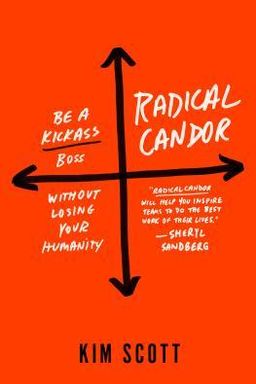
Radical Candor cover

Radical Candor

by Kim Scott

Radical Candor empowers leaders to cultivate strong relationships with their teams by blending empathy with honest, direct feedback. Kim Scott offers practical strategies for creating a dynamic work environment where trust, growth, and innovation thrive, allowing managers to become exceptional leaders admired by their teams.

Radical Candor: Caring and Challenging to Lead Well

How can you create a workplace where people speak truth, trust each other, and perform at their best? In Radical Candor, Kim Scott argues that great management begins with caring personally for people while challenging them directly. She discovered the cost of avoiding hard truths at Juice Software, refined candor’s art at Google and Apple, and saw how leaders like Sheryl Sandberg and Bill Campbell built loyalty through compassion coupled with clarity.

Two dimensions: Care Personally and Challenge Directly

Scott’s framework rests on two axes: Care Personally and Challenge Directly. If both are strong, you practice Radical Candor. Caring personally requires seeing employees as whole humans, not just job functions—learning their stories, ambitions, and struggles. Challenging directly means offering precise guidance even when it’s uncomfortable. The magic lies in their intersection: when people feel safe and respected, they welcome even tough criticism as help.

In Moscow, Scott learned this when diamond cutters wanted not just money but trust and learning; her genuine promises won lifelong commitment. Similarly, Sheryl Sandberg told Scott she said “um” too much, suggested a speech coach, and turned critique into motivation—care plus directness unlocked growth.

The four quadrants of feedback

To understand Radical Candor, Scott contrasts it with its opposites: Ruinous Empathy (care without challenge), Obnoxious Aggression (challenge without care), and Manipulative Insincerity (neither). These behaviors are not personalities but habits. You slide between them when tired, stressed, or fearful. Diagnosing your quadrant—by asking others how feedback lands—keeps your behavior improving.

Scott’s own mistake—covering for Bob at Juice instead of giving honest critique—illustrates Ruinous Empathy: kindness that destroys. The stranger who calmly helped her dog sit demonstrated Radical Candor: clear, brief, compassionate guidance that worked instantly.

Relationships as your real job

Scott insists management is relationship work. You must bring your whole self to work, listen actively, and adapt cross-culturally. Fred Kofman’s concept—“bring your whole self”—means sharing vulnerability and curiosity. Tim Cook listens silently; Steve Jobs listens loudly through argument. Both create candor when handled intentionally. Across cultures, calibrate tone: direct feedback in Tel Aviv signals respect; in Tokyo it may offend unless softened. Adapt delivery without abandoning clarity.

Candor builds culture, not chaos

Radical does not mean reckless. Compare it to Ray Dalio’s “Radical Transparency,” which prizes openness but less warmth. Scott’s version centers trust and psychological safety; you challenge only when people know you care. Her guidance culture scales through small rituals: feedback stickers on walls, praise in public, critique in private, career conversations grounded in meaning, and regular gauging of how feedback lands.

The management arc of Radical Candor

Scott’s book moves from relationship foundations to tactical systems. She teaches how to get, give, and encourage guidance; manage growth trajectories (rock stars vs. superstars); drive collective results through the “Get Stuff Done” wheel; handle reviews and firing with dignity; and stay centered while fostering freedom. The closing sections address gender bias, practice drills, and sustainability so candor becomes habit rather than theater.

The deeper insight

Radical Candor works because honesty and empathy are complementary, not opposites. Without care, directness is cruelty; without challenge, care is indulgence. Your job as a leader is to align love and truth—so people grow faster, teams perform better, and culture resists fear. (Note: Like Brené Brown’s idea of “clear is kind,” Scott reframes feedback as a moral responsibility.)

Core lesson

Relationships, not bureaucracy, define management success. Radical Candor is what happens when sincere care meets fearless clarity—making honesty, not harmony, the foundation of trust and performance.

If you practice both care and challenge every day—soliciting criticism, praising precisely, and correcting quickly—you create an environment where everyone learns faster. That is how Radical Candor transforms not just leadership style but entire organizational culture.


Building Relationships That Earn Trust

Radical Candor begins with deep trust, earned through genuine relationship work. You don’t have to be friends with your team, but you must be human with them—showing you care beyond performance metrics. Scott’s stories of recruiting diamond cutters, listening styles from Apple leaders, and cultural adjustments across continents illustrate that relationships are the foundation on which candor stands.

Know the person behind the role

Start with curiosity. Ask about their life story, motivations, and values. At Juice Software, Scott learned the hard way that ignoring emotional context leads to collapse. When she later promised Moscow recruits learning opportunities and protection, loyalty flourished. You build trust through consistent follow-through—what Harvard psychologist Amy Edmondson calls psychological safety.

Listen, adjust, and adapt

Tim Cook’s quiet listening encourages people to fill silence with truth; Steve Jobs’s loud listening provokes debate. Neither approach is right universally—the trick is to match it to the moment and person. Across cultures, adjust tone thoughtfully. In Japan, Scott learned to ask for persistence rather than bluntness. Adaptation signals respect while keeping authenticity intact.

Boundaries and inclusion

Social interactions can deepen bonds or create pressure. Scott recommends optional, non-alcoholic, low-pressure events—walks, dinners, or coffee chats instead of mandatory parties. Use the “platinum rule”: treat people as they prefer. Bill Campbell’s hugs worked for him; for others, verbal affirmation suffices. She also warns Radical Candor isn’t equally safe for all—women and minorities may risk reputational or emotional harm. Inclusion requires awareness and systems that protect voices.

Practical insight

Small, repeated acts of listening and follow-through—weekly 1:1s, career conversations, and public acknowledgment—turn professional respect into durable trust.

Trust isn’t built in workshops; it’s built daily. When people know you’ll listen, act, and protect them, they’ll accept direct challenge in return. That reciprocity is the emotional engine of Radical Candor.


Giving and Getting Guidance

Feedback is the atomic unit of Radical Candor. To make candor real, you must normalize guidance—giving, receiving, and encouraging it from everyone. Scott lays out a simple rhythm: ask for criticism first, then give praise, then offer criticism, and finally reward guidance so people keep speaking up.

Ask first and listen longer

Begin by asking, “What could I do or stop doing that would make it easier to work with me?” Sheryl Sandberg modeled this with Kim Scott, combining warmth and precise coaching. When you ask, let silence work—count six seconds to invite honesty. When criticism comes, reward it with thanks or follow-up. This behavior rewires the team’s social contract: feedback becomes safe and expected.

Deliver feedback fast and lightly

The best guidance happens in two minutes, not two months. Say it between meetings, not in annual reviews. Use situation–behavior–impact to keep feedback factual: describe what happened, what you observed, and the impact you saw. Praise publicly, critique privately. The mantra—“It’s not mean, it’s clear”—captures Scott’s ethic of direct kindness.

Build feedback systems

Cultural candor scales through small process tweaks: Google’s orange suggestion box, idea teams, and fix-it weeks turned casual feedback into institutional learning. When Sarah Teng’s keypad idea surfaced through such channels, efficiency gains proved candor pays real dividends. Rituals and systems remind people feedback is everyone’s job, not just the manager’s.

Consistently solicit, act on, and celebrate feedback. The loop of guidance restores respect and removes fear—forming the heart of sustainable Radical Candor.


Managing Growth and Career Conversations

A Radically Candid manager doesn’t just evaluate performance—they guide growth. Scott redefines career management around trajectories rather than labels: rock stars who master their roles steadily and superstars who seek steep climbs. Both are vital. Aligning work with growth accelerates motivation and retention.

Understand growth, not potential

At Apple, Scott and Scott Forstall replaced “potential” with “growth.” It shifts the question from judgment to curiosity: What does this person want to learn now? Steady experts need stability; ambitious changemakers need stretch. Reward mastery fairly—recognition plaques or expert tracks—not forced promotions that lead to the Peter Principle.

The three career conversations

Russ Laraway’s model contains three talks that deepen care: Life Story (understanding values), Dreams (uncovering aspirations, including the crazy ones), and the 18-Month Plan (designing specific skill growth). These conversations anchor development in meaning instead of bureaucracy. For instance, asking Sarah about her spirulina farm dream revealed leadership motivations that shaped real project choices.

Turn growth into action

After these talks, managers draft a simple growth plan—three to five bullets connecting skills, mentors, and next steps. Scott urges brief, disciplined yearly reviews to prevent drift. Promotion obsession kills fairness; instead, parallel management and individual contributor ladders honor both ambition and mastery.

Key message

Growth thrives when leaders know what drives their people and design work around those motives. Radical Candor transforms evaluation into coaching for long-term success.

Become the kind of boss who asks about dreams before deadlines. When people feel understood as evolving humans, they give you deeper effort and more honest feedback in return.


Driving Collaborative Results

Candor doesn’t end in conversation—it powers results. Scott introduces the “Get Stuff Done” wheel: Listen, Clarify, Debate, Decide, Persuade, Execute, Learn. Effective teams cycle through these steps quickly but never skip listening or persuasion, which anchor clarity and commitment.

Listen and clarify

Listening—via 1:1s, feedback boxes, or structured idea meetings—surfaces hidden insights. Google’s ideas tool turned casual comments like Sarah Teng’s keypad tweak into global improvements. Next, clarification ensures ideas are understood before judgment. Susan Wojcicki’s pre‑EMG meetings modeled this editing mindset: nurture before critique.

Debate, decide, persuade

Debate refines ideas like polishing stones—people challenge each other respectfully. End debate with clear deadlines and separate decision meetings from exploration to reduce confusion. Once decided, persuasion matters: leaders must explain emotional and logical reasons, showing humility and transparency. Sheryl Sandberg’s warning about “spinning a rope” reminds leaders to pace change—communication equals safety.

Execute and learn

Execution relies on visible systems—Kanban boards, dashboards, or “snippets.” Track both activity (effort) and results. Then close the loop by learning: revisit assumptions and adjust course. This wheel ensures Radical Candor shapes not just behavior but organizational learning.

Essential takeaway

When teams practice open listening, respectful debate, and mutual persuasion, trust converts discussion into execution. Candor becomes the operating system for results.

Run the wheel well and results compound: listening builds commitment, clarity drives speed, and learning fuels future candor—a continuous evolution of competence and trust.


Gender Bias and the Abrasive Trap

Radical Candor interacts painfully with gender bias. Scott calls out the “Abrasive Trap”: when direct women are labeled abrasive and men are praised as assertive. Cultural expectations distort feedback—making candor risky for women and integrity harder for men who fear giving honest critique.

For men: deliver truth with clarity and empathy

Many men over-soften criticism, fearing accusations of insensitivity. Scott advises using the framework explicitly—prefacing feedback with intention (“I care, and I’m being direct”). Then invite gauging: ask how the feedback landed. Transparency neutralizes anxiety and ensures usefulness.

For women: seek and shape feedback actively

Women often receive less actionable feedback. Scott suggests flipping the dynamic: ask bosses who seem hesitant, “What could I do to make it easier for you to be candid with me?” Push past discomfort with silence. Repeated invitations retrain your environment to treat you as equal in development, not fragile.

For everyone: check bias and language

Before calling someone abrasive, pause—would you say that about a man? Replace vague traits with specific behaviors: “interrupts meetings” or “dismisses ideas.” Managers must refuse to advise women merely to be more likeable. Address the bias, not the personality.

Scott’s challenge

Don’t ask people to tiptoe around prejudice. Build workplaces where directness is equally valued across gender and background.

Confronting bias candidly protects team integrity. When everyone feels safe to speak plainly, Radical Candor becomes truly inclusive.


Systems for Fair Performance and Growth

For Radical Candor to sustain at scale, organizational systems must reinforce fairness. Scott details how performance reviews, hiring, firing, and promotion processes can align with transparency while honoring humanity—embedding candor into the bones of a company.

Performance reviews: clarity without surprise

Quarterly feedback prevents shocking reviews. Written evaluations clarify thinking and signal preparation. Scott encourages reciprocal reviews—asking direct reports for theirs first—and 50‑minute in-person discussions focused on growth. Ratings help discipline fairness when categories are clear, but avoid false precision. Explain consequences plainly.

Hiring and firing with dignity

Use structured scorecards and blind skill tests (like orchestra auditions) to reduce bias. Keep committees constant across candidates. When firing, document carefully, involve others early, and end with compassion—allow goodbyes, acknowledge emotion. Moral instinct, not protocol alone, preserves dignity.

Promotion and calibration

Committee reviews balance power. Share lists early, debate transparently, and calibrate across levels to check favoritism. Promote based on merit, not charm. Such systems prevent Manipulative Insincerity from contaminating culture—the false praise and politics that Scott warns against.

Bottom line

Strong systems make candor safe. When pay and promotion match transparent assessment, people trust feedback instead of fearing it.

Administrative fairness protects Radical Candor from human bias—anchoring honesty in structure so care and challenge can thrive sustainably.


Creating Candor Habits Through Practice

Radical Candor isn’t theory—it’s practice. Scott ends with methods to make candor habitual: storytelling, role-play, and continuous gauging of feedback. These daily rituals build both emotional muscle and cultural stamina.

Gauge how feedback lands

The framework lives at the listener’s ear, not your mouth. Use Scott’s sticker-board method: after interactions, ask teammates to place stickers in quadrants—Radical Candor, Ruinous Empathy, Obnoxious Aggression, or Manipulative Insincerity. Patterns reveal truth. Track progress weekly and adjust delivery accordingly. If everything lands as Obnoxious Aggression, soften tone; too much empathy, sharpen it.

Use stories and role-plays

Share four personal stories showing each quadrant in your life—moments of success and failure. In groups, run the Feedback Triangle: giver, receiver, observer mapping tone and response. These exercises turn theory into reflex. Scott’s workshops, aided by improv trainers, helped teams practice diversity stamina—handling bias and conflict calmly.

Celebrate candor socially

Dan Woods’s Killer Whale for outstanding work and Whoops‑a‑Daisy for mistakes create a fun, visible candor loop. Skip-level meetings let truth travel upward safely; structured rituals prevent gossip and build collective learning.

Habit insight

When you reward honest criticism—by acting or explaining—you teach a culture that candor is valued, not punished.

Through repetition, reflection, and rituals, Radical Candor becomes muscle memory. You no longer rely on courage; candor simply becomes how your team communicates truth with care, every day.

Dig Deeper

Get personalized prompts to apply these lessons to your life and deepen your understanding.

Go Deeper

Get the Full Experience

Download Insight Books for AI-powered reflections, quizzes, and more.