
Idea 1
Radical Acceptance and Waking from the Trance
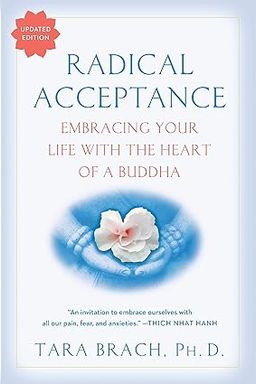
What if the deepest suffering in your life is born not from what happens to you, but from how you relate to yourself while it happens? In Radical Acceptance, Tara Brach argues that the core of our pain is a learned conviction that something is wrong with us. We live inside what she calls the trance of unworthiness—a state of separation and judgment that narrows the heart and confines us to anxiety, striving, and shame.
Brach presents Radical Acceptance as the way out: a two-winged practice that joins mindfulness (clear seeing) with compassion (tender holding). The path she outlines draws on Buddhist psychology, Western therapy, and personal experience to show how awareness and kindness dissolve the illusion of deficiency. The result is not passive acceptance, but a dynamic capacity to meet life as it is—and to act from clarity and love rather than fear.
The Trance of Unworthiness
The trance begins early. Parents, teachers, and culture convey messages—"Don’t be needy," "Be better," "Earn love"—that leave you feeling separate from worthiness. Brach recalls her student Marilyn’s dying mother whispering, “All my life I thought something was wrong with me,” a simple confession that mirrors countless lives. In this trance, you scan the world for evidence of your flaws: a missed call, a glance, a delay becomes proof of inadequacy. As Brach notes, even the myth of Original Sin encodes a collective shame—an assumption of exile from inherent goodness.
To survive the ache, you strive and compensate. Some overwork, some numb out through food or busyness, and others hide in superiority. Yet every strategy deepens the sense of separation. The healing begins by naming the trance and realizing it is not you—it is a story running through you. Recognition is the first taste of freedom.
The Two Wings of Freedom
When you clearly see what is happening (mindfulness) and hold it with kindness (compassion), you awaken the capacity Brach calls Radical Acceptance. Her own initiation came through crisis: after a public shaming from her ashram teacher over a miscarriage, she hit a despair so total it exposed the possibility of unconditional presence. Whispering, “May I love and accept myself just as I am,” she discovered awareness itself as a refuge. Carl Rogers’s paradox applies here: only when we accept ourselves as we are can we change.
This form of acceptance is not indulgence or resignation. It’s the courage to face truth without fleeing or judging it. As Brach emphasizes, acceptance opens the door to wise action—just as Gandhi or Mandela grounded activism in a deep willingness to meet reality without hatred.
Breaking the Cycle of Reactivity
One practical entry point is the sacred pause: stopping in the middle of a habit loop to feel what’s actually happening. Like Chuck Yeager’s lesson of doing nothing in a spin until the plane stabilized, pausing interrupts your urge to control. When Brach paused outside her son Narayan’s door, her anger softened into grief and care, allowing a healing conversation. Through pauses, you rediscover the space in which choice and connection live.
From Fear to Belonging
Fear is the pulse of the trance—the body’s survival circuitry hijacked by memory and identity. When fear governs, your world collapses around threat. Brach distinguishes between the raw affect (the body’s alarm) and the emotion of fear (the story-laden version we rehearse). The practice is to recognize fear as it arises, feel it in the body, and bring mindfulness and compassion to it rather than acting it out. Over time, the frightened self loosens, revealing a deeper belonging.
Practicing a Return
Because trance is collective as well as personal, returning to presence becomes a communal act. Taking refuge in the Buddha (your own awake heart), the dharma (teachings that guide you), and the sangha (community of support) provides safety inside and out. Each element reminds you that awakening happens in relationship—to body, to others, and to the living moment itself.
Core realization
Freedom does not come from fixing the self but from seeing through it. Radical Acceptance invites you to stop the war against yourself and discover the awareness that has never been broken.
Brach’s message is gently revolutionary: when you meet every moment with full awareness and compassion, you awaken the love that is your true nature. From that place, your ordinary life—work, relationships, fear, longing—becomes a field of awakening, a continual return to wholeness.