
Idea 1
Quitting Like a Millionaire: Turning Scarcity into Freedom
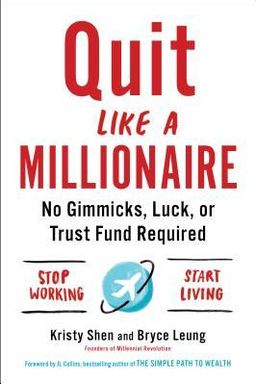
Have you ever wondered what difference your upbringing makes in your financial destiny? In Quit Like a Millionaire, Kristy Shen and Bryce Leung argue that the way you view money—especially if you've tasted scarcity—can become your superpower. Shen grew up in the slums of rural China, scavenging for toys in medical waste while learning that survival depends on resourcefulness. Her journey, from earning 44 cents a day to retiring at age thirty-one as a millionaire, reveals that financial independence isn't reserved for the privileged few; it's a mindset, a method, and a measurable process.
The book presents a radical rethinking of personal finance. It's not about luck or inheritance—it's about understanding how to make money a tool for time and not the other way around. Shen builds her argument around three distinct phases: escaping poverty through the Scarcity Mind-set, rising to middle-class security by understanding the math of money, and becoming truly wealthy by using the Freedom Mind-set. Each phase reshapes how you interact with money, debt, education, and even happiness.
From Scarcity to Creativity
Shen starts with poverty, introducing the concept of the Scarcity Mind-set—the intense focus and ingenuity that emerge when every penny counts. Instead of resentment, she reframes poverty as training in resilience, adaptability, creativity, and perseverance (she cheekily calls it the CRAP method). By turning cardboard boxes into dollhouses and guarding an empty Coke can as a precious luxury, young Shen unknowingly trained herself to spot waste, maximize use, and see constraints as fuel for invention. These lessons form the psychological foundation of her later successes.
Why the Middle Class Gets Stuck
When Shen immigrated to Canada and entered the middle class, she realized that comfort dulls creativity. The Scarcity Mind-set helped her survive poverty, but the middle-class world encourages consumption—houses, cars, purses—that trap people in lifelong debt. The book dives into cultural myths like homeownership as an investment and following your passion, showing how both can sabotage financial independence. Instead of chasing glamour or status, Shen insists that the path to freedom depends on cold math: understanding income, savings rates, and the real cost of debt.
The Freedom Mind-set: Money as Time
The heart of Shen’s philosophy is what she calls the Freedom Mind-set—flipping the old equation of “Time = Money” to “Money = Time.” In practice, this means building an investment portfolio strong enough to pay for your life so that you can stop trading hours for wages. Her strategy hinges on the 4 Percent Rule—the idea that when your living expenses equal 4% of your portfolio, you can safely withdraw forever without running out of money. By striving for high savings rates rather than astronomical incomes, anyone can reach that number faster.
What Financial Freedom Really Means
But financial independence isn’t just numbers—it’s psychological liberation. Shen blends neuroscience with finance, explaining how dopamine traps us into buying more but feeling less happy, and how understanding these chemicals helps us spend wisely. Budgeting becomes a personal experiment rather than punishment: you learn what expenses bring genuine joy and which can be cut painlessly. Once she and Bryce reached their $1 million portfolio, they quit their jobs, traveled the world on less than $40,000 a year, and discovered that freedom isn't just quitting work—it's reclaiming time to build a life of purpose.
Why It Matters to You
Shen’s story challenges the belief that you need a huge salary or luck to retire early. Through practical exercises—like identifying invisible waste with a closet test—and clear formulas for investing (such as her Pay-over-Tuition score for education choices and the Cash Cushion–Yield Shield for safe withdrawals), the book creates a blueprint anyone can copy. What makes Quit Like a Millionaire powerful is its reproducibility: if you follow her moves and math, you can end up free too. This isn’t about deprivation; it’s about designing your life so your money buys you time instead of things.
Ultimately, Shen argues that understanding money is understanding life. When you know how to save, invest, and protect what you earn, every choice—from where you live to when you work—becomes optional. Financial freedom isn’t quick or easy, but through scarcity, discipline, and smart investing, it becomes simple and repeatable. Her question to you is clear: what would you do if you could afford to live on your own terms? The answer begins with quitting—not your job, but the mentality that keeps you chained to it.