
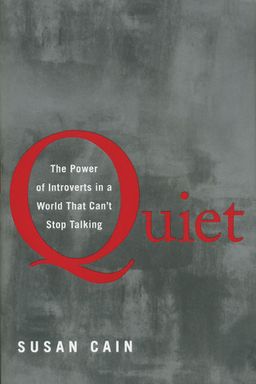
Quiet cover

Quiet

by Susan Cain

Quiet by Susan Cain explores the power and potential of introverts in a world dominated by extroverted ideals. It delves into the strengths introverts bring to the table, how they can adapt to extroverted demands, and the importance of balanced environments that value both personality types.

The Quiet Revolution: Redefining Strength and Success

What if everything you were taught about confidence and leadership favored only half the human spectrum? Susan Cain’s Quiet argues that modern culture has overvalued extroversion—equating speaking with thinking and charisma with competence—while neglecting the deep insight, creativity, and moral steadiness that often reside in quieter individuals. Across history, biology, psychology, and leadership, she traces how societies evolved to celebrate the Extrovert Ideal and how this bias distorts education, business, and relationships.

From the Culture of Character to the Culture of Personality

You live in a world historically shaped by public performance. In the early twentieth century, the United States transitioned from valuing quiet integrity—the Culture of Character—to idealizing sociability—the Culture of Personality. Dale Carnegie’s public-speaking manuals, advertising slogans like “Critical eyes are sizing you up right now,” and corporate hiring practices made charm and loud confidence synonymous with success. Schools taught group participation over private study, and workplaces built open-plan offices that prize collaboration over concentration.

Cain argues that this transformation didn’t just change manners—it changed self-perception. Introverts began hiding their preferences and doubting their strengths, as though solitude were a defect rather than a capacity. Seeing this ideal as cultural rather than natural liberates you to question its premises.

The Hidden Power of Introverts

Underneath the social noise, extraordinary contributions often emerge from solitude and deep focus. The quiet engineer Steve Wozniak built Apple’s first computer alone at night. The reflective Rosa Parks changed history through humble firmness. Gandhi exemplified what Cain calls “soft power”—influence without aggression. Such individuals maximize their strengths: keen observation, persistent thought, empathy, and self-control. These traits often lead not to flash but to sustainable achievement.

At heart, Quiet is about balance, not opposition. You need both styles—extroverted momentum and introverted depth—to sustain teams, innovations, and moral progress. But Cain emphasizes that suppressing introversion impoverishes institutions and discourages the people whose calm competence stabilizes them.

Biology and Temperament

Jerome Kagan’s research on high-reactive and low-reactive infants and Stephen Suomi’s studies of “orchid” monkeys show temperament’s biological roots. About one-fifth of people are “orchids”—highly reactive and sensitive to context. They wilt under stress but blossom with support. These findings reveal both vulnerability and extraordinary potential. Cain integrates neuroscience (Carl Schwartz’s amygdala studies) to show why introverts react strongly to novelty yet can train their prefrontal cortex to moderate fear responses—a “rubber-band personality” capable of growth within limits.

Temperament isn’t destiny; it’s a predisposition interacting with environment. By understanding how the brain’s reward and fear systems differ between individuals, you can tailor lifestyles, leadership approaches, and parenting methods that help everyone thrive.

Solitude, Flow, and Creativity

Solitude is not withdrawal—it’s incubation. The myth that group brainstorming maximizes productivity has been debunked repeatedly; individuals generate more and better ideas when given time alone. Steve Wozniak, Anders Ericsson’s deliberate-practice subjects, and Mihaly Csikszentmihalyi’s flow researchers all illustrate how uninterrupted focus produces mastery and innovation. Cain calls the modern compulsion toward nonstop teamwork the “New Groupthink.” The cure is not isolation but variety: structured collaboration balanced by time for reflection.

Social Balance and Leadership

Leadership myths also need revising. Jim Collins’s “Level 5” leaders—quiet but determined—outperformed flashy CEOs. Adam Grant’s studies found introverted leaders better at harnessing proactive employees, while extroverts excelled with passive ones. The lesson: match personality to context rather than worshiping charisma. Cain’s profiles of Darwin Smith, Lou Gerstner, and Eleanor Roosevelt reveal how humility and moral clarity can be strategic assets.

Cultural and Interpersonal Context

Across cultures, the extrovert ideal is not universal. In Asian traditions, the social emphasis on harmony, diligence, and respect yields “soft power”—steady influence through perseverance. Cupertino’s high-achieving schools exemplify this ethic. Yet cross-cultural clashes arise when quiet students enter extrovert-dominant American institutions. Recognizing differing norms helps teachers and managers honor multiple forms of strength.

Growth, Balance, and Application

You can stretch beyond temperament for meaningful pursuits—a principle drawn from Brian Little’s Free Trait Theory. Acting “out of character” for a core project (like teaching or advocacy) is sustainable when followed by restoration in “restorative niches.” Cain also provides interpersonal and parenting frameworks: design quiet-friendly environments, respect recharging needs, and teach children graded social exposure rather than forced participation.

Ultimately, Quiet redefines success as a blend of assertion and reflection. Understanding your own temperament—and the world’s bias toward one style—lets you build workplaces, schools, and relationships that harness both kinds of power. The book’s moral is simple: valuing silence can make us wiser, fairer, and more creatively alive.


Culture of Personality: How Extroversion Became Ideal

Cain traces how Western society came to worship sociability. The early 1900s industrial boom and urban migration replaced small communities rooted in moral reputation with business networks dependent on charm. Dale Carnegie’s courses and self-help manuals taught millions to “win friends and influence people”—implying silence equaled failure.

Institutional Effects

Schools began rewarding talkative students and penalizing those who pondered. College admissions favored “well-rounded” extroverts. Companies introduced open offices, reducing privacy and deep work. Even religious practices shifted to high-energy megachurches that equated enthusiasm with virtue.

Core insight

The Extrovert Ideal is not scientific—it’s cultural. Recognizing that frees you to revise environments that reward performance over authenticity.

Costs and Corrections

This social bias marginalizes half the population’s natural strengths—focus, humility, and conscientiousness. Cain’s historical perspective helps you see that by design rather than destiny, and invites you to redesign systems around balance instead of uniformity.


Solitude, Innovation, and the New Groupthink

The modern workplace confuses collaboration with creativity. Cain’s notion of the “New Groupthink” shows how excessive brainstorming undercuts innovation: people censor themselves, ideas blur together, and social pressure kills originality. Steve Wozniak’s Apple prototype came from solitary tinkering, not team meetings. Anders Ericsson’s elite performers—violinists and chess players—refine skill through deliberate, private practice.

Research Against Groupthink

Studies by Tom DeMarco and Timothy Lister found programmers thrive in quiet offices. Brainstorming research from Alex Osborn’s era consistently shows individuals outproduce groups. The cure is mixed architecture: allow collaboration but protect silence. Remote work tools even let collaboration happen asynchronously without social overload.

Practical Wisdom

Schedule solitude as deliberately as meetings. If you manage people, create environments that reward concentration. If you create, protect uninterrupted time: this is the oxygen of depth, innovation, and mastery.


Biology, Sensitivity, and the Orchid Hypothesis

Beneath social style lies biology. Jerome Kagan’s studies of infant reactivity and Stephen Suomi’s primate research show temperament’s deep biological roots. Highly reactive infants—crying and limb-thrashing at novelty—often become reflective adults. Cain reframes this sensitivity through the “Orchid Hypothesis”: some people flourish spectacularly in nurturing environments but struggle under pressure.

The Genetics of Sensitivity

The short allele of the serotonin transporter gene (5-HTTLPR) amplifies emotional responsiveness. Cain calls these individuals “orchids” compared to resilient “dandelions.” Their vulnerability becomes potential—all depends on context. The implication is humane: parenting and management should tailor support for sensitive people rather than labeling them deficient.

Key insight

Sensitivity is not weakness. When nurtured, it yields empathy, creativity, and principled judgment—the moral backbone of communities.


Reward Sensitivity and the Risks of Buzz

Extroversion associates with high reward sensitivity: dopamine systems in the brain amplify the thrill of anticipated gain. Cain illustrates this through Joseph Newman’s experiments—extroverts accelerate after mistakes—revealing how excitement overrides caution. In finance, Alan’s reckless trades on GM stock and the 2008 crash exemplify the same impulse: high-reward personalities dominate until their momentum drives collapse.

Balancing Buzz and Brakes

Introverts often act as institutional brakes—Warren Buffett, Seth Klarman, and Michael Burry resisted herd mentality through solitary analysis. Cain argues that teams and markets thrive when temperaments mix: bold extroverts spot opportunities; disciplined introverts test feasibility. Without that check, systems reward speed over judgment.

Practical Guardrails

  • Pair reward-seekers with cautious partners and build cooling-off periods before big decisions.
  • Create cultural respect for dissent and “world-class worriers.”
  • Value deliberation as much as enthusiasm.

Understanding dopamine-driven behavior helps you design systems that preserve both creativity and prudence.


Soft Power and Cultural Introversion

Turning to culture, Cain contrasts Western assertiveness with Asian introversion. In places like Cupertino, California, quiet diligence forms the center of social life. Students gather in libraries rather than malls, and success stems from study and respect rather than self-promotion. Professor Preston Ni’s “leadership by water” analogy captures soft power: persistent influence that wears down obstacles rather than colliding with them.

Global Lessons

Research on East Asian schooling reveals persistence as a predictor of high academic outcomes. Cain uses Gandhi’s restraint to show moral and political authority rooted in quiet conviction. Recognizing these values corrects the Western misconception that silence equals weakness.

If you’re an educator or manager, evaluate performance through competence and dedication, not verbal dominance. Cultural humility broadens understanding of what strength looks like worldwide.


Free Traits and Restorative Niches

Brian Little’s Free Trait Theory gives you a practical framework for managing energy. You can act out of character for causes or relationships you value—a teacher performing animatedly or a leader giving motivational talks—but such performances cost psychological fuel. Little suggests creating “restorative niches”—quiet spaces and routines—to recover afterward.

Strategic Acting

High self-monitors adapt successfully, reading cues and rehearsing behaviors. Examples like Edgar, who planned stories before parties, show that “faking” extroversion can become authentic through purpose. But without alignment to core projects—like Alison the litigator who burned out—acting drains rather than empowers.

How to Apply

  • Choose roles that match values, not expectations.
  • Schedule restorative activities—solitude, walks, music—to sustain out-of-character effort.
  • Negotiate Free Trait Agreements: explicit balance between performance and rest.

This model replaces guilt with strategy: authenticity means knowing when to stretch and when to return home to yourself.


Communication Across Temperaments

Introverts and extroverts often clash not from dislike but misunderstanding. Extroverts seek breadth of social stimulation; introverts crave depth and calm. Cain’s examples of Greg and Emily show both partners misreading motives—Greg saw shyness as rejection; Emily saw sociability as invasion. Understanding these differences transforms tension into negotiation.

Conflict Styles

Carol Tavris’s “hiss versus bite” metaphor offers guidance: introverts must voice discomfort early; extroverts must modulate intensity. Agreeableness predicts harmony more than extroversion itself. Cain suggests structured communication: pause-and-return discussions and small-group arrangements at social events.

Complementary Strengths

When differences align, relationships and teams thrive. Introverts provide depth; extroverts add momentum. Listening and articulation can coexist—Cain’s story of Jon Berghoff, the quiet salesman who succeeded by questioning rather than persuading, shows how cross-type skill fusion works.


Raising and Teaching Quiet Children

Cain’s guidance for parents and teachers reframes introversion as an asset to cultivate. Many children misdiagnosed as shy or anxious simply need environments that fit their rhythm. Forcing public exposure too early—like making anxious kids recite before classes—can cement fear. Dr. Jerry Miller advises accepting temperament before intervening.

Parenting with Fit

Parents like Jim model graded exposure: encouraging new activities stepwise and celebrating participation over bravado. Normalize fear without shaming, and let interests organically draw children outward. Passion transforms self-consciousness into confidence—David Weiss’s drumming passion exemplifies this shift.

Educational Design

Teachers should blend solitary and cooperative learning, assign explicit roles in group work, and provide calm presentation practice. When schools respect silence as part of learning, quiet children grow not only competent but brave.


Flow and the Deep Drive of Introverts

Unlike extroverts who chase dopamine-driven rewards, introverts thrive on flow—the absorbing state Mihaly Csikszentmihalyi describes where you lose track of time and act for pure engagement. Cain connects this intrinsic drive to persistence and mastery. Quiet students and creators often sustain effort precisely because they seek depth rather than applause.

Why Flow Matters

Flow activities—writing, designing, coding—fit introverted temperaments that favor autonomy and complexity. Tiffany Liao’s journalism passion shows how flow fuels achievement without external validation. Once engaged, introverts display intense motivation and resilience.

Practical Guidance

  • Protect long uninterrupted time blocks for deep tasks.
  • Avoid external reward priming that disturbs focus.
  • Treat passion projects as fuel for growth—your intrinsic drive is the best motivation system you have.

Flow transforms quiet diligence into vitality. When you find the work that absorbs you, you no longer need to imitate extroverts—you become self-propelled.

Dig Deeper

Get personalized prompts to apply these lessons to your life and deepen your understanding.

Go Deeper

Get the Full Experience

Download Insight Books for AI-powered reflections, quizzes, and more.