
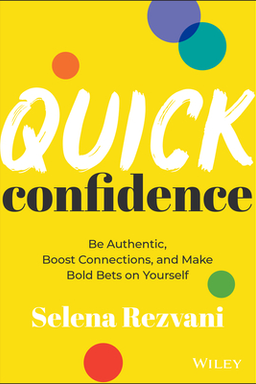
Quick Confidence cover

Quick Confidence

by Selena Rezvani

Quick Confidence by Selena Rezvani equips readers with practical techniques to boost self-assurance and foster authentic connections. Ideal for team managers, executives, and entrepreneurs, this book provides actionable advice to make impactful first impressions and navigate professional challenges with confidence.

Building Authentic Self-Confidence That Lasts

Have you ever felt like confidence is something other people seem to have in limitless supply—while you’re still trying to borrow a little? In Quick Confidence, Selena Rezvani argues that genuine confidence isn’t about faking boldness or trying to be invincible. It’s about authenticity, belonging, power balance, and everyday courage. Rezvani contends that anyone can build self-confidence fast—but lasting confidence requires a mix of mindset shifts, embodied presence, and interpersonal practice.

Rezvani’s central claim is that confidence is not a genetic trait—it’s a skill you develop through deliberate, repeatable actions. The author herself admits she didn’t inherit a ‘confidence gene.’ Her experiences as a woman of color navigating corporate America, surviving layoffs, and redefining leadership taught her that confidence grows not from pretending to be fearless, but from repeatedly practicing self-trust. Through stories drawn from her coaching work and her personal journey—from imposter syndrome to empowering others—she shows that confidence is built one small, actionable decision at a time.

Confidence as an Inside-Out Process

Throughout the book, Rezvani draws a critical distinction between the outer appearance of confidence and its inner foundation. Real confidence begins with mindset—learning to choose empowering beliefs, let go of perfectionism, and replace self-doubt with curiosity. It deepens through embodied signals: posture, tone, gestures, and presence. And it expands through interpersonal behaviors: how you communicate, advocate, and connect with others. This trio—mindset, embodied, and interpersonal—forms Rezvani’s signature confidence framework. Instead of trying to ‘fake it,’ she wants you to align what you think, feel, and do so they reinforce your self-worth.

Why Quick Confidence Matters Today

Rezvani began the Quick Confidence movement during the pandemic, when people’s sense of agency and belonging evaporated. Professionals wondered how to stay visible and valued amid crisis and remote work. Her weekly LinkedIn newsletter offered short, practical lessons—physical, mental, and social—on how to rediscover courage in challenging times. Those lessons grew into this book, designed to help readers ‘make bold bets on themselves.’ Confidence, she argues, isn’t fluff—it’s fuel. It drives negotiation, belonging, resilience, and leadership. When you practice it deliberately, it transforms your mindset from ‘Can I?’ to ‘Of course I can.’

From “Not Enough” to “400% Belonging”

The author’s mantra—“Walk in like you 400% belong”—sums up the spirit of this work. Whether you’re entering a boardroom, classroom, or networking event, Rezvani wants you to mentally grant yourself full permission to be there. Her approach combines self-compassion with power: stop apologizing for your existence, recognize your earned place, and move through the world like someone who belongs wholly. Confidence, she writes, isn’t arrogance or bravado—it’s a quiet, grounded assurance that you’ll figure things out.

What You'll Learn

In the chapters that follow, you’ll learn to make strong first impressions without losing authenticity, create self-belonging when the world doesn’t invite you in, rebalance power dynamics instead of shrinking from them, and let go of the exhausting habits of overdoing, overthinking, and overexplaining. Rezvani also offers practical tools for negotiating success, thriving in high-stakes moments, healing from toxic relationships, rising above failure, and ultimately scaling your confidence so it multiplies across your life. Each chapter blends research, stories, and concrete behavioral tips so that you can apply them daily.

This book matters because it reframes confidence not as a mask you wear but as a muscle you train. In the spirit of authors like Brené Brown (Daring Greatly) and Amy Cuddy (Presence), Rezvani shows that confidence isn’t about being perfect—it’s about showing up as yourself, taking ownership of your power, and practicing courage until it becomes your resting state. As you read, you’ll discover that the boldest act of confidence is being authentically you—even when your voice shakes.


Authentic First Impressions: Leading with Warmth

Every career success begins with a first impression—and according to Selena Rezvani, the best ones aren’t about polish but authenticity. Whether you’re interviewing for a job, meeting new colleagues, or networking, she warns that trying too hard to ‘perform’ confidence can backfire. A strained effort to impress often erases the real you. In her words, ‘Any situation where you lead in someone else’s style—not yours—puts you closer to losing your audience.’

“Just Do You”: Authenticity Over Acting

Rezvani calls for what she terms human, authentic first impressions. You don’t need to be hyper-rehearsed or trick people into liking you. Instead, she suggests “Just Do You”—making room for your quirks and imperfections. Authenticity creates connection, and connection creates impact. She points out that awkward moments or stumbles don’t ruin your credibility—they can humanize you. Unlike traditional advice that claims ‘you never get a second chance,’ Rezvani reassures that impressions can evolve and deepen over time.

Adopt “Dog Code”

One of her most memorable lessons comes from watching dogs greet people. Her Newfoundland pup, Midnight, never hesitates—he simply approaches and connects. Rezvani turns this into “Dog Code”: be the first to say hello, initiate, and welcome others. Research she cites shows that even brief social interactions—like greeting a barista or fellow commuter—boost happiness for both parties. Being the first to connect doesn’t just build relationships; it also interrupts “similarity bias,” our tendency to bond only with people like us. Acting as the first connector, especially in cold cultures, demonstrates leadership, humility, and inclusivity.

Connect, Then Lead

Drawing on Harvard researcher Amy Cuddy’s work on warmth and competence, Rezvani explains that warmth precedes trust. Leaders are seen as more effective when they show friendliness before showcasing skills. Physical indicators—steady eye contact, nodding, smiling, leaning in—signal openness. Verbal cues like empathy (“That must be a lot to manage”) and genuine interest tell others you value them. In short, being interesting starts with being interested. Warmth opens the door to competence.

The Power of a Great Intro

Few moments trigger anxiety like “Let’s do a round of introductions.” Rezvani offers a framework: name, title, and a plain-language translation of your impact. Instead of corporate jargon, say things like, “I make sure the company runs efficiently” or “I help clients tell great stories about their brands.” Adding simple connectors—“But really…” or “It’s all about…”—makes you relatable. Practice until your intro feels natural, and share it with ease.

Meet People Where They Are

Rezvani borrows a social work principle: “Meet people where they are.” That means aligning your body and tone with others without judgment—turn fully toward them, rise to greet them, and match their pace. These tiny physical cues of respect say more than words. She also encourages short confidence mantras like “I earned my place here” and “If it's meant to be, it's up to me” to shape your inner conversation before any first meeting.

Taken together, these practices—warmth before competence, dog code connection, and “Just Do You”—redefine confidence as presence, not pretense. As Rezvani writes, the best first impression isn’t about looking flawless but showing up fully human. (This echoes Carol Dweck’s mindset theory: confidence grows through authentic engagement, not perfection.)


Creating Belonging Wherever You Go

Selena Rezvani’s story begins with feeling like she didn’t fit anywhere—half Pakistani, half Ukrainian American, growing up in a mostly white community. She learned firsthand how painful it feels to hover between cultures and never feel like a full member. That longing to belong became a lifelong study in how people can create inclusion for themselves and others, even when systems fail to offer it.

Self-Belonging: Giving Yourself Permission

Rezvani realized that waiting for external validation keeps you playing small. One of her most liberating practices is writing an internal “permission slip” that says: “I 400% belong here.” This mantra reminds you that you don’t need others’ approval to own your power. She even personifies her inner critic as “Marjory,” a voice that tries to protect her from humiliation but often just holds her back. By naming and negotiating with that voice, you reclaim control. You can thank your fear for trying to protect you—and then override it.

Be Conspicuous

Across species, animals declare their presence through posture—cats arch, wolves stiffen their gait, bears stand tall. Humans can do the same through expansive, visible body language. Rezvani urges you to sit tall, lean in, expose your palms, and make clear eye contact. These physical cues not only communicate confidence to others but also to your own brain. As research shows, upright posture and expansive gestures reduce negative mood and increase self-esteem.

Share Power, Don’t Hoard It

To help others belong, Rezvani advocates for “power-sharing”—inviting voices rather than dominating. Compare two styles: “We made changes; start doing X” vs. “Here’s what inspired our change and how your input shaped it.” Power-sharing provides clarity and access. When transparency becomes the norm, cliquish toxicity fades. Sharing decision-making and credit tells people, “You deserve to be part of this.”

Embrace Compliments and Belonging

Ironically, belonging requires accepting praise. Rezvani admits she used to deflect compliments (“Are you sure you meant my book?”). She cites research showing people with low self-esteem resist compliments because they conflict with their negative self-view. Relearning how to say “Thank you, and…” allows both giver and receiver to connect and reinforces your self-worth.

Advocate for Others—and Yourself

Belonging scales through advocacy. Rezvani draws on law professor Joan Williams’s concept of ‘spreading the spotlight.’ You can introduce overlooked coworkers, nominate them for key projects, and shield them from unfair criticism. Inclusion grows when you act as a spotlight-giver instead of a spotlight-taker. (Similar to Sheryl Sandberg’s call for ‘taking others with you’ when you rise.)

Ultimately, belonging isn’t something granted—it’s something practiced. When you boldly show up in technicolor rather than shrinking to fit in, you invite others to do the same. In Rezvani’s words, ‘If your presence doesn’t make an impact, then your absence won’t make a difference.’ Confidence starts with self-belonging—and leads naturally to inclusive leadership.


Rebalancing Power with Grace

Power dynamics are everywhere, even in the friendliest workplaces. Selena Rezvani reveals that ignoring them only leaves you vulnerable. Her own story—being mistaken for a receptionist while preparing to present global research—illustrates how quickly others “round down” your power. Learning to rebalance those dynamics means owning your authority without aggression and recognizing when others’ behavior chips away at your confidence.

Standing Up Against Microaggressions

Microaggressions—subtle slights based on race, gender, or identity—can accumulate into a “slow escalator down” for someone’s career. Rezvani shares examples: being asked if a Hispanic engineer is sure he’s the project lead, or a Black woman labeled ‘angry’ for expressing justified frustration. Confronting these small indignities takes skill. Her advice: bring attention, intention, and presence. Notice what’s happening, know what you want from the interaction, and stay grounded rather than reactive.

Stop the Apology Habit

Frequent apologies weaken power. Rezvani offers verbal swaps to restore authority: replace “I just wanted to…” with “I want to…,” and “Sorry to bother you…” with “When you have a moment, I’d like X.” These small shifts transform deferential language into confident communication. (#SorryNotSorry, she jokes.)

Use a Resting Neutral Face

Borrowing from professional poker players, Rezvani teaches the “resting neutral face” (RNF)—neither smile nor frown, just attentive calm. When you receive disappointing news, an RNF signals reflection, not submission. Silence and neutrality create suspense and often push others to elaborate or reconsider. This simple physical cue can rebalance power in a tense negotiation or feedback moment.

Boundaries and Interruptions

Rebalancing power also means setting boundaries when questions turn invasive (“Why aren’t you married?”). You’re allowed to decline: “I don’t feel comfortable answering that.” And when over-talkers dominate meetings, play offense—raise a hand, keep speaking, or call out patterns factually (“That’s the third time Neil got cut off”). Equal airtime reinforces confidence and respect.

Finally, treat power as partnership. When facing executives or assertive coworkers, act “peer to peer.” Drop apologetic phrases and fawning behaviors. In Rezvani’s world, power isn’t a contest—it’s a conversation. You teach people how to treat you. Confidence comes not from fighting dominance but from calmly claiming space at the table.


Releasing the Trap of Overdoing and Overthinking

Do you ever find yourself working late, saying yes to every request, and apologizing for not doing even more? Selena Rezvani calls this toxic pattern the “over-delivery trap.” In pursuit of proving our worth, we overperform, overcommit, and overexplain—until burnout erodes our confidence. Her antidote: cultivate “just enoughness.”

The Power of “Just Enough”

Instead of striving for A++ every time, aim for “very good.” “Just enoughness” doesn’t mean slacking—it means valuing adequacy as success. It helps you deliver sustainable excellence without self-exhaustion. As Rezvani says, rest doesn’t have to be earned. When you stop overfunctioning, you reclaim energy that can be used for creativity and joy.

Breaking Overexplaining and Overthinking

Overexplaining stems from fear—fear of seeming harsh, foolish, or uncertain. Her cure is brevity: answer clearly, then stop talking. Pause, breathe, and let the message land. Overthinkers, too, must learn embodied resets like box breathing and visualization. Imagine clapping your hands loudly to break the mental loop and visualize your best, calm self handling the situation.

Shifting from Victim to Creator

Victims blame, complain, and wait. Creators act. Rezvani encourages transforming helpless statements (“My boss is holding me back”) into empowering ones (“I’ll propose a new role”). Research on the “progress principle” shows that making even small moves toward meaningful goals boosts motivation. Start acting your way out of stuckness.

Comparing Less, Appreciating More

Social media amplifies comparison-itis. To escape it, unfollow accounts that trigger envy, audit toxic influences, and list 10 things you appreciate about yourself. Snap a rubber band on your wrist if you catch yourself comparing. Cultivating gratitude shifts the metric from “How do I measure up?” to “How do I feel about myself today?”

When you drop filler words, cut unrealistic goals in half, and set clear limits, you start living with equilibrium instead of exhaustion. Confidence flourishes not in overwork but in self-trust. (This resonates with Greg McKeown’s Essentialism: doing less, but better.)


Negotiating Success and Saying Yes to Yourself

Many people wait for permission to ask for what they need. Selena Rezvani challenges this passivity; her own teenage story of appealing a college financial aid decision proves that bold requests can change your life. She learned that asking builds confidence—even before you feel ready to ask.

Don’t Tell Yourself No First

We often reject ourselves preemptively. Rezvani spent months attending an exhausting 6:30 p.m. meeting she hated until she finally asked to move it earlier—only to find everyone agreed instantly. Her mantra: “It’s not my job to decide if it’s a no.” Action builds power. Researching, proposing, and stepping forward start the chain reaction.

The LARA Framework

When faced with resistance, use Stanford’s LARA—Listen, Affirm, Respond, Ask Questions. Listen fully. Affirm shared values (“I appreciate your honesty”). Respond with facts or examples. Ask open-ended questions (“What would need to be true for you to support this?”). The model transforms disagreement into dialogue.

Use Silence Strategically

Strategic silence is one of Rezvani’s most viral lessons—her video on it hit 1.3 million views. After making a request, count seven seconds before speaking again. Silence signals confidence and causes others discomfort, prompting them to fill the space—often with new concessions or explanations. After they respond, pause again. Silence, paired with a neutral face, rebalances power.

Money Conversations and Brave Offers

Never giggle at your own number. Make the highest offer you can defend with research. Columbia professor Adam Galinsky’s findings show aggressive first offers anchor deals in your favor. Rezvani advises making the most ambitious request you can state without laughing. Bravery literally pays.

By treating negotiation as partnership—not conflict—you transform “No” into not yet. Asking is courage in action. It’s how you make bold bets on yourself, proving that teamwork and self-worth can coexist.


Thriving in High-Stakes Moments

Few experiences test confidence like a high-stakes presentation, performance, or conversation. Rezvani’s TEDx talk about gender bias was one such crucible—an 18-minute speech memorized word-for-word that later won a journalism award. Through it, she discovered that confidence comes not from certainty, but from courage practiced under pressure.

Managing Big Moments

High-stakes events activate fight-or-flight responses. To navigate them, Rezvani teaches pre-performance rituals: center yourself before entering, walk tall, and make a deliberate entrance. These actions calm the body and prime the mind. She reminds you that every “Hell yes” opportunity carries tradeoffs—time, nerves, sacrifice—but growth requires them.

Visualize the Win

Visualization, used by elite athletes like Simone Biles, stimulates the same brain regions as actual performance. Picture success in vivid sensory detail: what you see, hear, feel, and say. Rezvani adapted this technique using a DIY fake book cover to motivate herself while writing her first book. Seeing success precedes being it.

Thinking on Your Feet

When blindsided with a tough question, she suggests using frameworks like “What–So What–Now What” or “Past–Present–Future.” Pausing to breathe, organizing your answer, and maintaining composure signal expertise. If truly stumped, buy time (“I’ll research and get back to you”)—but no more than 15% of the time.

Media-Training Secrets

One standout tip from her spokesperson training echoes Anne Hathaway’s famed composure: never repeat a negative question. Instead, bridge to your own message: “What matters most is…” You shape the narrative; you decide what’s discussable. This, too, is confidence in motion.

Ultimately, thriving under pressure means replacing fear with presence. Expect awkwardness. Expect nerves. But remember Rezvani’s rule: walk in like you 400% belong. Confidence doesn’t mean being fearless—it means doing it afraid, and still shining.


Overcoming Toxic People and Cultures

Every professional encounters toxicity—whether it’s a hostile boss, gossiping coworker, or draining culture. Selena Rezvani vulnerably shares that she herself once became toxic, venting daily about a miserable job until a friend told her, “Your complaining is making things worse for me.” That awakening taught her that overcoming toxicity isn’t just about escaping bad environments—it’s about managing your own energy.

Stress and Energy Contagion

Stress spreads like a virus. Studies show watching stressed individuals raises observers’ cortisol. To protect your peace, Rezvani recommends three actions: remind yourself “I’m safe,” create distance from chronic complainers (“I’m breaking up with complaining”), and plan physical feel-goods—movement, baths, or screams into pillows—to reset the body.

Decline Negative Invitations

When colleagues vent excessively, you can disengage rather than debate. Challenge their assumptions (“We don’t know layoffs will happen”) or redirect toward solutions (“What could we do differently?”). Seek out positive people who fuel rather than drain your energy.

Don’t “Match Energy”

Mirroring toxicity breeds more of it. If you’re not a jerk, becoming one won’t make you fit better. Stay aligned with top values—even if it feels unpopular. Respond to dysfunction by voting with your feet when necessary. Your dignity is nonnegotiable.

Healing and New Boundaries

After leaving toxic workplaces, give yourself time to heal. Build self-esteem lists, identify new job “must-haves,” and journal for closure. Rezvani also introduces a mental “container”—visualizing a box that holds distress safely until you’re ready to process it. This technique separates negative emotions from daily life.

Finally, she urges becoming a light for others. Be the person who says, “Come sit with me.” Ally with newcomers, include others in decisions, and normalize humanness. Confidence in toxic times is courage with compassion—the audacity to protect peace and create belonging, even in hostile systems.


Rising Above Fails and Setbacks

Failure, Selena Rezvani insists, isn’t fatal—it’s formative. Her own near-dropout from Johns Hopkins Business School taught her that confidence grows not by avoiding fear but by enduring it. “Just give it one more week,” she told herself—and finished as valedictorian. That story embodies her concept of earned confidence: the strength you gain from fighting for your own growth.

Color-Coding Your Mindset

Rezvani’s “green-yellow-red zone” system helps manage fail-prone moments. Green means flow; yellow means cautious hesitation; red means shutdown. Recognize when you’re slipping into yellow or red. To return to green, breathe, plant your feet, and start with what you do know. Progress replaces panic.

Failing Forward

Every mistake offers a rewrite. Rezvani’s workshop participants who requested “do-overs” turned embarrassment into mastery. Seek feedback, learn, and try again. View failure as a temporary state, not a permanent label. Persistence signals professionalism and resilience.

Emotional Recovery

Letting go physically—through exhaling, writing, burning, or throwing symbolic objects—releases stuck emotions. Start small: tackle one achievable task afterward to rebuild confidence. Create a “smile file” of uplifting moments to remind you that setbacks don’t define your story.

Forgiving Yourself

Rumination keeps you in the past. To move forward, find the lesson, repair the damage, and treat forgiveness as health care—Dr. Karen Swartz’s research shows it lowers stress and disease risk. Self-forgiveness becomes a vitamin for peace.

Whether recovering from rejection or jealousy, Rezvani reminds you: you get to write the end of the story. Replace “Should have” with “Next time I will.” Confidence after failure isn’t denial—it’s choosing growth. (Similar to Ryan Holiday’s philosophy in The Obstacle Is the Way: turn defeat into fuel.)


Scaling Confidence and Spreading It to Others

Selena Rezvani closes her book on multiplication—scaling confidence so it becomes contagious. Her advice blends self-management and empowerment for others: manage energy, stop breaking promises to yourself, savor your wins, define anti-goals, and mentor someone who needs the boost you once sought.

Manage Energy, Not Time

Time is finite, but energy is renewable. Rezvani identifies four dimensions—emotional (fuel positivity), physical (move often), mental (focus deeply), and spiritual (connect to purpose). By noticing energy drains—endless meetings, toxic coworkers—you choose sustainable excellence. This approach echoes Jim Loehr and Tony Schwartz’s The Power of Full Engagement.

Keep Promises to Yourself

Broken self-promises corrode trust. Write commitments down, commit to less, and follow through. When you prove reliability to yourself, self-respect—and confidence—compound. Motivation grows from small wins kept.

Savor Success, Quit the Hedonic Treadmill

After every achievement, our minds race to “What’s next?”—a trap psychologists call the hedonic treadmill. Instead, savor wins deliberately: tell someone, create a keepsake, thank those who helped, and re-immerse in the joy. Studies show savoring increases lasting happiness; pride shared becomes pride magnified.

Define Anti-Goals and Mentor Others

Knowing what you refuse—like endless sitting or drama-heavy offices—builds clarity and autonomy. Rezvani’s treadmill desk symbolizes redesigning work around well-being. Finally, she urges becoming a confidence mentor. Her professor Lindsay Thompson’s challenge to interview “giants” led to her first book. Be the person who asks others to go bigger. Speak well of them, ask expansive questions, and have their back.

Scaling confidence means transforming it from internal assurance to communal inspiration. You don’t just build your confidence—you multiply it. When you light your torch, you illuminate others’ paths too. Rezvani’s message: Invest in belief—not only in yourself, but in everyone capable of greatness.

Dig Deeper

Get personalized prompts to apply these lessons to your life and deepen your understanding.

Go Deeper

Get the Full Experience

Download Insight Books for AI-powered reflections, quizzes, and more.