
Idea 1
Fashion, Power, and the Politics of Appearance
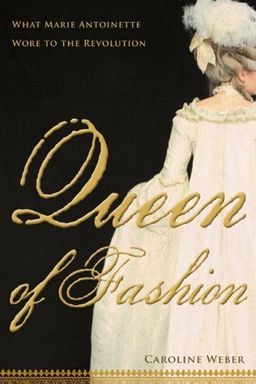
When you approach Weber’s study of Marie Antoinette, you confront a provocative thesis: clothing is not frivolous ornament but a system of political communication. The author argues that in eighteenth‑century France, dress operated as a language of rank, reputation, and sovereignty—so powerful that its misuse could be treated as treason. Through this lens, Marie Antoinette’s wardrobe becomes a living archive of monarchy’s triumphs and failures, recording how visibility both grants and imperils authority.
Versailles: where appearance is law
Versailles was a theater of spectacle founded by Louis XIV, in which clothing literally enforced hierarchy. Courtiers performed loyalty through silk, lace, and ritualized etiquette. When the young archduchess of Austria crossed into France for her remise—a ceremony in which she was stripped of Austrian garments and re‑dressed as French—the act signified the total conversion of the body into national property. Her trousseau, valued at 400,000 livres and designed by Parisian artists like Joseph Ducreux, marked her first immersion in the politics of appearance.
Dress as influence and exposure
At court, Marie Antoinette quickly understood that presence is capital. She learned to employ fashion for persuasion—sometimes borrowing masculine or royal motifs to build credibility. Her riding habit, breeches, and portraits recalling Louis XIV’s equestrian grandeur asserted sovereign dignity, even within the confines of Salic law, which barred her from rulership. Yet each sartorial advance also bred suspicion. To ride astride or adopt masculine tailoring seemed an encroachment on male privilege, turning assertion into controversy.
The Queen as industrial engine
Weber shows you how the Queen’s taste transformed France’s economy. Through marchandes de modes like Rose Bertin and hairdresser Léonard, fashion became an organized industry with boutiques, rotating collections, and printed plates. Styles such as the pouf à la Belle Poule—a towering coiffure commemorating naval victory—turned decoration into publicity. But extravagance carried a political cost: silk weavers in Lyon blamed her preference for imported muslins for unemployment, pamphleteers labeled her 'Minister of Fashion,' and fiscal unrest linked couture to moral decline. Fashion thus shifted from private luxury to national debate.
Retreat and reinvention at Trianon
Facing surveillance at Versailles, Marie Antoinette built a refuge at Petit Trianon where she redefined royal aesthetics around rustic simplicity—gauze, straw hats, and muslin shifts rather than brocade and whalebone. This pastoral style, reminiscent of Rousseau’s naturalism, emphasized intimacy and authenticity. Yet the attempt to humanize monarchy backfired: critics saw the Queen’s 'milkmaid' costumes as disrespectful and class‑confusing. Her wish for privacy paradoxically magnified her public exposure, converting simplicity into scandal.
Rumor, print, and the weaponization of fashion
Pamphlets and caricatures rendered couture into political evidence. The Queen’s poufs, redingotes, and chemise gowns became stand‑ins for corruption and sexual deviance. In the Diamond Necklace Affair (1785), the impostor Nicole Le Guay’s muslin dress and rose reenacted the Queen’s controversial portrait La Reine en gaulle, making forgery plausible and intensifying public fury. In pamphlet culture, every fold or jewel could confirm a narrative of waste, foreignness, and sin.
Revolution and reversal
As upheaval erupted, fashion vocabulary flipped its meaning. The tricolor cockade, muslin chemise, and redingote were reappropriated by citizens as republican emblems, transforming royal codes into civic grammar. The same materials that once signified privilege now proclaimed patriotism. Marie Antoinette’s own wardrobes traced this transformation: disguise during the Varennes escape failed to mask royal identity, and prison garments completed her symbolic stripping from queen to captive. At the scaffold she chose white—bridal, innocent, revolutionary, and funerary all at once—closing her story with an image that fused power and loss.
Core premise
Through Weber’s narrative, you learn that Marie Antoinette’s life was a continuous negotiation between image and survival. Every act of dressing was political speech. In a society where visual codes defined legitimacy, her wardrobe served as both shield and sentence—fashion as statecraft, spectacle, and ultimately, sacrificial stage.