
Idea 1
From KGB Networks to a Security-State Empire
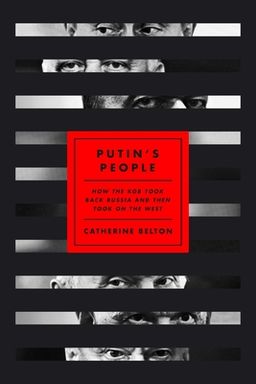
How do networks born in a secret police bureaucracy come to rule a country and project power worldwide? This book argues that modern Russia is the product of a long fusion between the Soviet intelligence apparatus and post-Soviet capitalism. Vladimir Putin's ascent—from mid-level KGB officer in Dresden to President—is not a personal odyssey so much as the visible culmination of a system engineered by the siloviki: the men of the security services who preserved the KGB’s networks, financing, and clandestine habits through the regime changes of the 1990s.
You start with the late Soviet period, where “friendly firms,” covert trade and the Communist Party’s invisible economy quietly stocked hard currency abroad. These parallel channels—Seabeco, Nordex, FIMACO—let the USSR finance influence even after collapse. When the Party disintegrated, the operators behind these structures, often foreign-intelligence veterans, converted them into private assets. In Dresden, Putin and colleagues linked with Stasi and KoKo smuggling firms under Operation Luch, learning techniques for clandestine finance—front companies, “operative firms,” and black cash channels—skills that reappeared later in St. Petersburg's oil-for-food system.
Building the Post-Soviet Power Base
Back in the decaying Soviet north, Putin’s office in Sobchak’s city administration became an incubator for the new hybrid power network. The St. Petersburg model blended bureaucratic control, organized crime (the Tambov group), and financial intermediaries (Bank Rossiya). Business figures such as Ilya Traber, Yury Kovalchuk, and Gennady Timchenko served as early conduits for money and muscle. The Ozero dacha cooperative gave these men a social and economic fortress—trust-based membership among future ministers and executives. What you see in miniature here is the prototype for how the state and criminal networks merge: capture of strategic assets, opaque ownership structures, and enforcement through loyalty or fear.
Translating Covert to Public Power
Putin’s rise to head of the FSB and then Prime Minister reflects a careful continuity of the old guard. The same siloviki—Patrushev, Sechin, Ivanov, Timchenko—move in unison to restore the apparatus of coercion. Their project culminates in what insiders call “Operation Successor”: the orchestration of kompromat and media control to remove legal and political threats (Skuratov, Primakov, Luzhkov) and secure Putin as the presidency’s safe candidate. In December 1999, the transition from Yeltsin’s family rule to siloviki dominance completes with one handshake—the Kremlin becomes a fortress run by intelligence men.
The State Within the State
Once in power, the siloviki rebuild the state in their own image. Institutions—courts, tax police, media regulators—become instruments of discipline. The Yukos case and Khodorkovsky’s arrest signal the end of independent wealth. Rosneft, Gazprombank, and Bank Rossiya absorb the economy’s commanding heights. Legal verdicts and auctions are “managed”—the term ruchnoye upravleniye, or manual control, defines the era. Property now exists by political permission.
Power Projection and Global Reach
The obschak—the black cash engine—funds loyalty and foreign leverage. Through Bank Rossiya, Gazfond, and offshore proxies like Sergei Roldugin, capital exits through mirror trades and shell companies, returning as influence in London, continental Europe, and even American politics. Soft-power arms—Orthodox foundations, conservative coalitions, cultural NGOs—wrap ideological camouflage around these financial flows. Abroad, hybrid war completes the toolkit: Crimea, Donbass, and cyber measures join economic and cultural operations to form a synchronized mode of empire.
Central Argument
The book’s core argument is that Russia’s resurgence is not spontaneous nor ideological—it is systemic, predicated on the rebirth of the KGB’s networks within capitalism. The siloviki converted black cash into governance, bureaucracy into coercion, and soft power into cover for ambition. Understanding this machinery means reading power itself as an enduring intelligence operation that survived regime change and adapted to the open world.
By following these threads—from Dresden to St. Petersburg to the Kremlin—you see how clandestine continuity shapes global politics. The system’s strength lies in its opacity; the reader’s strength lies in tracing its patterns. The ultimate insight: Russia’s reemergence is the story of a deep state reborn as a global actor, balancing black cash, ideology, and hybrid warfare in the style of its own secret heritage.