
Idea 1
Put Happiness to Work: Turning Joy into Engagement and Peak Performance
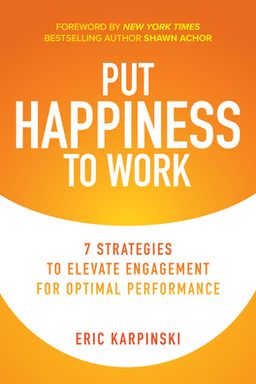
Have you ever wondered why, despite billions spent on employee engagement, your workplace still feels disengaged and drained? In Put Happiness to Work: 7 Strategies to Elevate Engagement for Optimal Performance, Eric Karpinski argues that organizations have been chasing the wrong goal. The true driver of engagement isn’t more surveys, meetings, or metrics—it’s happiness. Not the shallow, beer-cart and ping-pong-table kind, but a deeper form of positive emotion rooted in meaning, connection, and purpose.
Karpinski contends that traditional engagement programs have failed because they focus on outcomes—a more committed, proactive workforce—rather than the emotional experience that fuels them. Engagement, he says, is simply a measure of activated positive emotion at work. When people feel inspired, enthusiastic, proud, or fulfilled, they naturally go above and beyond. By aligning employees’ desire for happiness with leaders’ desire for engagement, everyone wins.
Why Happiness Is the Missing Piece
Karpinski begins with a simple but powerful idea: employees don’t come to work dreaming of being “engaged”; they want to be happy. Research from positive psychology and neuroscience shows that positive emotions broaden our thinking, enhance creativity, and build resilience. Yet most workplaces ask people to “leave emotions at home.” This suppression strips away the very source of energy that drives performance. Instead, workplaces should cultivate what Karpinski calls rational optimism—an attitude that acknowledges real problems but believes effort can make a difference.
Happiness, in Karpinski’s view, includes not just joy and enthusiasm but also pride in a job well done, curiosity, gratitude, interest, and connection. He distinguishes between two types of happiness: the short-lived pleasure of hedonic happiness and the fulfilling pursuit of eudaimonic happiness, which stems from meaning and growth. True engagement, he argues, comes from the latter.
The Research Behind the Revolution
To make his case, Karpinski draws on the last two decades of positive psychology. He recounts how Martin Seligman’s call to study what makes people thrive—not just what makes them ill—sparked a worldwide research movement. Meanwhile, Gallup’s studies of employee engagement revealed clear ties between positive emotions and business outcomes: higher productivity, lower turnover, and better profitability. However, despite massive investment, overall engagement numbers barely budged because organizations ignored the emotional roots behind the data.
Karpinski’s experiences with the Orange Frog Training Program—based on Shawn Achor’s The Happiness Advantage—bring this research to life. At Cemex, the world’s largest cement producer, teams using happiness-based training saw a 20% increase in engagement. A large insurance company achieved a 50% sales gain and cut attrition from 12% to 3%. Even a struggling hospital network, amid layoffs, boosted optimism and profitability through these practices. The data speaks for itself: happiness doesn’t just feel good; it works.
The Seven Practical Strategies
The book translates science into a set of seven actionable strategies that any leader or team can use to embed happiness into everyday work habits:
- Hardwire Authentic Appreciation — Build a culture where meaningful recognition flows freely and specifically from everyone, not just the boss.
- Cultivate Connection — Foster belonging and trust through micro-moments of positive interaction that link people to each other and the organization’s purpose.
- Put Stress to Work — Reframe stress as fuel for growth rather than a threat; learn to shift from anxiety to challenge responses.
- Activate Employee Superpowers — Identify and use signature strengths that energize people and lead to higher engagement and performance.
- Mine for Meaning — Help employees see how their work matters and aligns with their core values or a broader purpose.
- Embrace the Negative — Teach teams to face, rather than suppress, negative emotions and transform them into learning and resilience.
- Approach as a Coach — Shift from commanding to coaching by investing in one-on-one conversations that unlock people’s growth and potential.
A Human-Centered Blueprint for Change
Through these seven strategies, Karpinski offers both a mindset and a method: happiness must be hardwired into daily work through habitudes—small, recurring habits that compound into big cultural change. Rather than top-down mandates, he advocates distributed ownership where every employee contributes to a happier workplace. The goal isn’t to create utopia but to replace burnout and apathy with vitality and meaning.
“You can’t do engagement to people,” he writes. “They must be active participants.” When happiness becomes intrinsic to the work itself—embedded in meetings, feedback, and relationships—engagement follows naturally.
In a time of rapid change, remote work, and widespread burnout, Put Happiness to Work reminds readers that happiness isn’t a perk—it’s a performance strategy. If you learn to activate positive emotions, cultivate connection, and coach rather than command, you can turn work from a source of stress into a source of strength. This isn’t about being cheerful all the time—it’s about building psychologically safe, purpose-driven teams where people and performance flourish together.