
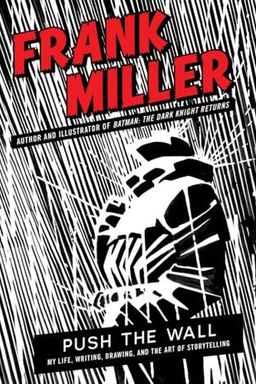
Push The Wall cover

Push The Wall

by Frank Miller

The comic book writer and artist chronicles his career from his time in New York in the 1970s to projects made in Hollywood over the decades.

How a Story Built and Broke Finance

How can one person turn narrative into money at global scale? In this book, you watch Ivar Kreuger blend performance, inventive security design, and engineered opacity to fund sovereigns, dominate an industry, and then implode in a storm of forgeries and investigation. The core claim is simple and unsettling: in permissive markets, a powerful story plus clever structures can raise vast sums faster than facts can be verified. But to follow how that works, you need to see three systems working together: Kreuger’s theater of persuasion, his capital engineering, and the fog of entities and accounting that hid risks until panic arrived.

You step into a 1920s world primed for such a character. Post-war optimism, celebrity culture, and a hunger for yield made the United States a receptive stage. Banking houses like Lee, Higginson & Co., figures like Donald Durant and Percy Rockefeller, and a press eager for heroes amplified credibility. Against that backdrop, Kreuger sold governments a distinctive bargain: immediate cash in exchange for long-lived match monopolies. He then sold American investors securities that looked safe but came with upside and prestige. As long as the story held, the machine spun cash. When the story cracked, the leverage, intercompany promises, and forged paper snapped back.

Performance as a financing tool

Kreuger acts like a stage director. On the Berengaria in 1922 he monopolizes the wireless room and orchestrates whispers that he has engaged the lines for exclusive use, priming New York financiers before he even lands. In boardrooms, he speaks in sculpted paragraphs, punctuates with long pauses, and locks eye contact until listeners lean forward. At a crucial Lee Higginson luncheon, he turns skeptics into backers with cadence and calm. Later, he curates a public myth through Isaac F. Marcosson’s Saturday Evening Post profile and a Time cover, reinforcing the idea that you are buying into a singular, silent genius. The show is not vanity; it is working capital.

Performance as persuasion

"When Ivar began weaving a story, he created a similar effect to Viking tapestries… a listener had no choice but to follow him to the end."

Engineering securities that investors crave

The story works because it is attached to instruments that answer investor psychology. In 1923, he and Lee Higginson sell convertible gold debentures for International Match at 6.5%, payable in dollars or gold with conversion rights. He shifts to participating preferreds to ease cash drains, and invents B shares with 1/1000th the vote so he can raise massive equity without surrendering control (a control hack later echoed by dual-class structures in tech). In 1927, he structures a French deal that couples a $75m sovereign loan at 5% with a U.S. convertible issue tied to both International Match equity and a dividend-linked kicker from Kreuger & Toll, capturing an estimated $2.5m of origination arbitrage up front. Form follows appetite: give safety, offer upside, keep control.

Hiding risk in a web of entities

Behind the glossy prospectuses, he builds Continental Investment Corporation in Liechtenstein and Garanta in the Netherlands to route funds, harness secrecy, and keep liabilities out of American view. About $12.24m from the 1923 issue moves to Continental, protected by a sweetheart tax deal that fixes payments regardless of income. Garanta, nominally Polish-owned, becomes the conduit for a larger, secret Poland arrangement; it also absorbs exchange losses by contract. On paper, you see big buckets like "Advances to Governments $31m" or "Advances for Investments in Match Concessions $28m" on Continental’s 1928 balance sheet (per Anton Wendler) but not the granularity you would need to tie assets to cash flows. Intercompany interest at steep rates (24% from Garanta) and a quiet $1,135,753.09 reserve transfer make reported profits rhyme with promised dividends, even when operating cash is thin.

Gatekeepers who steady the aircraft

The system relies on professional affirmation. A.D. Berning at Ernst & Ernst, flattered and compensated, offers private comfort letters and calls transactions "fair" while accepting Swedish audits at face value. Wisconsin’s Railroad Commission pushes, the NYSE demurs then lists, and Swedish banking supervisors flag concerns but defer as long as banks feast on fees. Durant, torn between skepticism and syndicate loyalty, earns nearly $1.4m personally on one certificate issue and keeps backing a client his firm cannot afford to lose. Pride and rivalry add texture: Jack Morgan bristles at exclusion from German negotiations and later pushes hard against an IT&T–Ericsson combination tied to Kreuger.

The grand gamble and the break

The machine’s signature bet arrives in 1929–1930: a $125m, 50-year German loan at 6% in exchange for a state monopoly and a 50/50 profit split. As markets crack, Kreuger insures his underwriters by granting a free put: if they cannot sell his American Certificates by December 31, 1930, he will buy back up to half at cost. It buys confidence but loads a catastrophic contingent liability precisely as liquidity vanishes. France’s early repayment briefly rescues him. Then, the Rome detour and forged Italian bills convert ambiguity into criminal clarity. Misspelled names and wrong signatures make it impossible to hide behind complexity. Within months, trustees seize assets, Lee Higginson collapses, and congressional outrage helps propel the Securities Act of 1933 and the Exchange Act of 1934 (founding the SEC).

The big lesson for you: the combination of a master narrative, engineered securities, and institutional deference can levitate a capital empire—until a tangible fact (a missed payment, a forged bill) punctures belief. Many assets were real (Swedish Match, Boliden, Ericsson stakes) and some value was recovered, yet the tower sat on promises, political enforcement, and unfalsified trust. If you invest, govern, or regulate, this story teaches you to triangulate narrative with structure and cash location, to interrogate gatekeeper incentives, and to treat "fair" as a red flag, not a conclusion. (Note: compare to later episodes from S&L hybrids to Enron’s SPVs and dual-class tech IPOs; the pattern rhymes.)


Theater as Capital

Kreuger shows you that persuasion can be designed and rehearsed like opera. He choreographs first impressions on the Berengaria in 1922—Homburg hat, dispatch case, total control of the wireless—to make financiers ask for him before he asks for them. In rooms with Lee Higginson partners, he deploys long, surgical silences so you fill the space with your own assent. He looks at you as if you are the only one there, speaks in paragraph-length arcs from memory, and exits on a high note, leaving others to repeat his lines for him. The performance is the wedge that opens capital markets.

Narrative beats data when the room is primed

In the 1920s, most investors cannot independently verify European government receivables or the health of a Polish concession. But they can feel a story: a builder who will tame a chaotic industry, pay steady dividends, and rebuild Europe with tasteful civic buildings. Kreuger sells identity more than numbers. When he unveils a "Match Palace," cultivates architects and artists, and sprinkles references to Greta Garbo, he invites you to join a tasteful mission, not just a transaction (note the similarity to modern founder myths around "mission-driven" monopolies).

Silence as signal

Marcosson quotes Kreuger’s rules: "One is silence; the second is more silence; while the third is still more silence." The restraint functions like scarcity: the less he says, the more others project competence onto him.

PR as underwriting

In October 1929, Isaac F. Marcosson’s Saturday Evening Post profile and a Time magazine cover convert mystique into mass trust. The American Certificates close on October 23 that same week. The sequencing matters: underwriters at Lee Higginson can now sell prestige alongside coupon and conversion math. When panic hits, Kreuger doubles down on performative confidence by offering a free put to the syndicate and sending unhurried cables to Donald Durant. His composure temporarily steadies distribution, buying weeks that his balance sheet does not afford.

Roomcraft: cadence, eye contact, choreography

Kreuger’s live technique is specific. He enters late to heighten stakes, then speaks in well-built paragraphs so you never catch him groping for a number. He pauses long enough to make you feel seen, and he exits before questions metastasize. The Lee Higginson luncheon becomes lore because he bends skepticism with timing as much as with facts. This is not natural charisma alone; it is practiced craft aimed at shortening diligence cycles.

Why you are vulnerable to this

When an intermediary you trust—Percy Rockefeller on the board, Lee Higginson on the cover, Ernst & Ernst in the footnotes—nods along, your brain substitutes their confidence for your own verification. Kreuger exploits that substitution. He monopolizes communication channels (the ship’s wireless, the chosen journalist) so skeptics cannot triangulate. Even his visible habits—constant cabling, multilingual asides, compact leather folders—signal control at a glance. The impressionistic data overwhelms slow facts.

  • Berengaria whisper campaign: "Mr Ivar Kreuger has engaged the wires for his exclusive use" primes demand before meetings occur.
  • Lee Higginson luncheon: pauses and autobiographical thread melt resistance, unlocking U.S. distribution.
  • Marcosson profile and Time cover: curated scarcity becomes national myth, enabling sales amid volatility.

Your practical countermeasures

Treat performance as a data point, never as proof. Insist on document trails that survive the person exiting the room. Randomize your reference checks and avoid single-journalist narratives. Demand that gatekeepers state what they actually examined—not whether terms felt "fair." And when a leader offers to backstop underwriters for free, ask what contingent liabilities they are concealing elsewhere to make that promise plausible. (In later eras, you see echoes of this in earnings call theater and founder-controlled supervoting shares.)

The hardest truth is also the most useful: charisma can be a financing moat. If you recognize that early, you can discount for it, slow the meeting tempo, and separate what the person projects from what the business produces.


Designing Investor-Hungry Securities

Kreuger treats capital structure like product design. He starts with what different pools of money want—safety, income, optionality—and then backsolves instruments that feel protective while preserving his control. Each issuance is a case study in matching cash-flow promises to investor psychology and to the political deals that source the cash in the first place.

Convertible gold debentures: a comfort machine

In 1923, International Match launches 6.5% convertible gold debentures through Lee Higginson. You get bond seniority, a gold-payment option, and the right to convert into equity. If you fear inflation or devaluation, the gold clause calms you; if you crave upside, convertibility tempts you. This blend tightens spreads and widens distribution (note how later markets rediscover this with convertible notes for growth companies).

Participating preferreds and B shares: cash relief and control

From 1924 to 1926, he refinances with participating preferreds that share in upside but impose no maturity cliff, easing cash pressure. Then he invents the B share—1/1000th of a vote—which lets him raise billions in today’s money without diluting control. You are offered dividends and status; he keeps the wheel. This split becomes the template for control engineering, resurfacing in modern dual-class IPOs where founders retain 10–20x voting power.

The French masterpiece: match flows to investor flows

In 1927, he offers France $75m at a nominal 5% (issued at a discount), while selling in America a linked convertible-debenture that syncs investor coupons with France’s payments. He adds a derivative kicker tied to Kreuger & Toll dividends: for every 1% above a 5% base, investors receive an extra 1%. You see three layers at once: sovereign bond, equity option, and parent-dividend participation. Appetite for the complexity produces an origination surplus—about $2.5m flows to the arranger. It is the early playbook of structured finance: move risk where the bid is strongest, take spread in the middle.

Design principle

Give each investor cohort what it craves—floor, upside, story—while you retain control and capture timing arbitrage as the intermediary.

American Certificates and the hidden insurance

By October 1929, Kreuger sells American Certificates in Kreuger & Toll, underwritten by a syndicate led by Lee Higginson. To force certainty in a wavering market, he grants underwriters a free put: if they cannot resell at $28, he will repurchase up to half on December 31, 1930. You, the bank, are now insured against resale risk; he inherits a time bomb of contingent liability that grows with every dollar the market drops. The structure solves short-term distribution but at the cost of long-term solvency if the market sours.

The hidden cost of tailored structures

Each feature—gold clause, convertibility, participation—requires collateral, cash-flow timing, or accounting latitude somewhere in the group. Kreuger supplies that by routing funds through Continental (Liechtenstein) and Garanta (Netherlands) and by recognizing intercompany interest at steep rates. On your statements, yields look covered by real earnings; in the engine room, repayments depend on political enforcement of monopolies and continued capital-market access. When liquidity disappears, optionality becomes obligation.

  • Pros: broader investor base, lower coupons, retained control, upfront origination gains.
  • Cons: complexity risk, hidden leverage, contingent liabilities (e.g., put-back guarantees), dependence on opaque affiliates.

Your takeaway: when a security feels custom-fit to your fears and hopes, check who bears the timing risk and where the control rights sit. Ask how cash flows map from sovereign or monopoly revenues to your coupon, who can defer them, and what hidden promises underwrote the issuance. If an intermediary captures an immediate spread, expect that someone else—often you—holds the tail.


The Monopoly-for-Loan Engine

At the core of Kreuger’s empire is a simple, scalable swap: he lends cash-strapped governments money now in exchange for monopoly or monopoly-like control over their match markets. It is a fiscal-utility model wrapped in industrial clothing. The sovereign gets budget relief without a tax hike; Kreuger gets enforceable pricing power and steady cash flows—at least on paper—to service investor dividends.

Step-by-step mechanics

The engine runs in three steps. First, raise money where appetite is deepest (the U.S. in the 1920s). Second, lend to a sovereign at an attractive published rate, outcompeting banks on headline terms. Third, secure exclusive rights to produce or sell matches, or to administer excise systems, so you harvest annuity-like revenues to fund coupons and dividends. The loop closes when investors see dividends paid and assume operating strength rather than political enforcement.

Poland: the practical opening

Poland’s fragmented industry and political churn provide the first breakthrough. The public arrangement offers a $6m loan and a licensed monopoly leased to International Match. The secret contract enlarges rights through Garanta, a Dutch conduit controlled by nominal Polish shareholders. Exchange losses are contractually pushed onto Garanta. To you, the public face sells legitimacy; the private face manufactures return through quietly shifted risks and receivables.

France: the marquee scale-up

In 1927, the French deal coyly avoids the word "monopoly" but delivers its function: pricing and enforcement that secure cash flows. Kreuger lends $75m at a nominal 5% (issued at a discount), then mirrors France’s payments in his U.S. convertible issue with a dividend-linked kicker. Investors fund more than France receives; Kreuger captures the difference. You see industrial policy and capital markets braided together by a single arranger who monetizes the braid.

Germany: prestige turns to peril

The 1929–1930 German negotiation is the system at maximum voltage: $125m at 6% for 50 years, a state-run monopoly, prices hiked from 6 to 8.5 cents per ten boxes, and a 50/50 profit split. Exclusion clauses aim to keep Russian imports out. But the timing is fatal. To keep his American Certificate pipeline open, Kreuger grants a free put to underwriters, effectively writing insurance as the market burns. When the crash deepens, the engine stalls: political payables and underwriter guarantees come due while issuance windows shut. France’s early repayment buys months, not salvation.

Model risk

The model depends on three fragile pillars—political enforceability, continuous capital-market access, and auditors who bless intercompany mappings. Lose any one pillar in a downturn, and the engine seizes.

What to watch if you see this pattern

Scan for upfront arbitrage that flows to the arranger, not the state; opacity in how investor dollars traverse offshore entities before reaching the sovereign; and enforcement language that hides behind euphemism ("exclusive procurement" instead of "monopoly"). Check whether reported earnings mirror dividend policy too closely and whether intercompany interest rates—like 24% charged to Garanta—are pumping up profit. Most of all, track liquidity timing: are there put-backs or similar guarantees that turn distribution problems into issuer solvency crises?

Kreuger’s genius was to turn a political concession into a bond-like revenue stream. His blind spot was the cyclical and reputational fragility of that stream once new money stopped and facts overtook story.


Fog Machines: Entities and Accounting

If the show and the securities pull money in, the accounting fog decides how long you can keep it. Kreuger constructs Continental (Zürich to Liechtenstein) and Garanta (Amsterdam, nominally Polish-owned) to move cash off U.S. soil, reduce tax and oversight, and place liabilities just out of reach of regulators and auditors. The goal is not to falsify every number; it is to make tracing cash prohibitively hard, so you accept labeled aggregates instead of proofs.

The Wendler snapshot: plausible totals, missing anatomy

Anton Wendler’s 1928 balance sheet for Continental lists huge, smooth buckets: "Advances to Governments $31m," "Land, Buildings, Machinery & Equipment $32m," "Advances for Investments in Match Concessions $28m," "Stocks & Bonds $15m," and "Accounts Receivable $9m." You cannot see which government, which plant, which bonds, or the terms. In that obscurity, intercompany debts masquerade as assets, and related-party interest income fattens headline profits.

The common levers

  • Aggregate line items that defy tracing (e.g., "Advances for Investments in Match Concessions").
  • Intercompany loans and credits moved at will (e.g., a hidden $1,135,753.09 reserve transfer between Swedish Match and International Match).
  • Offshore domiciles with secrecy and light disclosure (Liechtenstein, the Netherlands) to break the audit trail.
  • High internal interest rates (24% charged to Garanta) to manufacture earnings that look operating but are intracompany.

Auditors and the language of comfort

A.D. Berning of Ernst & Ernst becomes an "enabling auditor." Courted with travel, fees, and proximity, he writes memoranda calling transactions fair and offers private attestations hedged by "as far as we know." Wisconsin’s Railroad Commission demands detail; Berning supplies just enough. The New York Stock Exchange, initially hesitant, takes comfort and lists International Match. Swedish bank inspectors raise early alarms about syndicate loans and concentrated risk but stop short of enforcement as long as local banks profit.

Red-flag vocabulary

Repeated use of "fair" and "as far as we know" is a smoke signal that evidence has been replaced by reassurance.

Gatekeepers as co-authors

Donald Durant and Lee Higginson both question and enable. Durant presses for the composition of "marketable securities" lines (one showed $77m) yet continues to underwrite American Certificates, earning large commissions and binding the firm’s reputation to Kreuger. Jack Morgan’s ambivalence calcifies into hostility when excluded from German talks, affecting how rival institutions respond to later deals like an IT&T–Ericsson merger. Incentives write the footnotes as surely as accountants do.

Your due-diligence playbook

Follow cash across legal entities, not just consolidated statements. Break out the big buckets until you see counterparties and terms. Reconcile reported dividends with external, arm’s-length operating cash, not intercompany interest. Test auditor independence by analyzing fee mixes, side engagements, and travel perks. And when an issuer claims sovereign receivables or monopoly rents, obtain independent confirmations from ministries, not just notarized copies in a briefcase.

Opacity here is not a passive byproduct; it is a designed moat. If you accept labels without anatomy, you become the working capital.


Networks, Media, and Mania

Kreuger harnesses the social circuits of the 1920s as if they were syndicate lines. He recruits elite validators—Percy Rockefeller on the International Match board, Oscar Rydbeck at Swedish banks, Sosthenes Behn at IT&T—and stitches them to distribution powerhouses like Lee Higginson. He sprinkles celebrity dust with Greta Garbo and courts statesmen up to President Hoover. In a market hungry for growth stories (RCA fever, bucket shops, Jesse Livermore tales), the network becomes a substitutive due diligence for the masses.

Media as multiplier

The Marcosson Saturday Evening Post profile on October 12, 1929, and Time’s October cover package Kreuger as a modest, silent genius with global reach. He grants Marcosson exclusive access and freezes out others, making one journalist the tether for millions of readers. When syndicates sell American Certificates days later, bankers point to ink as proof. The press turns identity into collateral, a dangerous substitution when disclosures are thin.

Theater of confidence in panic

As markets lurch, visible calm becomes a tactic. Kreuger sends Durant an unruffled cable—"I regret very much that our issue seems to have gone at a very unfortunate moment"—while delivering the put-back guarantee. Underwriters feel protected and keep placements alive longer than fundamentals justify. For a few weeks, psychology trumps arithmetic. Then arithmetic reclaims the throne.

Why the timing was perfect—and fatal

Post-war optimism, rising consumerism (radios, cars, cigarettes), and lax disclosure rules make America the ideal market for engineered paper tied to European monopolies. Investors want yield with a whiff of novelty; Kreuger supplies both. But when the same media and networks swing from adulation to scandal after his death, they accelerate collapse. Yesterday’s heroic myth flips into "the greatest swindler in all history," and reputational contagion spreads faster than trustees can count sacks of seized papers.

Social proof trap

When you outsource skepticism to prestigious names and glossy profiles, you buy the man, not the numbers—and inherit his blind spots.

Your translation to practice

Rate the credibility stack by its weakest link, not its glossiest. If one journalist or one bank carries the entire narrative, assume information risk is concentrated. Stress-test deals dependent on "monopoly-like" language or political favors; those deals rerate violently when sentiment shifts. And treat visible confidence—calm cables, celebrity endorsements, presidential meetings—as inverse indicators unless backed by independent verifications.

The network that lifts valuations on the way up will also synchronize selling on the way down. Plan accordingly.


Forgeries, Collapse, and Reform

For months, you could argue about labels and intent: were the intercompany transfers legitimate? Were secret monopolies politically sensitive but real? That debate ends when paper lies. After a furtive trip to Italy, Kreuger orders a Stockholm lithographer to produce 42 bills that look like Italian Treasury obligations, stamped "Guaranteed as to principal and interest by the Kingdom of Italy," bearing names like G. Boselli and A. Mosconi, with interest payable at Barclays in London. The bills are clumsy: misspellings, signature forms that do not match usage. When Sweden’s foreign minister Hellner presents them to Mussolini, Mussolini calls them forgeries. Ambiguity vanishes.

From accounting fog to criminal clarity

Before the bills, defenders could cite secrecy needs or European political delicacy. After the bills, prosecutors can point to a physical artifact of fraud. Media narratives pivot instantly, politicians smell moral clarity, and cooperation evaporates. Offices are seized—150 sacks of waste paper hauled out—Price Waterhouse dives into forensics, and U.S. trustees like Edward S. Greenbaum begin untangling cross-border claims.

Immediate fallout

Kreuger dies in Paris on March 12, 1932, officially by suicide. Swedish and U.S. investigations ramp up. Lee, Higginson & Co., too concentrated in Kreuger paper, enters liquidation. Investors in International Match eventually recover roughly 32 cents on the dollar after years of litigation and asset sales. Not all assets were fiction: Swedish Match survives, Boliden throws off dividends, and Ericsson stakes have real value. But financing channels close, reputations crater, and banks that nursed on fees discover they were also drinking poison.

Regulatory pivot

Congressional outrage over Kreuger becomes fuel for the Securities Act of 1933 and the Exchange Act of 1934, birthing the SEC and mandating registration, audited financials, and liability for material misstatements.

Gatekeepers on the stand

Hearings probe banks that underwrote without full transparency, exchanges that listed with "comfort" instead of inspection, and auditors who used hedged language. Legislators ask the questions you should always ask: What did you actually examine? What did you verify with third parties? What fees tied you to the client? That interrogation crystallizes reforms around auditor independence, disclosure standards, and exchange listing requirements.

Your operating lessons

Treat single-source, high-value sovereign documents as unverified until you obtain confirmations from the issuing authority. Recognize that when gatekeeper incentives depend on a single charismatic client, skepticism atrophies; you must supply it. And assume that once a tangible fraud artifact surfaces, legal and political processes will move faster than balance sheets can be repaired. In that phase, recovery depends on the residual quality of industrial assets—which, in Kreuger’s case, softened but did not erase losses.

Scandals write rules. The ones you invest under today exist because someone once sold a great story and printed a bad bill.


Ambiguity and the Final Act

The last chapter is not moral algebra with a tidy sum. Kreuger is both builder and forger, industrialist and illusionist. Friends describe a man unraveling by 1931–1932: long retreats into a Silence Room, manic memorization of minutiae, oscillations between charm and panic, heavy smoking and drinking. Close associates like Krister Littorin, Karin Bökman, and Sigurd Hennig watch the mask slip. Stress of contingent liabilities—the underwriter put-backs, German installments—may have turned a virtuoso structurer into a desperate improviser.

Three endings, none conclusive

  • Suicide: the official French account—shot through the heart with a Browning 9mm in his Paris apartment on March 12, 1932—fits the arc of collapse.
  • Murder: Torsten Kreuger and some researchers point to oddities—missing suitcases, inconsistent forensics, the precision of the wound—and suggest silencing by enemies.
  • Escape: a romantic but thinly evidenced theory that he staged his death and fled.

Primary evidence is compromised: the body is cremated quickly, the scene is inconsistently documented, witnesses disagree. The book urges epistemic humility. You can extract lessons without pretending to know the unknowable.

Messy truths

He built enduring assets (Swedish Match, Boliden, telecom and pulp stakes) and also printed fake Italian bills. Innovation and deceit coexisted—then the latter devoured the former.

How to read figures like Kreuger

Avoid binaries. Ask what was real, what was timed accounting, what was political arbitrage, and what crossed into criminality. Disaggregate the person from the structures they built: some will survive them; others exist only while the myth holds. And calibrate blame with incentives: bankers, auditors, and directors did not merely miss red flags; many were paid to look away or spoke a language of comfort that muffled their doubts.

Your enduring filter

When you meet a dazzling operator, ask four questions: Where does the cash actually sit? What promises come due if markets shut? Who verifies the claims independently? What part of the story survives if you remove the protagonist from the room? In Kreuger’s case, the answers would have separated Swedish Match and Boliden from Italian bills and put-back guarantees. That separation—made early—could have saved fortunes.

The final act is ambiguous, but the practical lessons are not. The next time a "match king" arrives—whether selling bandwidth, carbon credits, or AI monopolies—you will know which curtains to pull back first.

Dig Deeper

Get personalized prompts to apply these lessons to your life and deepen your understanding.

Go Deeper

Get the Full Experience

Download Insight Books for AI-powered reflections, quizzes, and more.