
Idea 1
Turning Purpose into Power: How Ordinary People Create Extraordinary Change
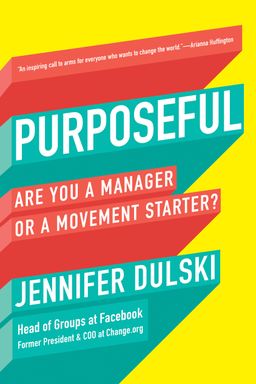
Have you ever felt a pull to fix something broken—in your workplace, community, or world—but hesitated because you thought, “I’m just one person”? In Purposeful: Are You a Manager or a Movement Starter?, Jennifer Dulski argues that you don’t have to be a CEO, politician, or activist icon to change the world. You just have to start with purpose. Drawing on her experiences leading at Yahoo!, Facebook, Google, and Change.org, Dulski shows that the same skills that make great business leaders also fuel world-changing social movements.
At its core, Purposeful is a roadmap for transforming passion into action. Dulski contends that the most effective leaders don’t just manage—they start movements. These leaders, whether teenage entrepreneurs or corporate executives, rally communities around shared purpose, build trust through vision and empathy, and sustain progress by fostering growth, resilience, and connection. The book weaves together inspiring real-world stories and practical strategies, showing how small actions create ripple effects that can transform organizations and societies.
From Managing to Movement Building
Most people treat leadership as a job title. Dulski reframes it as an act of collective empowerment. She distinguishes between managers—those who maintain systems—and movement starters—those who ignite purpose in others. Managers keep order; movement starters inspire action. Whether you’re launching a product, leading a nonprofit, or starting a community initiative, your job is to create momentum behind a shared vision.
To illustrate, Dulski recounts the story of Manal Rostom, an Egyptian woman who founded the Facebook group “Surviving Hijab,” eventually helping Nike design its Pro Hijab for Muslim women athletes. Rostom didn’t begin with power or resources; she began with conviction. Similarly, teenage entrepreneur Megan Grassell launched Yellowberry to help girls find age-appropriate bras, and Neil Grimmer founded Plum Organics from his kitchen to give babies healthier food. These leaders weren’t managing—they were mobilizing around purpose.
The Ripple Effect of Small Actions
Dulski insists that you don’t need extraordinary circumstances to make an impact. Across the book, she repeats a core truth: meaningful change often starts with one small, courageous act. Drawing from social science research (like Jonathan Freedman and Scott Fraser’s “Foot-in-the-Door” technique), she shows that people are more likely to commit to big actions after starting with small ones. One woman’s post, one petition signature, or one prototype can cascade into collective momentum. Consider Sarah Kavanagh, a 15-year-old from Mississippi, who petitioned PepsiCo to remove brominated vegetable oil from Gatorade, successfully prompting global change across the beverage industry. Dulski uses such examples to prove that micro-actions, once amplified, build macro impact.
Purpose, Dulski explains, makes persistence possible. Movements are marathons, not sprints. They require inner clarity and external alignment—an understanding of why the work matters and for whom it matters. Purpose fuels patience and resilience when challenges inevitably arise.
Bridging the Worlds of Business and Social Change
What makes Purposeful stand out among leadership books is how it bridges corporate strategy with grassroots activism. Dulski draws parallels between social organizing and enterprise management. Both demand vision, storytelling, persuasion, and the ability to motivate diverse stakeholders. From the Theory of Change framework used by nonprofits to the Motivational Pie Chart she employed at Yahoo! and Change.org, the tools she outlines are versatile—they apply equally to CEOs managing teams and teenagers launching petitions.
(Note: This mirrors Simon Sinek’s Start With Why, but with a stronger emphasis on actionable leadership practices that link empathy, accountability, and hope.)
The book balances inspiration with realism. Movements face haters, criticism, and failure. Dulski doesn’t romanticize this; she arms you to anticipate it. From handling online attacks with compassion to viewing adversity as “Rocky Moments” that strengthen character, she provides practical tools for staying motivated through turbulence. Her refrain—“If I can do this, I can do anything” (IICDTICDA)—runs through every chapter, modeling a mindset of courage in action.
Why These Ideas Matter
We live in what Dulski calls a “world in need of hope.” Political polarization, inequality, burnout, and fear can paralyze people from acting. Yet, she argues, the antidote is movement creation: using purpose to connect and empower. By seeing every goal—organizational, civic, or personal—as a movement, you can transform stagnant systems into living communities. The future, she concludes, belongs to those who choose hope, empathy, and persistence over cynicism.
In the pages that follow, Dulski walks readers step-by-step through seven stages of movement building: uncovering purpose, sparking action, articulating vision, persuading power, leading teams, handling critics, and overcoming obstacles. Through intimate stories and field-tested strategies, she shows that leadership isn’t about authority—it’s about awakening agency in yourself and others. As she reminds us, “We all have the power to make a difference… you just have to be the first one to clap.”