
Idea 1
The Psychology Delusion: Why Self-Help Makes Us Miserable
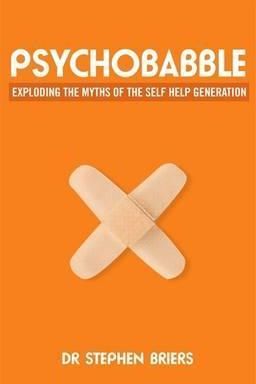
Have you ever wondered why, in an age of endless self-help books and motivational gurus, we don’t seem to feel any better about ourselves? In Psychobabble, psychologist Stephen Briers asks this uncomfortable question. He argues that the massive self-help industry — a multibillion-dollar empire of gurus, life coaches, and pseudo-scientists — has done more harm than good by feeding us seductive myths about happiness, confidence, and control. Instead of liberating us, it has left us disappointed, self-critical, and perpetually striving to ‘improve’.
Briers' central claim is simple yet radical: the language of popular psychology has reshaped how we think about ourselves — not necessarily in the direction of truth, but toward conformity, pressure, and endless self-optimization. He describes this jargon-filled territory as Psychobabble — a hybrid of pop culture and pseudoscience that promises self-fulfillment but delivers anxiety and disillusionment.
From Self-Improvement to Self-Tyranny
Briers shows how Psychobabble seduces us with simple formulas: a handful of habits, some affirmations, a positive mindset. Its power lies in its simplicity. But life, he points out, is inherently complex. By reducing deep human questions — love, failure, meaning — to easy slogans, we distort reality itself. Behind every glossy cover touting inner peace hides a subtle directive: you should be better — calmer, fitter, happier, richer.
This relentless drive for optimization has a dark side. The belief that everyone can be whoever they want to be creates crippling pressure. When we fail to reach our “potential,” the only person left to blame is ourselves. Psychobabble thus replaces compassion with guilt. It turns fallible humans into permanent self-fixing projects. Instead of peace, we get self-recrimination.
The Birth of a Psychological Culture
Modern life, Briers argues, has given rise to a distinct psychological culture. In it, feelings have become moral imperatives. To repress emotion is now a sin, to display it openly a virtue. The “stiff upper lip” ethos has given way to emotional transparency — but not always wisely. Self-help encourages us to bare our souls, insist on happiness, and “find our true selves.” Yet, as Briers shows, emotional honesty and emotional indulgence are not the same.
In this new world, personal growth has replaced morality. You no longer need to be good — only “authentic.” Even everyday language is saturated with psychological clichés. People now “need closure,” “set boundaries,” and “self-care” their way through life. But in chasing these goals, we often lose perspective. Psychobabble gives us the illusion of wisdom while stripping away our ability to think critically about what truly matters.
Faith in False Science
Briers devotes much of the book to dismantling the pseudoscientific basis of popular psychology. He reminds us that psychological research, though valuable, is still young and rarely as definitive as gurus pretend. When self-help writers misuse neuroscience, quantum mechanics, or “emotional intelligence” to legitimize their claims, they practice what Nobel physicist Richard Feynman called “cargo cult science” — something that looks scientific but isn’t. The danger, Briers warns, is that ordinary readers don’t have the tools to tell the difference.
Even well-meaning advice can backfire when applied without nuance. Cognitive Behavioral Therapy (CBT), now hailed as the cure-all for human suffering, works in many cases but isn’t the one-size-fits-all solution its promoters claim. Likewise, the obsession with “high self-esteem” has produced more narcissists than genuinely confident people. Briers argues that humility, not self-love, is often the true mark of maturity.
Why These Myths Matter
So why does all this matter? Because Psychobabble shapes how we see ourselves — and others. If we believe we can heal our bodies through thought (à la Louise Hay) or manifest success by visualization, then failure becomes a personal sin. The sick are blamed for their illnesses; the poor for their poverty. Responsibility for everything shifts inward. The communal becomes psychological, and society retreats from solidarity into self-help individualism.
At heart, Briers calls for a return to realism. Life, he reminds us, is messy, unpredictable, and full of pain as well as joy. The mature task is not self-transformation but acceptance — to “come as we are,” flaws included. That doesn’t mean resignation but balance: cultivating compassion over control, patience over perfectionism, curiosity over certainty.
In the chapters that follow, Briers explores and dismantles many of the myths that Psychobabble has sold us — from the cult of self-esteem (“The root of all your problems is low self-esteem”) to misplaced faith in the mind’s control over health (“You can heal your body”), to the illusion of total autonomy (“You are in control of your life”). Together, these myths reveal how the self-help revolution, far from freeing us, has made us our own prison wardens. Each chapter is a witty, evidence-based plea for a humbler, saner, more compassionate psychology — one that sees human frailty not as a defect to fix, but as the essence of being alive.