
Idea 1
Reading as a Cultural Invention that Changes the Brain
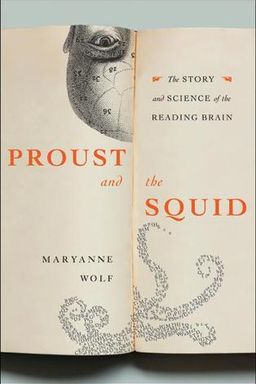
Maryanne Wolf’s work argues that reading is not innate; it is a cultural invention that reorganizes neural circuits and transforms how humans think. Just as Proust described reading as a sanctuary for reflection, Wolf examines the biological miracle that makes that sanctuary possible: the brain repurposes older systems designed for vision and speech to create new ones for literacy. You do not simply install reading like software—you sculpt it through repeated, structured experiences that reorganize your cortex.
Neuronal Recycling and New Cognitive Pathways
Wolf builds on Stanislas Dehaene’s concept of “neuronal recycling.” Your occipital-temporal regions (especially area 37) were once devoted to object recognition; through literacy, they become specialized for letters and words. This shift reflects how evolution reuses ancient brain circuits for modern cultural tasks. Raichle’s imaging studies show that meaningful symbols activate far more extensive networks—semantic, parietal, and frontal areas—than meaningless lines, proving that reading multiplies cognitive engagement.
Experiments by Stephen Kosslyn demonstrate that when you imagine letters, specific visual regions activate even without visual input. Once learned, letter representations become durable and retrievable mental objects, available to the imagination as well as perception. This process of specialization allows automatic recognition and creates the foundation for fluent reading.
Automaticity and the Role of Practice
Hebb’s principle—“cells that fire together, wire together”—explains why repetition is vital. Every exposure to a word strengthens neural alliances until recognition becomes instantaneous. When you practice, your brain consolidates patterns and speeds communication between visual and phonological circuits. Keith Rayner’s eye-movement research shows that your reading eyes jump in quick saccades and fixations, using subtle previews of upcoming words. This coordination across vision, attention, and language is what transforms effortful decoding into apparent ease.
Scripts and Cultural Variation
Wolf extends her analysis from biology to culture: different writing systems produce different neural organizations. Sumerian cuneiform and Chinese logographs demand broad bilateral and motoric engagement; alphabets, by contrast, emphasize left-lateralized phonological mapping and economy. Each system cultivates distinct mental habits and educational practices—the Chinese system builds exceptional visual-spatial memory; the alphabet encourages phoneme awareness and analytic precision. Across cultures, writing systems reshape both the brain and thought.
Literacy, Thought, and the Socratic Mirror
Wolf juxtaposes the alphabet’s advantages with Socrates’ warnings. Alphabets streamline reading and democratize knowledge, but Socrates foresaw that writing could erode memory and true dialectic. Wolf compares this ancient anxiety with modern fears about digital immediacy—Google offers instant access but risks shallow understanding. Just as Socrates valued dialogue and reflection, Wolf calls for “deep reading” that preserves inferential thought and patience in an age of speed.
Reading Development and Equity
Your reading brain is built long before school. Early storytime, naming, and nursery rhymes create the scaffolding for future literacy. Hart and Risley’s finding of a 32-million-word gap between children of different language environments demonstrates how vocabulary richness becomes the key predictor of comprehension. Wolf urges practical policies: reading aloud at home, early phonological games, and medical care (such as treating ear infections) that preserve auditory clarity.
From Science to Mandate
The overarching argument is clear: reading transforms the brain, and teaching must mirror this transformation. Historical scripts show how culture sculpts cognition, developmental research shows when learning is most fertile, and neuroscience reveals what circuits must be trained. The reader, educator, or parent must therefore act with intention—create language-rich environments, respect the biological timetable, and cultivate the deep, reflective engagement that keeps humanity thoughtful amid technological change.