
Idea 1
The Industrial Animal Dilemma
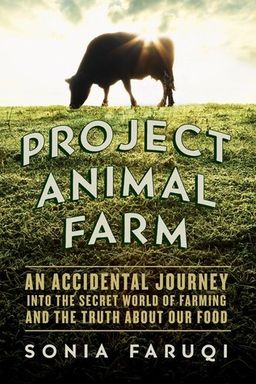
What happens when the global push for cheap meat collides with animal welfare, worker safety, and ecological balance? This book explores that exact tension—following farms, corporations, and slaughterhouses across Canada, the U.S., and Asia to reveal a unified industrial system driven by cost efficiency and scale, often at the cost of compassion and transparency.
The system beneath your plate
Across continents, the same patterns reappear: battery cages, gestation crates, tethered cows, closed poultry houses, and contract farming under multinationals like Tyson, KFC, and Smithfield. These arrangements promise productivity and sanitary control but result in confinement, mutilation, and the loss of natural behaviors—hens who can’t spread wings, pigs who can’t turn, cows chained for life. Automation adds precision yet removes human empathy, creating what the author calls an "economy of invisible pain."
Animal welfare doesn’t erode through negligence alone. Instead, it’s built into the economics: certification rules, contracts, and government policies reward volume and consistency. As seen at the Millers’ Canadian organic dairy, even "organic" can legally mean tethered cows—proof that labeling language and loopholes define the ethical boundaries we accept.
Global replication and the fast food engine
Through travels to Malaysia, Mexico, Indonesia, and beyond, you watch the U.S. factory model become a world template. Integrators like KFC and Crio manage chicken supply from hatchery to plate, creating systems so standardized they can be exported wholesale. Fast food demand fuels the model: when franchises require predictable meat, producers adopt industrial methods. A single meal chain can shape national livestock systems. (As Eric Schlosser argued in Fast Food Nation, every burger is a supply-chain vote.)
This expansion isn’t cultural coincidence—it’s an economic migration. Technology, breeds, and language travel together: “DOCs” (day-old chicks), “harvest” as slaughter euphemism, and identical cage or feed systems from Europe and the U.S. appear worldwide. Local flavor masks global uniformity.
Consequence: disease, secrecy, and disconnection
Dense populations and closed houses foster disease outbreaks—avian influenza (H5N1), swine flu (H1N1), PEDv—each demonstrating how confinement and global trade magnify health risks. Biosecurity, though necessary, doubles as a curtain against scrutiny: locked barns, denied visitors, and "ag-gag" laws criminalize exposure. Public health thus intertwines with ethics; secrecy protects profits more than animals or communities.
At the slaughter level—the Blackwater kill floor—you see the human toll. Workers suffer trauma and desensitization; stunning and inspection failures inflict prolonged suffering on animals. What starts with economics ends as moral numbness. The author calls this the system’s final test: how efficiency redefines empathy.
Emerging alternatives
Yet amid all this, you meet Roger Harley’s pastoral farm—rotating crops and animals, using hardy breeds, and proving scale doesn’t necessitate cruelty. In Indonesia, smallholders exemplify resilience and species diversity; their chickens and cows roam freely, naturally adapting to environment and culture. The author outlines a "farm matrix" model, distinguishing large-industrial, small-industrial, small-pastoral, and large-pastoral systems. The last—large-pastoral—is the hopeful synthesis, blending economic viability with ecological ethics.
The journey ends at the consumer’s hand. Labels, transparency, and political engagement become your levers. You learn to read between words like “organic,” “free-run,” and “antibiotic-free,” to ask about real conditions rather than packaging. Ultimately, change arises through sustained demand for high-welfare production and policy protection for pastoral and transparent systems. (Note: comparable calls appear in Jonathan Safran Foer’s Eating Animals.)
Core insight
Industrial agriculture is not only a way of raising animals—it is a philosophical, economic, and moral framework. Changing it means redefining what efficiency means and recognizing that your choices connect directly to living beings across continents.
By connecting farms, corporations, and the food you buy, the book argues for conscious consumption and policy reform. It shows that humane systems already exist—and that ethical progress depends as much on visibility and governance as on compassion itself.