
Idea 1
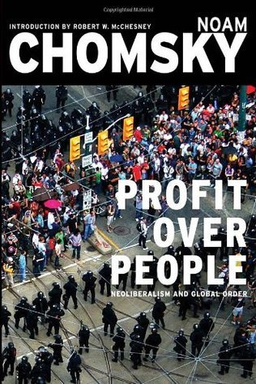
Profit Over People: The Hidden Costs of Neoliberalism
What happens when a society decides that profit matters more than people? In Profit Over People, Noam Chomsky dissects the rise of neoliberalism—the political and economic ideology that promises freedom through markets while, in reality, concentrating power in the hands of a wealthy few. Chomsky argues that neoliberalism has redefined democracy and freedom into slogans that serve corporate power, producing a global system that exalts profit, privatization, and deregulation over human well-being, equality, and self-rule.
The Myth of the Free Market
At the heart of neoliberalism lies a seductive myth: that free markets and individual entrepreneurship naturally promote prosperity and liberty. Chomsky reveals this as an illusion maintained through sophisticated propaganda, from media institutions to academic ideology. In truth, he shows, what is called a “free market” is often a system of state-backed capitalism for the rich—a network of subsidies, trade protections, and bailout programs ensuring that corporations are shielded from risk while citizens bear the costs. Governments, Chomsky writes, do not retreat under neoliberalism; they are repurposed as servants of private power.
This inversion of values is not new. Citing Adam Smith’s observation that the architects of policy in eighteenth-century England were “merchants and manufacturers” who used the state to serve their own interests, Chomsky argues that neoliberalism represents the modern culmination of this same pattern: laws and global trade agreements written by and for corporate elites under the pretense of economic freedom.
From Democracy to Spectatorship
In theory, democracy grants citizens a voice in shaping collective life. In practice, neoliberalism has transformed democracy into a spectator sport. Chomsky echoes political theorists like Walter Lippmann and Edward Bernays, who believed that the general public should be managed, not empowered. Through mass media control and political marketing, neoliberal societies manufacture what Chomsky calls “consent without consent” – the illusion that citizens freely choose policies designed by elites.
Low voter turnout, apathy toward public institutions, and corporate-driven political campaigns are not signs of democratic failure by accident; they are the desired outcomes of a system predicated on keeping the population disengaged. As Chomsky observes, “The most effective way to restrict democracy is to transfer decision-making power from the public arena to unaccountable institutions.” This is how neoliberalism undermines both political and cultural life, replacing communities with markets and citizens with consumers.
A Global System of Inequality
Chomsky places this critique in global context through case studies ranging from Latin America to Southeast Asia. He traces how the so-called “Washington Consensus”—a set of structural adjustment policies advocated by the IMF, World Bank, and U.S. Treasury—has forced poorer nations to liberalize trade, privatize assets, and eliminate social spending. These policies, presented as rational steps toward growth, in fact reproduce dependency and poverty: profits soar for international investors while local populations face dismantled public services and rising debt. The irony, Chomsky notes, is that every rich nation achieved its prosperity not through free markets but through protectionism, government planning, and public investment.
Resistance and Hope
Despite this grim portrait, Chomsky insists that people everywhere retain democratic potential. Movements like the Zapatista uprising in Mexico, union struggles, and grassroots activism demonstrate that ordinary citizens can defy “the logic of profit.” He argues that history’s major moral victories—civil rights, labor rights, the end of colonialism—came from organized resistance, not elite benevolence. For those asking whether alternatives exist, his answer is clear: freedom and democracy can only survive when people reclaim the power to shape their own lives, breaking the illusion that markets should dictate morality.