
Idea 1
Multiplying Time: A New Approach to Productivity
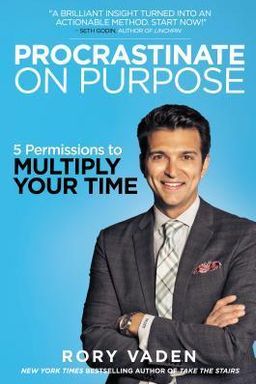
How can you find more time when every hour already feels consumed? In Procrastinate on Purpose, Rory Vaden argues that traditional time management has failed because it focuses on efficiency—getting more done in less time. But working faster doesn’t fix the deeper problem: there’s simply more to do than you can ever do. Instead of trying to squeeze an infinite to-do list into a finite day, Vaden invites you to rethink time itself. His radical proposition is that you can literally multiply your time by spending time on things today that will give you more time tomorrow.
Vaden challenges classic productivity advice, building on the foundation of his earlier book Take the Stairs but expanding the concept beyond discipline alone. He introduces a new mindset—the Multiplier Mindset—that reframes how successful people think about time. These Multipliers don’t just get more done. They operate from a higher dimension of decision-making, adding a third factor to the old discussion of importance and urgency: significance. While others juggle priorities or manage chaos, Multipliers strategically invest in actions that compound their impact over time.
From Managing to Multiplying
Rory Vaden begins by confronting the myths of “time management.” You can’t manage time, he insists; time moves on whether you like it or not. What you can manage is yourself—your energy, your choices, and your willingness to act on what matters most. Managing time is one-dimensional thinking. Prioritizing time, popularized by Stephen Covey’s The 7 Habits of Highly Effective People, adds a second dimension by balancing importance and urgency. But Vaden observes that both eventually lead to burnout because they never actually create more time—they only rearrange it.
Multipliers take it further. They think in three dimensions: importance, urgency, and significance—asking not just how soon or how much something matters but how long it will matter. This shift transforms time from a race to complete tasks into an investment strategy. Vaden calls this three-dimensional thinking, a method that enables people to foresee which actions will deliver returns tomorrow and continually compound those gains.
The Five Permissions
The book’s practical framework is built around five behaviors or emotional permissions that multipliers give themselves—each representing a major leap beyond traditional productivity tools. These are:
- Eliminate – The permission to ignore and say no to what doesn’t multiply time.
- Automate – The permission to invest in systems that compound time like interest.
- Delegate – The permission to allow imperfection by letting others take tasks.
- Procrastinate – The permission to wait intentionally when timing isn’t right.
- Concentrate – The permission to protect your highest-value priorities from distraction.
His metaphor for these permissions is the Focus Funnel: a decision-making process where every task enters at the top and moves through questions that determine whether it should be eliminated, automated, delegated, postponed, or completed. The goal is to ensure that only truly significant tasks—those that multiply your time and results—reach your focus.
Beyond Efficiency: The Emotional Dimension
Vaden emphasizes that productivity isn’t just logical—it’s emotional. We resist saying no because we fear rejection. We avoid delegating because we crave control. We hurry to prove worth. Recognizing these emotional blocks allows you to grant yourself the “permissions” you need. This emotional awareness distinguishes the Multipliers from the chronically overwhelmed. As Vaden demonstrates through case studies—from Tracy Christman, the busy executive balancing family life, to pastor Pete Wilson, redefining success through significance—real mastery comes from managing emotions as much as calendars.
Why This Model Matters
The big payoff of adopting the Multiplier Mindset is freedom. You stop sprinting on the hamster wheel of tasks and start investing in actions that compound value. “You multiply your time,” Vaden says, “by spending time on things today that will give you more time tomorrow.” That could mean automating a process, training a team member, creating a system, or cultivating a habit that reduces friction permanently. Just as compound interest multiplies money, compound significance multiplies time. In the end, Procrastinate on Purpose isn’t about doing more; it’s about doing what matters, when it matters, in a way that lasts. It’s about moving from exhaustion and reaction to calm, deliberate creation—where every choice today earns you freedom tomorrow.